
Rescue Operations Intensify in Nepal Following Glacier Collapse Flood
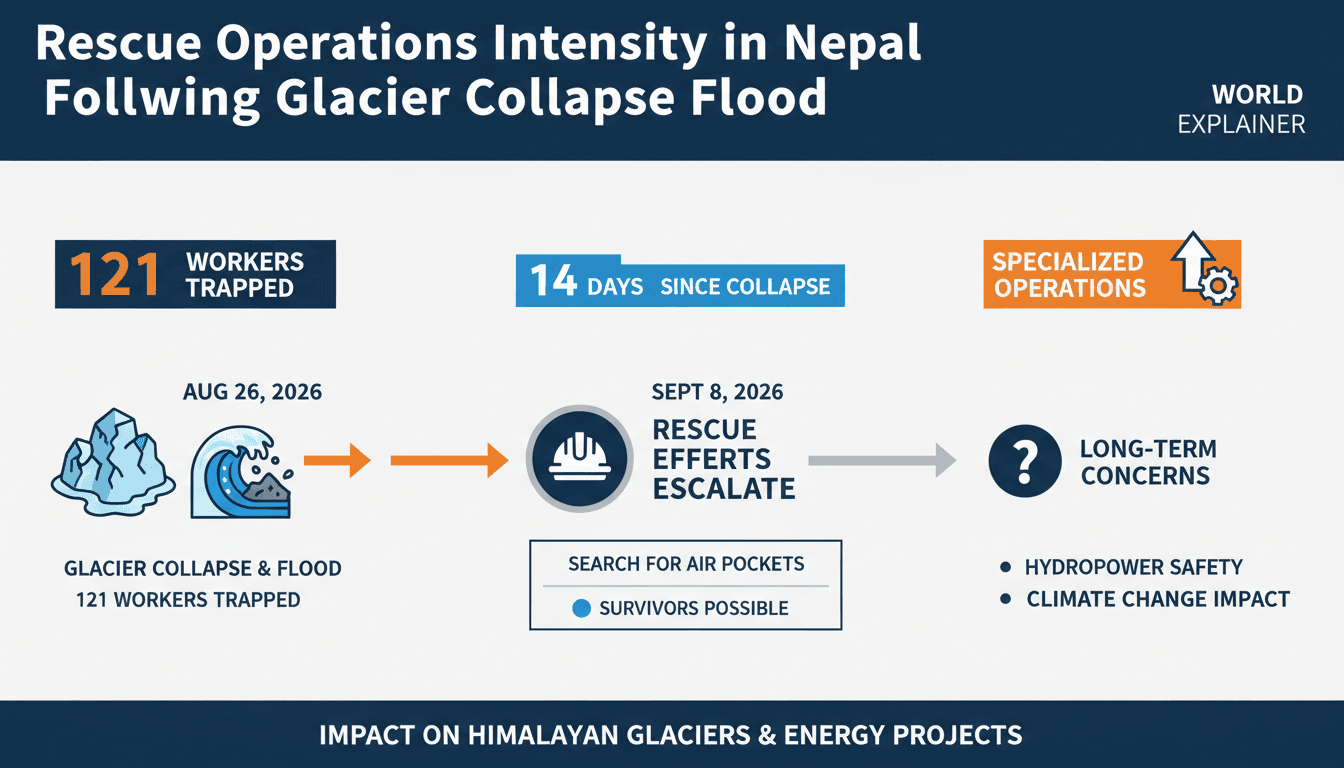
Here's what it means for you.
The ongoing rescue operations in Nepal highlight the vulnerabilities of global energy supply chains, particularly in hydropower.
Why it matters
The disaster underscores the risks associated with climate change and its impact on energy infrastructure, affecting energy prices and availability worldwide.
What happened (in 30 seconds)
- Rescue operations intensified on September 8, 2026, targeting three hydropower tunnel sites where workers are believed to be trapped.
- A glacier collapse on August 26 triggered floods and mudslides, resulting in at least 1,399 deaths and over 5,400 missing across Nepal and Tibet.
- Approximately 121 workers are thought to be trapped in tunnels, with ongoing efforts to supply oxygen and specialized equipment for rescues.
The context you actually need
- Climate change is a key factor in the glacier collapse, with both Nepal and China attributing the disaster to its impacts on Himalayan glaciers.
- Hydropower is critical for Nepal's energy supply, making the recovery of workers essential for the country's energy stability.
- Initial rescues recovered over 270 workers, but the focus has shifted to tunnels where survivors may still be alive in air pockets.
What's really happening
The August 26 glacier collapse on the Nepal-China border has triggered a humanitarian crisis, with rescue operations now focused on three specific hydropower projects: Chilime, Upper Trishuli 3A, and 3B. The disaster has left approximately 900 hydropower workers missing, with around 121 believed to be trapped in the tunnel networks. The Nepal Army, alongside local authorities and the Nepal Electricity Authority, is leading the rescue efforts, which have included supplying oxygen and deploying specialized equipment to reach those trapped.
The initial response saw over 270 workers rescued from various sites, but as the situation evolved, the focus shifted to the tunnels where survivors might still be alive. The successful extraction of two workers after nine days from the Upper Trishuli 3A tunnel on September 4 has provided a glimmer of hope, prompting authorities to prioritize sites with known worker facilities. Prime Minister Balendra Shah has pledged continued support for the rescue operations, emphasizing the government's commitment to humanitarian efforts.
The broader implications of this disaster extend beyond immediate rescue operations. The event raises critical questions about the sustainability of hydropower development in the region, particularly as climate change continues to impact glacial stability. The risks associated with such projects are becoming increasingly apparent, prompting discussions about the future of energy infrastructure in the Himalayas. As countries around the world grapple with the effects of climate change, the situation in Nepal serves as a stark reminder of the vulnerabilities inherent in relying on hydropower as a primary energy source.
The ongoing rescue efforts are not just about saving lives; they are also about addressing the systemic risks that come with climate-induced disasters. The potential for similar events in the future could lead to increased scrutiny of hydropower projects, influencing investment decisions and energy policies globally. As the situation develops, the focus will likely shift towards ensuring the safety of workers and the resilience of energy infrastructure in the face of climate change.
Who feels it first (and how)
- Hydropower workers: Directly impacted by the disaster, with many missing or trapped.
- Local communities: Affected by the loss of life and potential energy shortages.
- Energy sector investors: Facing increased scrutiny and potential shifts in investment strategies due to climate risks.
What to watch next
- Rescue outcomes: The success of ongoing operations will influence public perception and policy regarding hydropower safety.
- Climate policy discussions: Increased focus on climate change impacts may lead to new regulations affecting hydropower projects.
- Energy market fluctuations: Potential disruptions in energy supply could affect prices and availability in the region and beyond.
The glacier collapse has resulted in significant loss of life and missing workers.
Increased scrutiny on hydropower projects due to climate change risks.
The long-term impact on Nepal's energy infrastructure and market stability.
Frequently Asked Questions
- Why it matters?
- The disaster underscores the risks associated with climate change and its impact on energy infrastructure, affecting energy prices and availability worldwide.
- What happened (in 30 seconds)?
- Rescue operations intensified on September 8, 2026, targeting three hydropower tunnel sites where workers are believed to be trapped. A glacier collapse on August 26 triggered floods and mudslides, resulting in at least 1,399 deaths and over 5,400 missing across Nepal and Tibet. Approximately 121 workers are thought to be trapped in tunnels, with ongoing efforts to supply oxygen and specialized equipment for rescues.
- What's really happening?
- The August 26 glacier collapse on the Nepal-China border has triggered a humanitarian crisis, with rescue operations now focused on three specific hydropower projects: Chilime, Upper Trishuli 3A, and 3B. The disaster has left approximately 900 hydropower workers missing, with around 121 believed to be trapped in the tunnel networks. The Nepal Army, alongside local authorities and the Nepal Electricity Authority, is leading the rescue efforts, which have included supplying oxygen and deploying sp
- Who feels it first (and how)?
- Hydropower workers: Directly impacted by the disaster, with many missing or trapped. Local communities: Affected by the loss of life and potential energy shortages. Energy sector investors: Facing increased scrutiny and potential shifts in investment strategies due to climate risks.
- What to watch next?
- Rescue outcomes: The success of ongoing operations will influence public perception and policy regarding hydropower safety. Climate policy discussions: Increased focus on climate change impacts may lead to new regulations affecting hydropower projects. Energy market fluctuations: Potential disruptions in energy supply could affect prices and availability in the region and beyond.
Political, social, and economic news across Asia and the Pacific.
"France 24 is viewed as a globally focused outlet with balanced coverage and a European perspective."
— A47 Editor
Nepal rescuers race to free dozens trapped in hydropower tunnels
Authorities in Nepal are racing against time to rescue dozens of workers believed to be trapped in hydropower project tunnels following severe floods that have devastated the region, resulting in hundreds of fatalities and thousands missing. The floo...
International news coverage curated for readers in the UAE and Gulf region.
"Emirates 24|7 world coverage presents global developments through a UAE-facing and Gulf-relevant editorial lens."
— A47 Editor
Nepal flash flood death toll nears 1,400 as more than 5,000 remain missing
The confirmed death toll from the devastating flash floods that struck Nepal and neighboring Tibet has reached nearly 1,400, with 1,341 casualties reported in Nepal and 43 in Tibet. Search and rescue operations are ongoing, as over 5,000 individuals ...
International news, politics, and culture.
"Sky News is a UK-based 24-hour channel known for fast-breaking news and political coverage."
— A47 Editor
Nepal: China confirms number of dead and missing following floods
Catastrophic floods have devastated the Nepal-Tibet border, resulting in at least 43 confirmed deaths and 519 individuals reported missing, as confirmed by Chinese authorities. The floods were triggered by a glacier collapse, leading to widespread de...