
25th Anniversary of September 11 Attacks Highlights Ongoing Geopolitical Impact
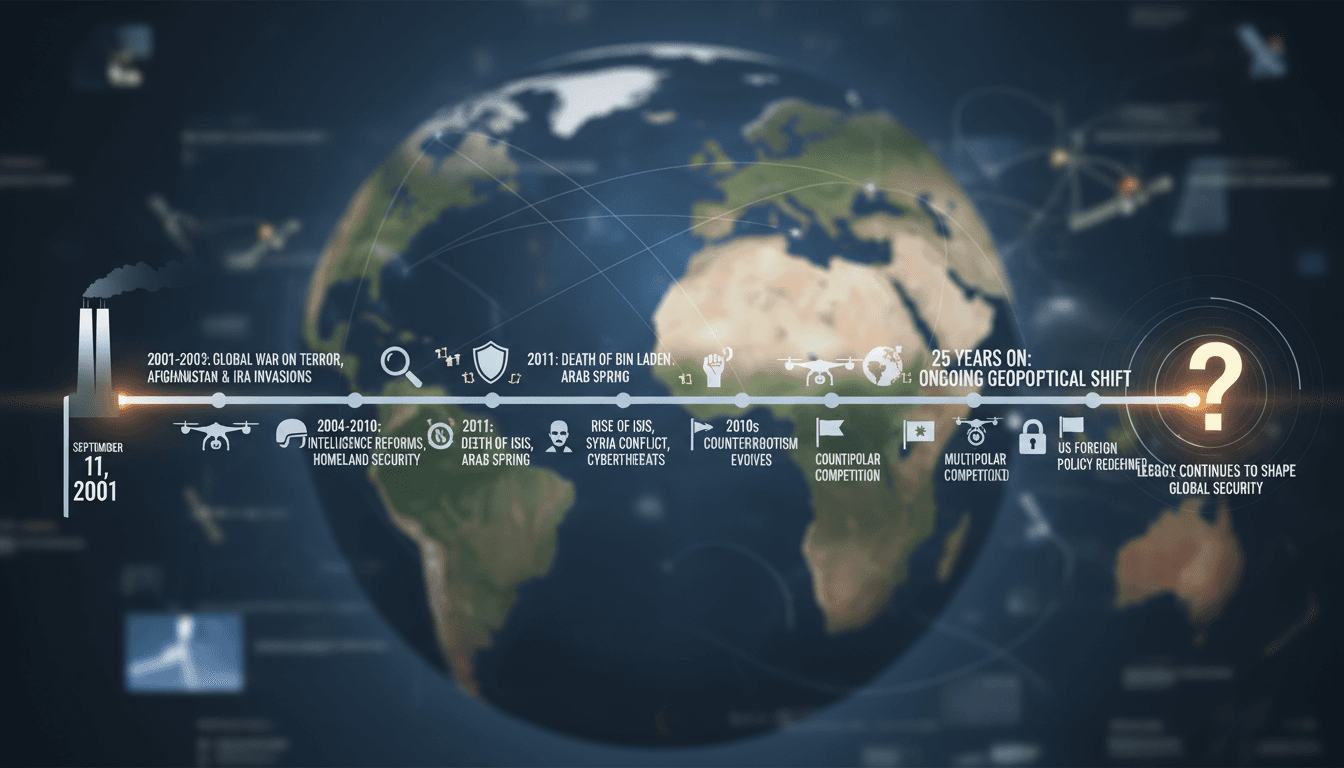
Here's what it means for you.
As a global citizen, understanding the enduring impacts of the September 11 attacks can help you navigate the complexities of international relations and security policies that affect your daily life.
Why it matters
The September 11 attacks reshaped global security frameworks, influencing everything from travel regulations to international military engagements.
What happened (in 30 seconds)
- Nearly 3,000 people were killed in coordinated terrorist attacks on September 11, 2001, by al-Qaeda operatives.
- The U.S. launched the 'war on terror', leading to military interventions in Afghanistan and Iraq, and significant changes in domestic security policies.
- Twenty-five years later, the geopolitical landscape continues to be influenced by the legacy of 9/11, with ongoing conflicts and shifts in global power dynamics.
The context you actually need
- Post-Cold War optimism: In the 1990s, the U.S. was the unchallenged superpower, but al-Qaeda's rise highlighted vulnerabilities in U.S. foreign policy.
- Immediate aftermath: The attacks prompted the establishment of the Department of Homeland Security and the Transportation Security Administration (TSA), along with expanded surveillance measures.
- Long-term consequences: The financial burden of wars and security measures has contributed to U.S. debt exceeding $40 trillion, while the focus has shifted toward great-power competition with nations like China and Russia.
What's really happening
The September 11 attacks marked a pivotal moment in global history, triggering a series of responses that have reshaped international relations and security policies. In the wake of the attacks, the U.S. government, under President George W. Bush, initiated the 'war on terror,' which included military interventions in Afghanistan and Iraq. The primary objective was to dismantle al-Qaeda and remove the Taliban from power, which was seen as harboring terrorists.
These military actions led to significant changes in U.S. domestic policy, including the establishment of the Department of Homeland Security and the TSA. Surveillance programs expanded dramatically, with the government implementing measures that many argue infringe on civil liberties. The invocation of NATO's Article 5 after the attacks underscored a collective defense approach, leading to increased military cooperation among member states.
The financial implications of these wars have been staggering, with estimates suggesting that the total cost of the wars in Iraq and Afghanistan could exceed $6 trillion. This expenditure has contributed to the U.S. national debt, which surpassed $40 trillion by 2021. The long-term military engagements have also resulted in millions of deaths, both military and civilian, raising ethical questions about the effectiveness and morality of such interventions.
As of 2026, the geopolitical landscape continues to reflect the legacy of 9/11. Analysts note a shift toward multipolar competition, particularly with the rise of China and Russia as significant global players. The focus on counterterrorism has institutionalized various frameworks that prioritize national security over civil liberties in many countries. Additionally, the U.S. withdrawal from Afghanistan in 2021, which resulted in the Taliban's return to power, has sparked debates about the efficacy of two decades of military involvement.
In regions like the Middle East, the instability caused by these conflicts has had ripple effects on global markets, particularly oil prices, which can indirectly impact economies worldwide, including those in Dubai. Residents of Dubai have experienced heightened aviation security protocols and increased counterterrorism cooperation between the UAE and Western governments, illustrating the far-reaching implications of the attacks.
Who feels it first (and how)
- Travelers: Increased security measures at airports and border crossings.
- Military personnel: Ongoing deployments and engagements in conflict zones.
- Government agencies: Heightened focus on counterterrorism and intelligence sharing.
- Economists: Fluctuations in global markets tied to geopolitical instability.
- Residents of conflict-affected regions: Direct impacts from military actions and local instability.
What to watch next
- Changes in U.S. foreign policy: Watch for shifts in military engagement strategies, particularly in the Middle East and Asia.
- Global security collaborations: Monitor how NATO and other alliances adapt to new threats and challenges.
- Public sentiment on security measures: Observe how citizens respond to ongoing surveillance and security policies, especially in democratic nations.
The September 11 attacks led to significant changes in global security policies and military engagements.
The geopolitical landscape will continue to evolve, with a focus on great-power competition and counterterrorism.
The long-term effectiveness of current security measures and their impact on civil liberties remains to be seen.
Frequently Asked Questions
- Why it matters?
- The September 11 attacks reshaped global security frameworks, influencing everything from travel regulations to international military engagements.
- What happened (in 30 seconds)?
- Nearly 3,000 people were killed in coordinated terrorist attacks on September 11, 2001, by al-Qaeda operatives. The U.S. launched the 'war on terror', leading to military interventions in Afghanistan and Iraq, and significant changes in domestic security policies. Twenty-five years later, the geopolitical landscape continues to be influenced by the legacy of 9/11, with ongoing conflicts and shifts in global power dynamics.
- What's really happening?
- The September 11 attacks marked a pivotal moment in global history, triggering a series of responses that have reshaped international relations and security policies. In the wake of the attacks, the U.S. government, under President George W. Bush, initiated the 'war on terror,' which included military interventions in Afghanistan and Iraq. The primary objective was to dismantle al-Qaeda and remove the Taliban from power, which was seen as harboring terrorists. These military actions led to sign
- Who feels it first (and how)?
- Travelers: Increased security measures at airports and border crossings. Military personnel: Ongoing deployments and engagements in conflict zones. Government agencies: Heightened focus on counterterrorism and intelligence sharing. Economists: Fluctuations in global markets tied to geopolitical instability. Residents of conflict-affected regions: Direct impacts from military actions and local instability.
- What to watch next?
- Changes in U.S. foreign policy: Watch for shifts in military engagement strategies, particularly in the Middle East and Asia. Global security collaborations: Monitor how NATO and other alliances adapt to new threats and challenges. Public sentiment on security measures: Observe how citizens respond to ongoing surveillance and security policies, especially in democratic nations.
News from the United States including domestic politics, society, and culture.
"The Guardian is known for its progressive editorial stance and in-depth analysis, often advocating for social justice, environmental issues, and liberal values."
— A47 Editor
How 9/11 changed the world - The Latest
Twenty-five years after the September 11 attacks, which resulted in nearly 3,000 deaths in New York City, Washington DC, and Pennsylvania, the repercussions of that day continue to shape global geopolitics and conflicts. Annie Kelly discusses these o...
Top international stories selected by The Guardian editors.
"The Guardian is known for its progressive editorial stance and in-depth analysis."
— A47 Editor
How 9/11 changed the world - The Latest
Twenty-five years after the September 11 attacks, which resulted in nearly 3,000 deaths in New York City, Washington DC, and Pennsylvania, the repercussions of that day continue to shape global geopolitics and conflicts. Annie Kelly discusses these o...
News across North, Central, and South America including politics and economics.
"France 24 is viewed as a globally focused outlet with balanced coverage and a European perspective."
— A47 Editor
How the media has changed since 9/11
The 25th anniversary of the September 11 attacks has prompted reflections on the profound impact these events had on the media landscape, particularly in how journalists covered the attacks and their aftermath. Nearly 3,000 lives were lost when terro...
News across North, Central, and South America including politics and economics.
"France 24 is viewed as a globally focused outlet with balanced coverage and a European perspective."
— A47 Editor
9/11 then and now: Do September 2001 attacks still shape our world?
As the 25th anniversary of the September 11 attacks approaches, reflections on the events that unfolded on that fateful day in 2001 continue to resonate globally. The attacks, which targeted New York's Twin Towers, the Pentagon, and Pennsylvania, res...