
Gaza Faces Humanitarian Energy Crisis as Oil Shortages Impact Hospitals and Households
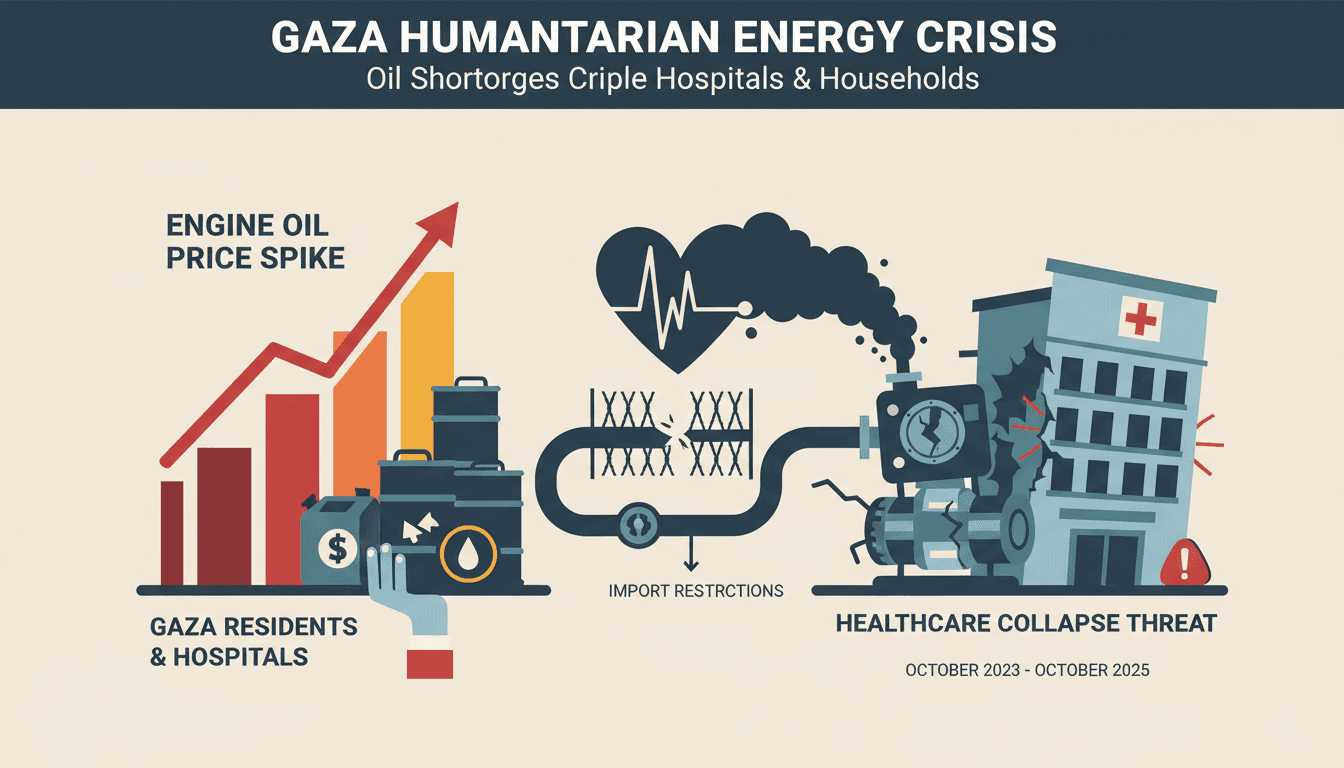
Here's what it means for you.
The ongoing humanitarian crisis in Gaza could impact global energy markets and humanitarian aid dynamics.
Why it matters
The energy crisis in Gaza highlights the fragility of healthcare systems in conflict zones and the broader implications for international humanitarian efforts.
What happened (in 30 seconds)
- Gaza's hospitals are struggling to maintain operations due to severe shortages of engine oil and fuel, particularly affecting Nasser Hospital in Khan Younis.
- Household electricity costs have skyrocketed by approximately 20-fold, making it unaffordable for most families to power generators.
- Israeli import restrictions on fuel and spare parts, initiated after the October 2023 military offensive, continue to exacerbate the crisis despite a ceasefire in October 2025.
The context you actually need
- Gaza has lacked grid electricity since the military response to the October 7, 2023, Hamas-led attacks, leading to a reliance on generators.
- The October 2025 ceasefire ended major combat but did not lift restrictions on essential supplies, leaving hospitals in dire need of maintenance and resources.
- Local markets are experiencing inflated prices for engine oil, with current costs reaching $1,300 per liter, up from approximately $3 pre-war.
What's really happening
As of September 2026, Gaza's healthcare system is on the brink of collapse due to a critical shortage of fuel and engine oil necessary for generator operations. The Nasser Hospital, a key medical facility in Khan Younis, is facing severe power cuts, forcing it to implement austerity measures. With one of its four generators out of service and the others strained, the hospital is struggling to provide essential care to patients who rely on ventilators and nebulizers.
The situation is exacerbated by Israeli import restrictions that have been in place since the military offensive in October 2023. These restrictions were intended as punitive measures but have resulted in a humanitarian crisis that persists even after the U.S.-brokered ceasefire in October 2025. The ceasefire did not address the underlying issues of supply shortages, leaving hospitals reliant on damaged generators that lack necessary maintenance supplies.
Médecins Sans Frontières (MSF) has reported that the restrictions have not only affected hospitals but also ambulances and water systems, pushing local groups to seek supplies in markets where prices have surged. The cost of engine oil has skyrocketed to $1,300 per liter, making it prohibitively expensive for many healthcare facilities and households. This price increase represents a staggering 433% rise from pre-war levels, severely limiting access to essential services.
Local generator operators are also feeling the strain, as displaced residents across Gaza rely on neighborhood generators for power. With costs soaring, many families are unable to afford electricity, leading to a humanitarian crisis that affects thousands. The Israeli Coordination of Government Activities in the Territories (COGAT) has stated that mechanisms are in place to monitor the entry of supplies, but local medics and humanitarian organizations argue that these measures are insufficient to meet the urgent needs of the population.
The cascading effects of this energy crisis are profound, as hospitals are forced to delay treatments and surgeries, putting lives at risk. The lack of reliable power not only threatens healthcare but also exacerbates the already dire living conditions for residents in Gaza, where many are displaced and struggling to survive.
Who feels it first (and how)
- Healthcare workers at hospitals like Nasser Hospital, facing increased workloads and ethical dilemmas due to power shortages.
- Patients requiring life-sustaining equipment, such as ventilators, who are at risk due to unreliable power supply.
- Displaced families relying on neighborhood generators, facing skyrocketing costs and limited access to electricity.
- Local businesses that depend on stable power for operations, now struggling with inflated energy costs.
What to watch next
- International humanitarian aid responses: Watch for changes in aid strategies as organizations assess the ongoing needs in Gaza.
- Market fluctuations in energy prices: Keep an eye on how the crisis in Gaza might influence global oil and fuel prices.
- Potential policy shifts: Monitor any changes in Israeli import restrictions that could impact the flow of essential supplies into Gaza.
Hospitals in Gaza are facing severe power shortages due to fuel and engine oil scarcity.
The humanitarian crisis will continue to escalate without significant changes in supply access.
The long-term impacts on regional stability and international humanitarian efforts remain uncertain.
Frequently Asked Questions
- Why it matters?
- The energy crisis in Gaza highlights the fragility of healthcare systems in conflict zones and the broader implications for international humanitarian efforts.
- What happened (in 30 seconds)?
- Gaza's hospitals are struggling to maintain operations due to severe shortages of engine oil and fuel, particularly affecting Nasser Hospital in Khan Younis. Household electricity costs have skyrocketed by approximately 20-fold, making it unaffordable for most families to power generators. Israeli import restrictions on fuel and spare parts, initiated after the October 2023 military offensive, continue to exacerbate the crisis despite a ceasefire in October 2025.
- What's really happening?
- As of September 2026, Gaza's healthcare system is on the brink of collapse due to a critical shortage of fuel and engine oil necessary for generator operations. The Nasser Hospital, a key medical facility in Khan Younis, is facing severe power cuts, forcing it to implement austerity measures. With one of its four generators out of service and the others strained, the hospital is struggling to provide essential care to patients who rely on ventilators and nebulizers. The situation is exacerbate
- Who feels it first (and how)?
- Healthcare workers at hospitals like Nasser Hospital, facing increased workloads and ethical dilemmas due to power shortages. Patients requiring life-sustaining equipment, such as ventilators, who are at risk due to unreliable power supply. Displaced families relying on neighborhood generators, facing skyrocketing costs and limited access to electricity. Local businesses that depend on stable power for operations, now struggling with inflated energy costs.
- What to watch next?
- International humanitarian aid responses: Watch for changes in aid strategies as organizations assess the ongoing needs in Gaza. Market fluctuations in energy prices: Keep an eye on how the crisis in Gaza might influence global oil and fuel prices. Potential policy shifts: Monitor any changes in Israeli import restrictions that could impact the flow of essential supplies into Gaza.
Regional coverage and analysis focused on politics, diplomacy, and business across the Middle East.
"Al-Monitor is known for analytical reporting on Middle East politics and policy developments."
— A47 Editor
Gaza's hospitals and homes struggle to keep generators running as oil shortages bite
Gaza's hospitals are facing severe challenges as power cuts and shortages of engine oil and spare parts lead to generator failures, jeopardizing patient care in already overcrowded and sweltering conditions. Medics warn that the inability to maintain...
English-language reporting on Saudi politics, policy, and society.
"Saudi Gazette reflects mainstream Saudi institutional perspectives."
— A47 Editor
Lives at risk as power cuts plague Gaza’s few functioning hospitals
Power cuts are severely impacting Gaza's functioning hospitals, with medics warning that shortages of engine oil and spare parts are causing generators to fail, endangering patient lives. The ongoing Israeli siege has left Gaza without grid electrici...
Comprehensive coverage of Middle Eastern and global issues.
"Al Jazeera is a prominent voice from the Global South, especially the Middle East, with an emphasis on underreported stories."
— A47 Editor
Gaza hospitals ration power as fuel shortages deepen
Gaza's hospitals are facing severe power rationing due to deepening fuel and engine oil shortages, which are critically impacting their ability to provide healthcare services. The ongoing conflict and restrictions have exacerbated these shortages, le...