
UN Agencies Warn of Imminent Collapse of Sudan's Humanitarian Aid Pipeline
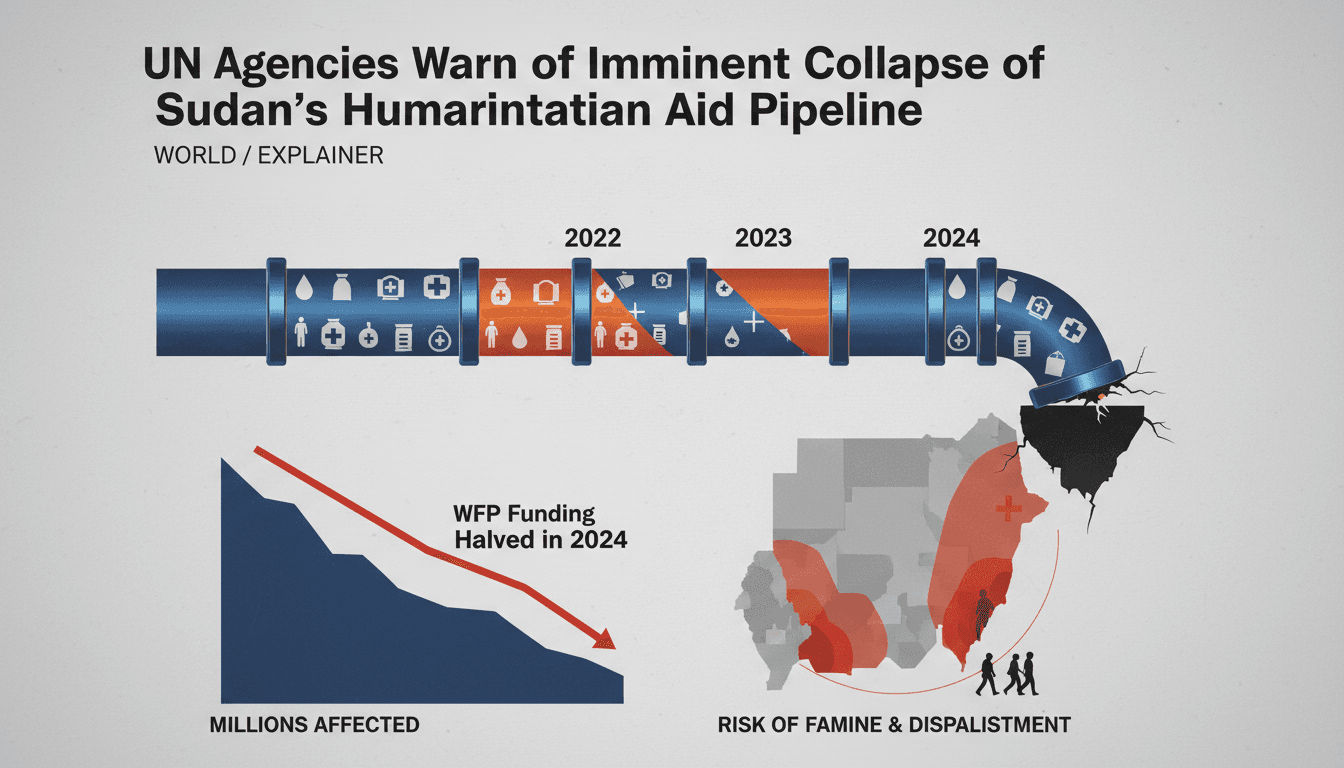
Why it matters
The failure of Sudan's humanitarian pipeline threatens to exacerbate one of the world's largest displacement and hunger crises.
What happened (in 30 seconds)
- UN agencies warned that Sudan's Common Humanitarian Pipeline could collapse within weeks due to severe funding shortfalls.
- Funding for the World Food Programme (WFP) has been halved, limiting aid distribution to millions in need.
- Over 200,000 deaths have occurred since the civil war began in April 2023, leading to 8.6 million internally displaced persons.
The context you actually need
- Sudan's civil war erupted in April 2023, creating a humanitarian crisis that has resulted in the world's largest displacement and hunger crisis.
- The Common Humanitarian Pipeline, managed by the International Organization for Migration (IOM), has provided aid to 2.84 million people since the war began but is now at risk of collapse.
- Major funding cuts from international donors, including the U.S., have severely impacted the ability to deliver essential supplies and services.
What's really happening
The humanitarian situation in Sudan is deteriorating rapidly due to a combination of ongoing conflict, funding shortfalls, and logistical challenges. The civil war between the Sudanese Armed Forces and the Rapid Support Forces (RSF) has created a complex environment where access to aid is severely restricted. As of September 2026, the IOM and WFP have issued urgent warnings that the Common Humanitarian Pipeline, which has been operational since the onset of the war, is on the brink of collapse. This pipeline has been crucial in delivering shelter, sanitation, and emergency supplies to millions of people affected by the conflict.
The IOM has reported that it has reached 2.84 million individuals through a network of over 100 NGOs, but the reach has significantly declined from over one million in 2024 to just 330,000 in 2026. This sharp decline is primarily due to funding cuts, with WFP's budget for Sudan slashed from $645 million to $206 million in just one year. The implications of these funding reductions are dire; many areas, such as Tawila, are now receiving only half-rations, and the overall reach of aid has been severely restricted.
The IOM and WFP have called for immediate donor support, estimating that they need between $15 million and $42 million to restore operations to 2024 levels, alongside a nearly $300 million gap for WFP operations. Without this funding, the humanitarian pipeline is projected to exhaust its supplies by the end of September 2026, with warehousing capacity becoming unsustainable by December 2026. The situation is compounded by heavy rains and flooding, which have further hindered access to those in need.
The international community's response has been tepid, with no significant local governmental actions documented as of mid-September 2026. The warnings from UN agencies have prompted renewed calls for immediate donor support, but the lack of urgency from major funding sources raises concerns about the future of humanitarian efforts in Sudan.
Who feels it first (and how)
- Internally displaced persons: Over 8.6 million people are at risk of losing access to essential supplies.
- Humanitarian organizations: NGOs reliant on the Common Humanitarian Pipeline face operational shutdowns.
- Local communities: Those already suffering from the effects of the civil war will experience heightened food insecurity and lack of shelter.
What to watch next
- Donor responses: Watch for any announcements from major international donors regarding new funding commitments to Sudan.
- Humanitarian access: Monitor changes in access to affected areas, particularly as the rainy season progresses.
- Conflict developments: Keep an eye on the dynamics between the Sudanese Armed Forces and RSF, as escalations could further complicate aid delivery.
The Common Humanitarian Pipeline is at risk of collapse without immediate funding.
Aid distribution will continue to decline, exacerbating the humanitarian crisis.
The extent of international donor response and its impact on the situation in Sudan.
Frequently Asked Questions
- Why it matters?
- The failure of Sudan's humanitarian pipeline threatens to exacerbate one of the world's largest displacement and hunger crises.
- What happened (in 30 seconds)?
- UN agencies warned that Sudan's Common Humanitarian Pipeline could collapse within weeks due to severe funding shortfalls. Funding for the World Food Programme (WFP) has been halved, limiting aid distribution to millions in need. Over 200,000 deaths have occurred since the civil war began in April 2023, leading to 8.6 million internally displaced persons.
- What's really happening?
- The humanitarian situation in Sudan is deteriorating rapidly due to a combination of ongoing conflict, funding shortfalls, and logistical challenges. The civil war between the Sudanese Armed Forces and the Rapid Support Forces (RSF) has created a complex environment where access to aid is severely restricted. As of September 2026, the IOM and WFP have issued urgent warnings that the Common Humanitarian Pipeline, which has been operational since the onset of the war, is on the brink of collapse.
- Who feels it first (and how)?
- Internally displaced persons: Over 8.6 million people are at risk of losing access to essential supplies. Humanitarian organizations: NGOs reliant on the Common Humanitarian Pipeline face operational shutdowns. Local communities: Those already suffering from the effects of the civil war will experience heightened food insecurity and lack of shelter.
- What to watch next?
- Donor responses: Watch for any announcements from major international donors regarding new funding commitments to Sudan. Humanitarian access: Monitor changes in access to affected areas, particularly as the rainy season progresses. Conflict developments: Keep an eye on the dynamics between the Sudanese Armed Forces and RSF, as escalations could further complicate aid delivery.
English-language reporting on Saudi politics, policy, and society.
"Saudi Gazette reflects mainstream Saudi institutional perspectives."
— A47 Editor
Humanitarian network in Sudan could collapse within weeks, UN agencies warn
The United Nations has issued a stark warning that the humanitarian network in Sudan is on the brink of collapse within weeks due to severe funding shortages. Amy Pope, head of the International Organization for Migration, emphasized the urgent need ...
Global news coverage with extensive reporting on Middle Eastern conflicts and geopolitics.
"Al Jazeera is a Qatar-based broadcaster known for wide regional coverage and alternative perspectives."
— A47 Editor
Sudan aid networks at risk of collapse, UN agencies warn
UN agencies have warned that aid networks in Sudan are at risk of collapse due to a critical lack of donations, with the International Organization for Migration (IOM) stating that shelter and relief supplies could run out by the end of the month.
Comprehensive coverage of Middle Eastern and global issues.
"Al Jazeera is a prominent voice from the Global South, especially the Middle East, with an emphasis on underreported stories."
— A47 Editor
Sudan aid networks at risk of collapse, UN agencies warn
UN agencies have warned that aid networks in Sudan are at risk of collapse due to a critical lack of donations, with the International Organization for Migration (IOM) stating that shelter and relief supplies could run out by the end of the month.
English-language news from Qatar covering domestic and regional affairs.
"Gulf Times reflects Qatari perspectives on regional developments."
— A47 Editor
UN warns key humanitarian network in Sudan could 'collapse within weeks'
The United Nations has issued a warning that a crucial humanitarian network in Sudan is at risk of total collapse within weeks unless immediate funding is secured. This dire situation arises amidst ongoing conflict and escalating violence in the regi...