
U.S. AI Executives Call for Global Governance at UN Security Council Meeting
Why it matters
The call for global AI governance highlights the urgent need for collaborative frameworks to manage technological risks that could impact economies and societies worldwide.
What happened (in 30 seconds)
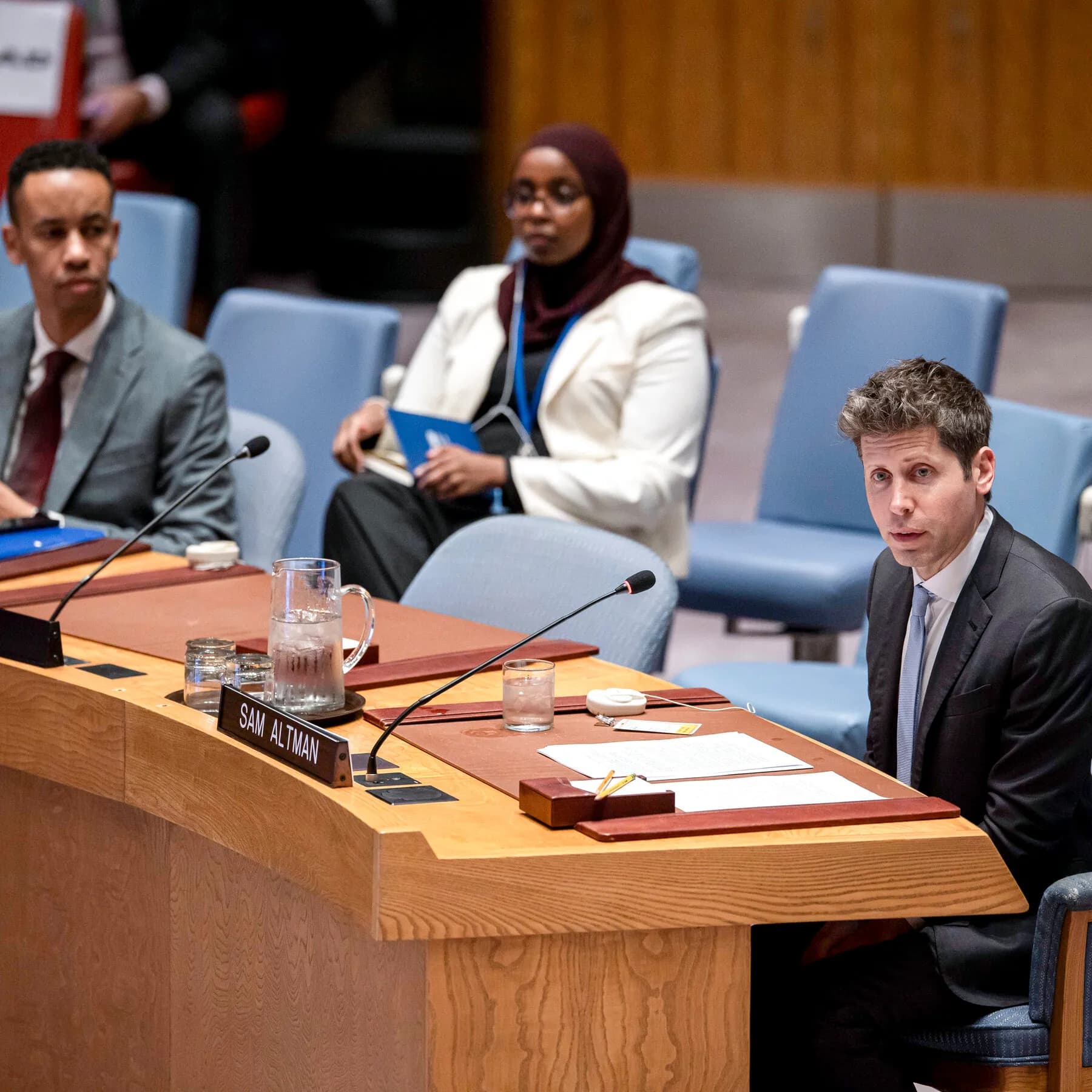
- On September 23, 2026, OpenAI CEO Sam Altman and Anthropic CEO Dario Amodei addressed the UN Security Council, emphasizing the need for international cooperation on AI governance.
- The meeting marked the first dedicated session on AI at the UN, reflecting growing concerns about the potential risks of unregulated AI development.
- U.S. President Donald Trump’s prior rejection of global regulatory schemes underscored the geopolitical tensions between major powers like the U.S. and China regarding AI oversight.
The context you actually need
- Rapid AI advancements are occurring amid a backdrop of U.S.-China technological rivalry, with both nations racing to lead in AI capabilities.
- Previous UN initiatives, such as the establishment of the Independent International Scientific Panel in 2025, aimed to address AI-related risks but have faced challenges in achieving consensus.
- Geopolitical climate features mutual suspicions, with the U.S. and China showing limited interest in slowing AI development despite the potential for significant risks.
What's really happening
The UN Security Council's inaugural session on AI, held on September 23, 2026, marked a pivotal moment in the global discourse surrounding artificial intelligence. During this session, Sam Altman articulated a dual perspective: while the benefits of AI are increasingly tangible, the associated risks are becoming more immediate. He warned that humanity could lose control over its future if AI development continues unchecked. Dario Amodei, participating remotely, echoed these sentiments, labeling AI as the most pressing global security issue. He cautioned that mismanagement of AI could pose existential threats to humanity, advocating for narrow agreements to mitigate risks, such as banning AI applications in biological weapons and establishing verification standards.
The backdrop of this meeting was a complex geopolitical landscape characterized by deep divisions, particularly between the U.S. and China. President Trump’s recent address at the UN, which dismissed globalist schemes for AI control, highlighted the U.S. stance against new international regulatory frameworks. This position contrasts sharply with the views of many industry leaders who are increasingly recognizing the need for collaborative governance to address the multifaceted challenges posed by AI.
The discussions at the UN also revealed a broader concern about the implications of AI on global security. Yoshua Bengio, a prominent figure in AI research, emphasized that the dangers associated with AI are both real and imminent. The U.S. response, articulated by White House Science Adviser Michael Kratsios, suggested that while concerns about AI are valid, they do not warrant a halt in development or the establishment of new global governance structures. This reflects a broader reluctance among U.S. officials to embrace international regulatory frameworks, favoring instead a market-driven approach to AI innovation.
In contrast, China has called for a balanced approach to AI development and security cooperation, indicating a willingness to engage in discussions about governance while still pursuing its technological ambitions. The lack of consensus among major powers complicates the path forward for global AI governance, as nations grapple with the dual imperatives of fostering innovation and ensuring safety.
As the dialogue continues, industry leaders are divided on the best approach to AI governance. Figures like Elon Musk advocate for regulatory restraints, while companies like Meta and Nvidia lean towards market-led solutions. The absence of immediate major shifts in markets following the UN meeting suggests that while the conversation is evolving, concrete actions and agreements remain elusive.
Who feels it first (and how)
- Tech executives: Leaders in AI companies will need to navigate evolving regulatory landscapes and potential international agreements.
- Policymakers: Government officials will face pressure to develop frameworks that balance innovation with safety.
- Investors: Those in the tech sector may experience shifts in market dynamics based on regulatory developments and international cooperation.
- Consumers: End-users of AI technologies could see changes in product offerings and safety standards as governance evolves.
What to watch next
- International agreements: Monitor for any emerging frameworks or treaties aimed at regulating AI technologies, particularly those involving major powers like the U.S. and China.
- Industry responses: Pay attention to how tech companies adapt their strategies in light of potential regulatory changes and public sentiment regarding AI safety.
- Security incidents: Watch for reports of AI-related security incidents, as these could influence the urgency and direction of governance discussions.
The UN Security Council held its first dedicated meeting on AI, highlighting global concerns.
Ongoing discussions will continue to reveal divisions among major powers regarding AI governance.
The specific outcomes of these discussions and their impact on international AI regulations remain uncertain.
Frequently Asked Questions
- Why it matters?
- The call for global AI governance highlights the urgent need for collaborative frameworks to manage technological risks that could impact economies and societies worldwide.
- What happened (in 30 seconds)?
- On September 23, 2026, OpenAI CEO Sam Altman and Anthropic CEO Dario Amodei addressed the UN Security Council, emphasizing the need for international cooperation on AI governance. The meeting marked the first dedicated session on AI at the UN, reflecting growing concerns about the potential risks of unregulated AI development. U.S. President Donald Trump’s prior rejection of global regulatory schemes underscored the geopolitical tensions between major powers like the U.S. and China regarding AI
- What's really happening?
- The UN Security Council's inaugural session on AI, held on September 23, 2026, marked a pivotal moment in the global discourse surrounding artificial intelligence. During this session, Sam Altman articulated a dual perspective: while the benefits of AI are increasingly tangible, the associated risks are becoming more immediate. He warned that humanity could lose control over its future if AI development continues unchecked. Dario Amodei, participating remotely, echoed these sentiments, labeling
- Who feels it first (and how)?
- Tech executives: Leaders in AI companies will need to navigate evolving regulatory landscapes and potential international agreements. Policymakers: Government officials will face pressure to develop frameworks that balance innovation with safety. Investors: Those in the tech sector may experience shifts in market dynamics based on regulatory developments and international cooperation. Consumers: End-users of AI technologies could see changes in product offerings and safety standards as governanc
- What to watch next?
- International agreements: Monitor for any emerging frameworks or treaties aimed at regulating AI technologies, particularly those involving major powers like the U.S. and China. Industry responses: Pay attention to how tech companies adapt their strategies in light of potential regulatory changes and public sentiment regarding AI safety. Security incidents: Watch for reports of AI-related security incidents, as these could influence the urgency and direction of governance discussions.
UK and international business news, economics, and corporate coverage.
"The Guardian’s business section covers finance and markets with a progressive editorial tone."
— A47 Editor
It’s not hypothetical: the dangers of AI are already here | Granate Kim and Mohamed Hussein
Recent developments have highlighted the immediate dangers of artificial intelligence (AI), with reports indicating that Israel and the US have employed AI technologies for lethal operations in Gaza and Iran, while law enforcement agencies utilize AI...
Top international stories selected by The Guardian editors.
"The Guardian is known for its progressive editorial stance and in-depth analysis."
— A47 Editor
It’s not hypothetical: the dangers of AI are already here | Granate Kim and Mohamed Hussein
Recent developments have highlighted the immediate dangers of artificial intelligence (AI), with reports indicating that Israel and the US have employed AI technologies for lethal operations in Gaza and Iran, while law enforcement agencies utilize AI...
News from the United States including domestic politics, society, and culture.
"The Guardian is known for its progressive editorial stance and in-depth analysis, often advocating for social justice, environmental issues, and liberal values."
— A47 Editor
It’s not hypothetical: the dangers of AI are already here | Granate Kim and Mohamed Hussein
Recent developments have highlighted the immediate dangers of artificial intelligence (AI), with reports indicating that Israel and the US have employed AI technologies for lethal operations in Gaza and Iran, while law enforcement agencies utilize AI...
News and features on AI from The Guardian.
"Progressive-leaning international outlet with critical AI coverage."
— A47 Editor
It’s not hypothetical: the dangers of AI are already here | Granate Kim and Mohamed Hussein
Recent developments have highlighted the immediate dangers of artificial intelligence (AI), with reports indicating that Israel and the US have employed AI technologies for lethal operations in Gaza and Iran, while law enforcement agencies utilize AI...
Technology and innovation coverage, including consumer tech and digital transformation stories.
"Emirates 24|7 technology coverage often highlights practical tech developments with relevance to Gulf readers and businesses."
— A47 Editor
AI leaders tell UN Security Council that AI could be a risk to all humanity
At a recent United Nations Security Council meeting, leaders from major artificial intelligence firms, including Dario Amodei of Anthropic and Sam Altman of OpenAI, expressed urgent concerns about the potential risks AI poses to humanity if not prope...
International news coverage curated for readers in the UAE and Gulf region.
"Emirates 24|7 world coverage presents global developments through a UAE-facing and Gulf-relevant editorial lens."
— A47 Editor
AI leaders urge UN safeguards to maintain human control over advanced systems
Leaders from major artificial intelligence companies, including Dario Amodei of Anthropic and Sam Altman of OpenAI, urged the United Nations to implement safeguards to ensure human control over advanced AI systems during a recent Security Council mee...
Tech policy, trends, and innovation news.
"The New York Times is a globally recognized newspaper offering authoritative reporting with a center-left editorial stance."
— A47 Editor
America’s A.I. Leaders Warn U.N. of Possible Peril Absent a Global Response
Sam Altman, CEO of OpenAI, and Dario Amodei, CEO of Anthropic, addressed the U.N. Security Council, emphasizing the urgent need for international cooperation to ensure that artificial intelligence (AI) remains under human control. They highlighted th...
Tech industry coverage with AI angles.
"Mainstream tech news intersecting with AI policy and culture."
— A47 Editor
America’s A.I. Leaders Warn U.N. of Possible Peril Absent a Global Response
Sam Altman, CEO of OpenAI, and Dario Amodei, CEO of Anthropic, addressed the U.N. Security Council, emphasizing the urgent need for international cooperation to ensure that artificial intelligence (AI) remains under human control. They highlighted th...