
Cuba Faces Eighth Nationwide Blackout of 2026 Due to Transmission Failures and Fuel Shortages
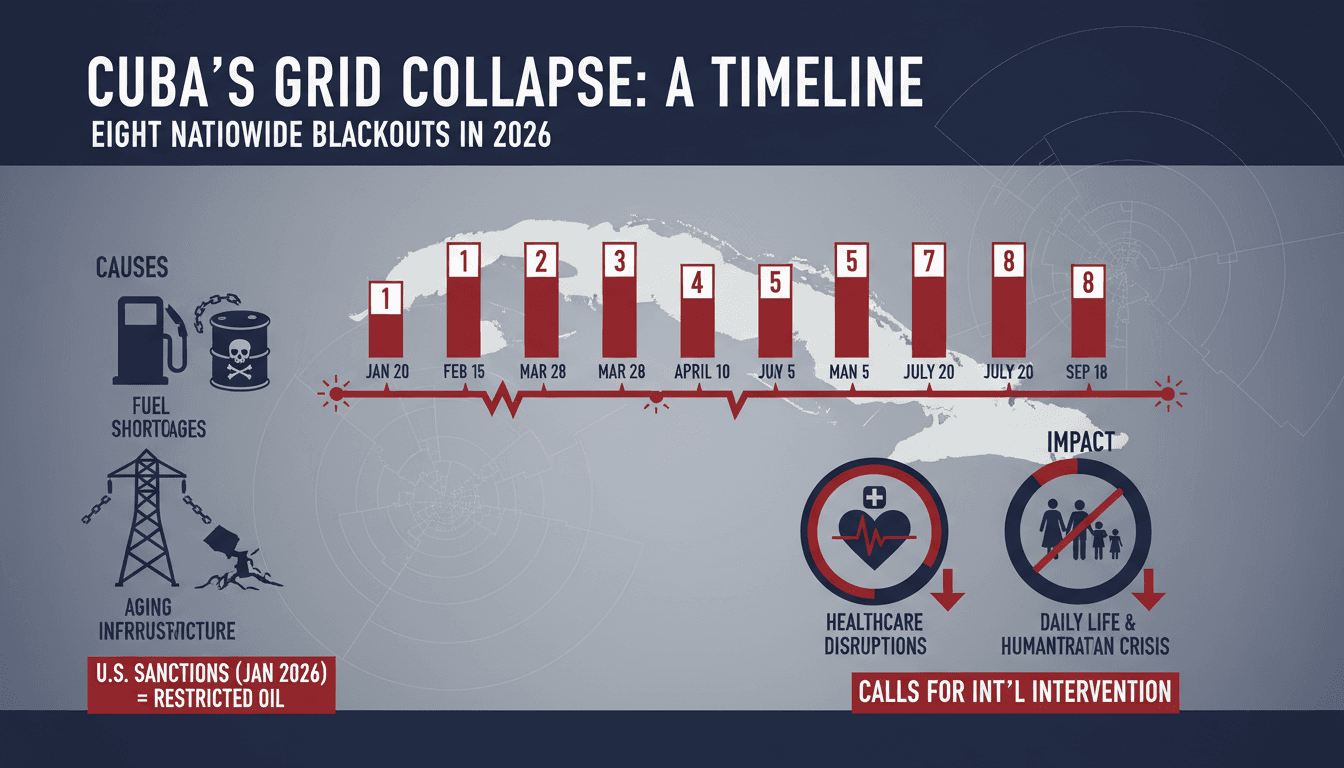
Why it matters
Cuba's ongoing energy crisis underscores the vulnerabilities in global energy supply chains, which can ripple through markets and affect prices worldwide.
What happened (in 30 seconds)
- Nationwide blackout: On September 18, 2026, Cuba experienced its eighth nationwide blackout of the year due to transmission line failures and fuel shortages.
- Restoration efforts: The Cuban Ministry of Energy and Mines activated restoration protocols, achieving partial recovery by September 19 and full interconnection by September 20.
- Underlying issues: The crisis is rooted in chronic fuel shortages exacerbated by U.S. sanctions and an aging electrical infrastructure.
The context you actually need
- Decades of embargo: Cuba has faced a U.S. embargo for decades, limiting access to essential fuel, parts, and technology necessary for energy production.
- Recent sanctions: The situation worsened in January 2026 when U.S. sanctions intensified following the capture of Venezuelan President Nicolás Maduro, disrupting oil shipments to Cuba.
- Infrastructure challenges: Aging infrastructure and unstable weather conditions have compounded the energy crisis, leading to repeated blackouts and service disruptions.
What's really happening
Cuba's energy crisis is a complex interplay of geopolitical tensions, economic sanctions, and infrastructural decay. The recent blackout on September 18, 2026, was triggered by the failure of high-voltage transmission lines, specifically the 220 kV Matanzas-Cienfuegos line, which disconnected the entire electrical grid from Pinar del Río to Guantánamo. This failure was not an isolated incident; it marked the eighth nationwide blackout in 2026 alone, highlighting a systemic issue within Cuba's energy sector.
The root causes of these blackouts are deeply entrenched. The U.S. embargo has severely restricted Cuba's access to fuel and technology, which has been further exacerbated by recent sanctions targeting the oil sector. The capture of Nicolás Maduro in early 2026 led to a halt in Venezuelan oil shipments, which Cuba had relied on for its energy needs. As a result, the Cuban government has struggled to maintain a stable energy supply, leading to chronic shortages and an over-reliance on aging infrastructure.
The Cuban Ministry of Energy and Mines has been forced to prioritize restoration efforts, focusing on essential services like hospitals while gradually restoring power to the general population. However, even after the restoration of national interconnection, the energy generation remains insufficient to meet demand, with deficits exceeding 2,000 MW. This ongoing energy instability not only disrupts daily life for millions of Cubans but also raises concerns about the long-term viability of Cuba's energy infrastructure.
Internationally, the situation has drawn attention from human rights organizations, which have raised concerns about the humanitarian impact of U.S. sanctions on the Cuban population. While there have been no immediate market shifts reported, the implications of Cuba's energy crisis could resonate beyond its borders, particularly as global energy markets remain sensitive to supply disruptions.
Who feels it first (and how)
- Cuban residents: Daily life is severely disrupted, affecting access to water, healthcare, and basic services.
- Healthcare sector: Hospitals face challenges in maintaining operations due to unreliable power supply.
- Energy sector workers: Employees in the energy sector are under pressure to restore services amid chronic shortages and infrastructure failures.
What to watch next
- Fuel import negotiations: Watch for any changes in U.S. sanctions or negotiations regarding fuel imports, as these could significantly impact Cuba's energy stability.
- Infrastructure investments: Monitor potential investments in renewable energy or infrastructure upgrades, which could help alleviate future blackouts.
- International response: Keep an eye on international reactions, particularly from human rights organizations, as they may influence U.S. policy towards Cuba.
Cuba is experiencing chronic energy shortages and repeated blackouts.
The energy crisis will continue to affect daily life and healthcare services in Cuba.
The long-term impact of international responses to Cuba's energy crisis remains uncertain.
Frequently Asked Questions
- Why it matters?
- Cuba's ongoing energy crisis underscores the vulnerabilities in global energy supply chains, which can ripple through markets and affect prices worldwide.
- What happened (in 30 seconds)?
- Nationwide blackout: On September 18, 2026, Cuba experienced its eighth nationwide blackout of the year due to transmission line failures and fuel shortages. Restoration efforts: The Cuban Ministry of Energy and Mines activated restoration protocols, achieving partial recovery by September 19 and full interconnection by September 20. Underlying issues: The crisis is rooted in chronic fuel shortages exacerbated by U.S. sanctions and an aging electrical infrastructure.
- What's really happening?
- Cuba's energy crisis is a complex interplay of geopolitical tensions, economic sanctions, and infrastructural decay. The recent blackout on September 18, 2026, was triggered by the failure of high-voltage transmission lines, specifically the 220 kV Matanzas-Cienfuegos line, which disconnected the entire electrical grid from Pinar del Río to Guantánamo. This failure was not an isolated incident; it marked the eighth nationwide blackout in 2026 alone, highlighting a systemic issue within Cuba's en
- Who feels it first (and how)?
- Cuban residents: Daily life is severely disrupted, affecting access to water, healthcare, and basic services. Healthcare sector: Hospitals face challenges in maintaining operations due to unreliable power supply. Energy sector workers: Employees in the energy sector are under pressure to restore services amid chronic shortages and infrastructure failures.
- What to watch next?
- Fuel import negotiations: Watch for any changes in U.S. sanctions or negotiations regarding fuel imports, as these could significantly impact Cuba's energy stability. Infrastructure investments: Monitor potential investments in renewable energy or infrastructure upgrades, which could help alleviate future blackouts. International response: Keep an eye on international reactions, particularly from human rights organizations, as they may influence U.S. policy towards Cuba.
RT is a Russian state-funded network covering global events from a Russian perspective.
"RT is widely criticized for promoting pro-Kremlin narratives and is considered by many to be a state propaganda outlet."
— A47 Editor
Cuba plunges into darkness amid nationwide blackout
Cuba has plunged into darkness due to a nationwide blackout, marking a significant failure of its electrical grid, which has been under strain from ongoing fuel shortages linked to U.S. sanctions. This blackout is part of a troubling trend, as the is...
Global news coverage with extensive reporting on Middle Eastern conflicts and geopolitics.
"Al Jazeera is a Qatar-based broadcaster known for wide regional coverage and alternative perspectives."
— A47 Editor
Cuba works to restore power after another major nationwide blackout
Cuba is currently working to restore power following a significant nationwide blackout, marking at least the sixth such incident this year. The outages are attributed to the ongoing collapse of the island's electrical grid, which has been severely im...
Comprehensive coverage of Middle Eastern and global issues.
"Al Jazeera is a prominent voice from the Global South, especially the Middle East, with an emphasis on underreported stories."
— A47 Editor
Cuba works to restore power after another major nationwide blackout
Cuba is currently working to restore power following a significant nationwide blackout, marking at least the sixth such incident this year. The outages are attributed to the ongoing collapse of the island's electrical grid, which has been severely im...
24/7 international news from a French perspective in multiple languages.
"France 24 is viewed as a globally focused outlet with balanced coverage and a European perspective."
— A47 Editor
Millions without power in Cuba as electrical grid collapses again
Cuba has experienced its seventh massive blackout of the year, leaving millions without power. The ongoing collapse of the island's aging electrical grid has been exacerbated by a U.S.-imposed energy blockade, which has severely limited fuel supplies...
International coverage of politics, culture, and current affairs.
"BBC News is widely regarded as a reputable international news organization, known for its impartial tone and public service mandate."
— A47 Editor
Millions without power as Cuba hit by latest major blackout
Millions of people in Cuba are currently experiencing widespread power outages due to a major blackout, a situation exacerbated by ongoing fuel shortages linked to the US blockade. The Cuban government has reported that these blackouts have become in...
News across North, Central, and South America including politics and economics.
"France 24 is viewed as a globally focused outlet with balanced coverage and a European perspective."
— A47 Editor
Cuba hit with another nationwide blackout amid US fuel blockade
Cuba experienced a nationwide blackout on Friday, marking the collapse of its electrical grid, which has faced multiple failures this year. This incident is attributed to the ongoing fuel blockade imposed by the United States, which has severely rest...