
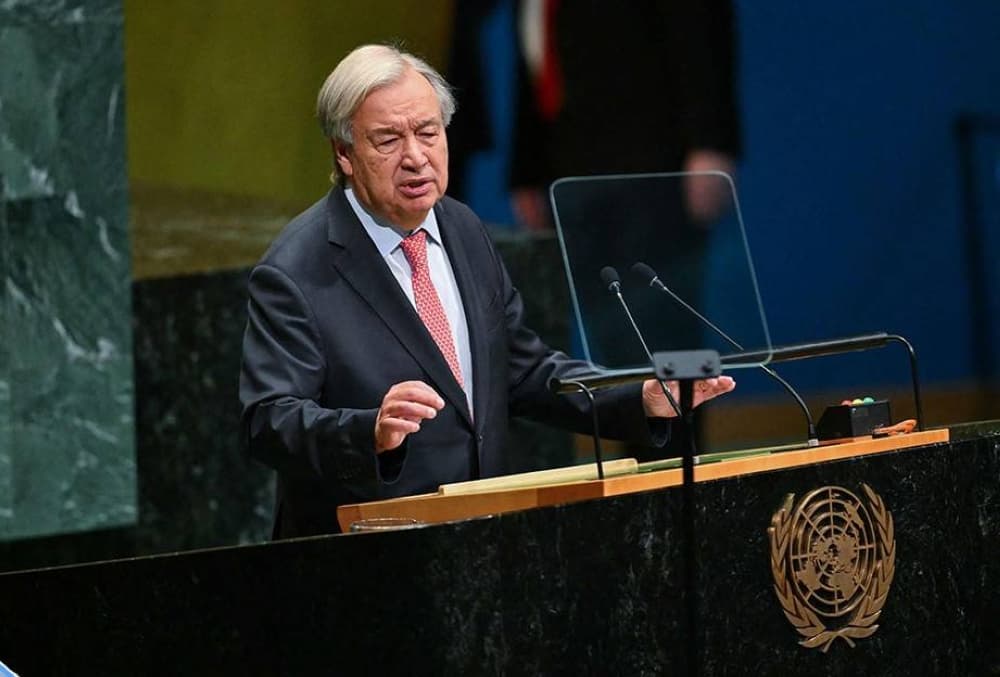
Guterres Highlights Global Power Challenges in Final UN Address
Why it matters
The address highlights critical global challenges that could reshape international relations and economic conditions.
What happened (in 30 seconds)
- António Guterres delivered his final address to the UN General Assembly on September 22, 2026, outlining four major tests of global power.
- He emphasized urgent issues including war and peace, wealth inequality, climate change, and AI governance amid ongoing global conflicts.
- Calls for reform of the UN Security Council were reiterated, reflecting dissatisfaction with current multilateral structures.
The context you actually need
- Guterres' speech comes during escalating conflicts in the Middle East and Sudan, which have significant implications for global stability.
- The UN faces increasing pressure to adapt to a multipolar world where traditional power dynamics are shifting.
- Technological advancements, particularly in AI, are raising concerns about governance and ethical implications that could affect economies worldwide.
What's really happening
António Guterres' farewell address serves as a stark reminder of the growing fractures in global governance and the urgent need for reform. He identified four critical tests of power that encapsulate the current geopolitical landscape.
First, the decisions surrounding war and peace are increasingly contentious, particularly with ongoing violence in Gaza and Sudan. Guterres criticized the destruction in Gaza and the targeting of civilians in Sudan, highlighting the moral imperative for the international community to intervene. This reflects a broader trend where military expenditures, which reached $2.7 trillion in 2025—13 times greater than global development aid—are prioritized over humanitarian needs.
Second, Guterres called for reform of the UN Security Council, emphasizing the historical injustice of Africa's lack of permanent representation. This issue resonates deeply as nations push for a more equitable global governance structure that reflects current geopolitical realities rather than outdated post-World War II frameworks.
Third, the climate crisis remains a pressing concern, with Guterres condemning the intergenerational inequity that results from inaction. He urged a transition away from fossil fuels and accountability for polluters, signaling a shift towards more aggressive climate policies that could impact industries reliant on fossil fuels.
Finally, Guterres addressed the governance of artificial intelligence, advocating for dialogue between the US and China to ensure responsible development. The rapid advancement of AI poses risks of inequality and loss of human control, necessitating a collaborative approach to regulation.
These four tests are interconnected, reflecting a world where military, economic, environmental, and technological factors are increasingly intertwined. The implications of Guterres' address extend beyond the UN, as nations grapple with these challenges and their effects on global stability and economic growth.
Who feels it first (and how)
- Governments: National leaders will need to navigate the implications of Guterres' calls for reform and accountability.
- Businesses in energy and technology sectors: Companies may face new regulations and market shifts as climate policies and AI governance evolve.
- Expatriate communities in conflict zones: Individuals living in unstable regions may experience direct impacts from geopolitical tensions and economic instability.
What to watch next
- UN Security Council reform discussions: Watch for proposals and negotiations that could reshape international governance structures.
- Climate policy developments: Monitor new regulations and initiatives aimed at reducing fossil fuel dependency and promoting sustainability.
- AI governance frameworks: Keep an eye on international dialogues between major powers, particularly the US and China, regarding AI regulation.
Global military expenditure continues to outpace development aid significantly.
Increased calls for UN reform will gain traction as nations seek representation that reflects current power dynamics.
The specific outcomes of AI governance discussions between the US and China remain uncertain.
Frequently Asked Questions
- Why it matters?
- The address highlights critical global challenges that could reshape international relations and economic conditions.
- What happened (in 30 seconds)?
- António Guterres delivered his final address to the UN General Assembly on September 22, 2026, outlining four major tests of global power. He emphasized urgent issues including war and peace, wealth inequality, climate change, and AI governance amid ongoing global conflicts. Calls for reform of the UN Security Council were reiterated, reflecting dissatisfaction with current multilateral structures.
- What's really happening?
- António Guterres' farewell address serves as a stark reminder of the growing fractures in global governance and the urgent need for reform. He identified four critical tests of power that encapsulate the current geopolitical landscape. First, the decisions surrounding war and peace are increasingly contentious, particularly with ongoing violence in Gaza and Sudan. Guterres criticized the destruction in Gaza and the targeting of civilians in Sudan, highlighting the moral imperative for the inte
- Who feels it first (and how)?
- Governments: National leaders will need to navigate the implications of Guterres' calls for reform and accountability. Businesses in energy and technology sectors: Companies may face new regulations and market shifts as climate policies and AI governance evolve. Expatriate communities in conflict zones: Individuals living in unstable regions may experience direct impacts from geopolitical tensions and economic instability.
- What to watch next?
- UN Security Council reform discussions: Watch for proposals and negotiations that could reshape international governance structures. Climate policy developments: Monitor new regulations and initiatives aimed at reducing fossil fuel dependency and promoting sustainability. AI governance frameworks: Keep an eye on international dialogues between major powers, particularly the US and China, regarding AI regulation.
Coverage of political affairs and regional developments from a Saudi perspective.
"Al Watan political coverage typically follows a mainstream Saudi framing of regional and national issues."
— A47 Editor
4 اختبارات كبرى للقوة في خطاب جوتيريش الوداعي
United Nations Secretary-General António Guterres delivered his final annual speech before the end of his term at the opening of the 81st session of the UN General Assembly in New York, warning of increasing global fractures and unprecedented pressur...
Arabic-language political and world news coverage for UAE readers.
"Emarat Al Youm world coverage usually presents international developments through a UAE and Arab audience lens."
— A47 Editor
أمام الجمعية العامة.. غوتيريش يحذر من اتساع الانقسامات ويدعو إلى خفض التصعيد أمام الجمعية العامة.. غوتيريش يحذر من اتساع الانقسامات ويدعو إلى خفض التصعيد
United Nations Secretary-General António Guterres urged world leaders to utilize the high-level week of the General Assembly to reduce global divisions and tensions. His call comes amid increasing geopolitical conflicts and challenges facing the inte...
Arabic-language political and world news coverage for UAE readers.
"Emarat Al Youm world coverage usually presents international developments through a UAE and Arab audience lens."
— A47 Editor
غوتيريش: على القوى العظمى أن تدرك "أن قوتها ليست خارقة كما تبدو" غوتيريش: على القوى العظمى أن تدرك "أن قوتها ليست خارقة كما تبدو"
United Nations Secretary-General António Guterres stated on Tuesday that major powers must recognize that their strength is not as overwhelming as it appears, emphasizing that military power alone is insufficient to ensure peace.
Arabic-language coverage of political affairs and current events.
"Okaz political coverage typically follows mainstream Saudi framing on national and regional affairs."
— A47 Editor
في افتتاح عمومية الأمم المتحدة.. غوتيريش يحذر من اتساع الحروب وتلاشي حل الدولتين
The United Nations General Assembly convened in New York, with global leaders addressing ongoing crises, particularly the war in Ukraine and the Israeli-Palestinian conflict. UN Secretary-General António Guterres highlighted the targeting of civilian...