
2026-2027 Super El Niño Declared with Record Sea Surface Temperature Anomalies
Why it matters
The 2026-2027 Super El Niño is projected to disrupt global weather patterns, leading to significant agricultural and health challenges.
What happened (in 30 seconds)
- El Niño conditions were declared in June 2026, marking the onset of a very strong climate oscillation.
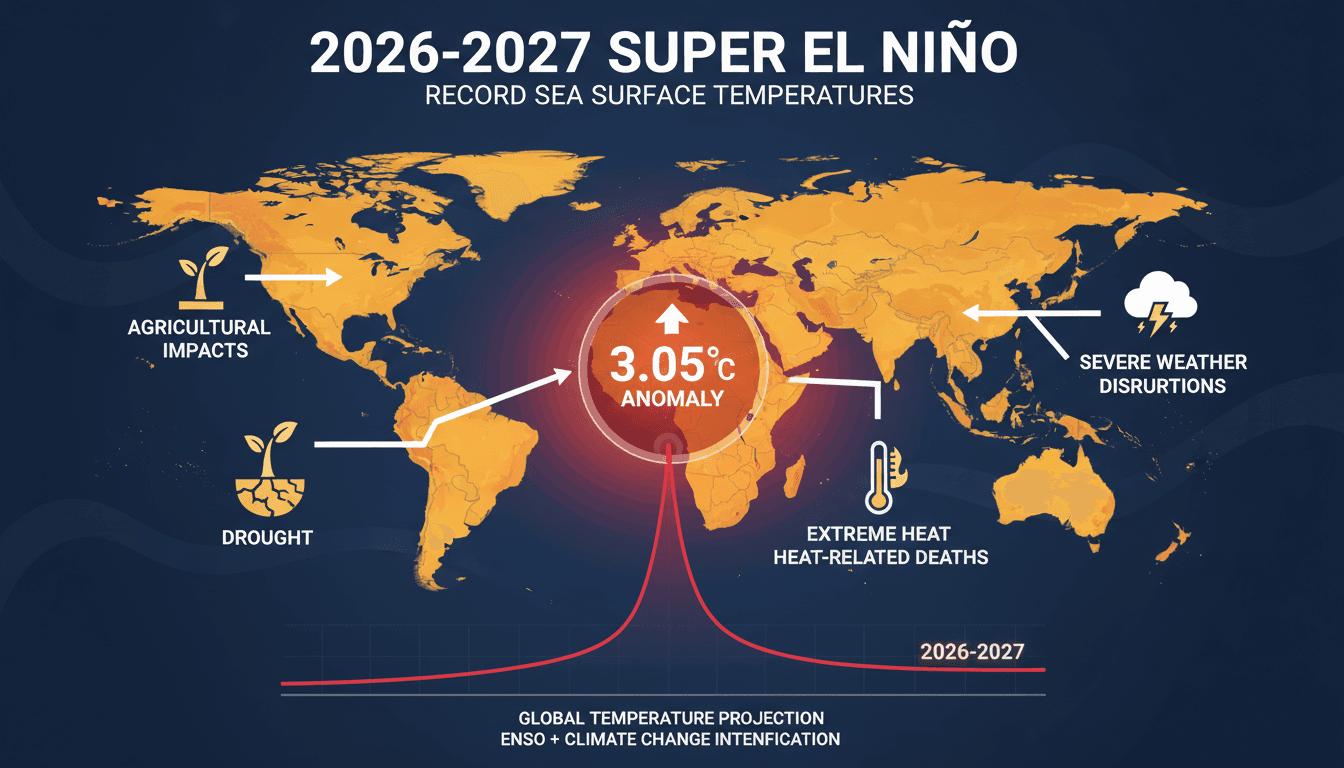
- Equatorial Pacific sea surface temperatures reached a record anomaly of 3.05°C above the 1991-2020 average by September 2026.
- Projected impacts include severe floods, droughts, and heatwaves, with up to 451,000 excess heat-related deaths anticipated.
The context you actually need
- El Niño occurs every 2–7 years when trade winds weaken, allowing warmer waters to shift eastward in the Pacific.
- This event follows a strong El Niño in 2023-2024 and is amplified by a 1.4°C increase in global temperatures since pre-industrial times.
- Historical parallels include the 2015-2016 and 1997-1998 events, but current models suggest peak anomalies could approach 4.0°C.
What's really happening
The 2026-2027 Super El Niño is the strongest recorded phase of the El Niño-Southern Oscillation (ENSO) cycle, with sea surface temperatures in the equatorial Pacific reaching unprecedented levels. Declared by NOAA in June 2026, the event has intensified rapidly, with temperatures exceeding 3.05°C above the 1991-2020 average by September 2026. This anomaly is significant not only for its record-breaking nature but also for the broader implications it carries in the context of climate change.
The phenomenon is expected to peak in early 2027, potentially making that year the hottest on record. The World Meteorological Organization (WMO) has classified this event as "very strong," although it does not use the term "super." The current El Niño follows a strong event in 2023-2024, indicating a pattern of increasing frequency and intensity of such climate oscillations. The historical context is critical; previous strong El Niño events have led to severe weather disruptions globally, but the current situation is exacerbated by the ongoing impacts of anthropogenic climate change.
As global temperatures rise, the effects of El Niño are intensified, leading to more extreme weather patterns. For instance, regions like southern South America and Central Asia are projected to experience severe flooding, while southern Africa, Australia, and Southeast Asia may face significant droughts. The agricultural sector is particularly vulnerable, with forecasts indicating reduced crop yields, notably in rice production in India, which could lead to food shortages and increased prices.
The health implications are equally concerning, with estimates suggesting up to 451,000 excess heat-related deaths due to intensified heatwaves. Governments and organizations, including the UN World Food Programme, are already warning of acute hunger affecting nearly 50 million people by the end of 2027, particularly in the most vulnerable regions. This situation underscores the urgent need for early warning systems and protective measures for outdoor workers to mitigate the risks associated with extreme heat.
Who feels it first (and how)
- Farmers: Facing crop losses due to droughts and floods, impacting livelihoods and food supply.
- Health workers: Managing increased heat-related illnesses and potential fatalities.
- Governments: Responding to humanitarian crises and food insecurity in affected regions.
- Businesses: Experiencing supply chain disruptions and increased costs due to agricultural impacts.
What to watch next
- Temperature anomalies: Monitor sea surface temperature changes in the equatorial Pacific, as they will indicate the intensity of the El Niño.
- Agricultural forecasts: Keep an eye on crop yield predictions, particularly for staple foods like rice and wheat, which could signal food security issues.
- Health advisories: Watch for public health announcements regarding heat-related risks and protective measures for vulnerable populations.
The 2026-2027 Super El Niño is the strongest recorded phase of the ENSO cycle.
Significant global weather disruptions, including floods and droughts, will occur through 2027.
The full extent of economic impacts on global food supply chains and health systems remains to be seen.
Frequently Asked Questions
- Why it matters?
- The 2026-2027 Super El Niño is projected to disrupt global weather patterns, leading to significant agricultural and health challenges.
- What happened (in 30 seconds)?
- El Niño conditions were declared in June 2026, marking the onset of a very strong climate oscillation. Equatorial Pacific sea surface temperatures reached a record anomaly of 3.05°C above the 1991-2020 average by September 2026. Projected impacts include severe floods, droughts, and heatwaves, with up to 451,000 excess heat-related deaths anticipated.
- What's really happening?
- The 2026-2027 Super El Niño is the strongest recorded phase of the El Niño-Southern Oscillation (ENSO) cycle, with sea surface temperatures in the equatorial Pacific reaching unprecedented levels. Declared by NOAA in June 2026, the event has intensified rapidly, with temperatures exceeding 3.05°C above the 1991-2020 average by September 2026. This anomaly is significant not only for its record-breaking nature but also for the broader implications it carries in the context of climate change. The
- Who feels it first (and how)?
- Farmers: Facing crop losses due to droughts and floods, impacting livelihoods and food supply. Health workers: Managing increased heat-related illnesses and potential fatalities. Governments: Responding to humanitarian crises and food insecurity in affected regions. Businesses: Experiencing supply chain disruptions and increased costs due to agricultural impacts.
- What to watch next?
- Temperature anomalies: Monitor sea surface temperature changes in the equatorial Pacific, as they will indicate the intensity of the El Niño. Agricultural forecasts: Keep an eye on crop yield predictions, particularly for staple foods like rice and wheat, which could signal food security issues. Health advisories: Watch for public health announcements regarding heat-related risks and protective measures for vulnerable populations.
International news coverage curated for readers in the UAE and Gulf region.
"Emirates 24|7 world coverage presents global developments through a UAE-facing and Gulf-relevant editorial lens."
— A47 Editor
'Super El Niño' explained, and how it will affect the weather
The developing El Niño weather pattern in the Pacific Ocean is projected to be one of the strongest on record, potentially leading to severe weather events such as floods, droughts, and extreme heat, with the University of Chicago's Climate Impact La...
24/7 international news from a French perspective in multiple languages.
"France 24 is viewed as a globally focused outlet with balanced coverage and a European perspective."
— A47 Editor
El Nino: Climate scientists warn of "Godzilla-level" climate event
Climate scientists warn that the ongoing super El Niño could lead to extreme heat conditions, resulting in an estimated 451,000 excess deaths globally by February 2027, particularly affecting countries like Nigeria, Indonesia, and Sudan.
Top international stories selected by The Guardian editors.
"The Guardian is known for its progressive editorial stance and in-depth analysis."
— A47 Editor
Huge El Niño projected to cause more than 450,000 deaths by February
A new report indicates that the ongoing super El Niño is projected to cause over 450,000 excess deaths globally by February 2027, with significant impacts expected in regions such as Nigeria, Indonesia, and the US. This alarming forecast highlights t...
Reports on climate change, environmental science, sustainability, and nature.
"BBC News is widely regarded as a reputable international news organization, known for its impartial tone and public service mandate."
— A47 Editor
Developing El Niño becomes strongest on record weeks before expected peak
Scientists have reported that the developing El Niño has reached unprecedented strength, becoming the strongest on record just weeks before its expected peak, with significant weather impacts already being observed globally.
International coverage of politics, culture, and current affairs.
"BBC News is widely regarded as a reputable international news organization, known for its impartial tone and public service mandate."
— A47 Editor
Developing El Niño becomes strongest on record weeks before expected peak
Scientists have reported that the developing El Niño has reached unprecedented strength, becoming the strongest on record just weeks before its expected peak, with significant weather impacts already being observed globally.