
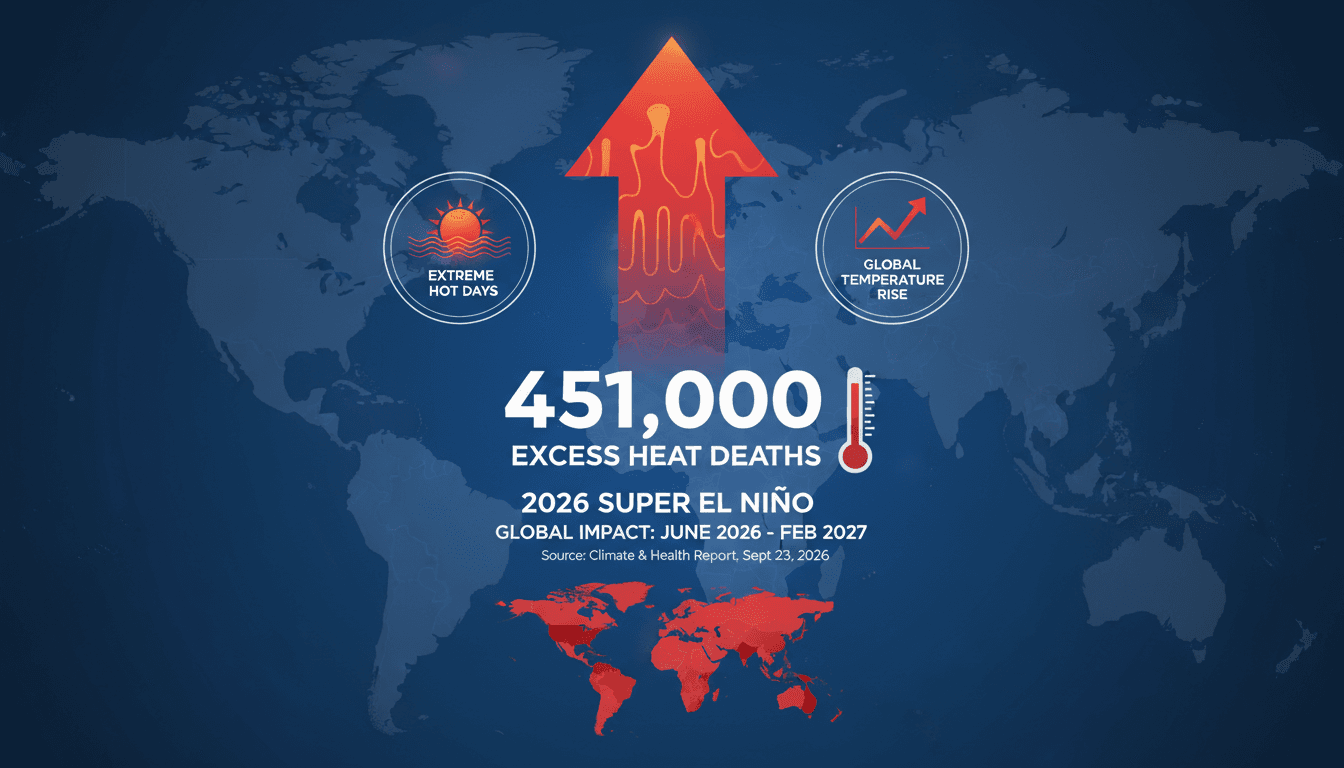
2026 Super El Niño projected to cause 451,000 excess heat-related deaths globally
Why it matters
The projected excess mortality from extreme heat underscores the urgent need for climate adaptation strategies worldwide.
What happened (in 30 seconds)
- On September 23, 2026, the Climate Impact Lab released a report estimating 451,000 excess deaths globally due to extreme heat from the Super El Niño.
- The United States is projected to see approximately 3,500 additional heat-related fatalities between June 2026 and February 2027.
- The analysis highlights a 44% increase in extremely hot days, with global temperatures expected to rise 1.2°C above normal.
The context you actually need
- El Niño is a climate phenomenon characterized by warmer sea surface temperatures in the Pacific, affecting global weather patterns and temperatures.
- The 2026 event has intensified to "super" strength, exacerbated by human-induced climate change, leading to record global heat levels.
- Heat-related mortality projections focus solely on deaths from extreme temperatures, excluding additional risks from droughts, wildfires, and flooding.
What's really happening
The 2026 Super El Niño is a significant climate event that is expected to have far-reaching consequences, particularly in terms of heat-related mortality. This phenomenon occurs when warmer-than-average sea surface temperatures develop in the central and eastern tropical Pacific Ocean, leading to a cascade of climatic changes worldwide. The Climate Impact Lab's report highlights that this year's Super El Niño is not just another instance of this recurring pattern; it has intensified to a "super" level, which is expected to amplify the effects of climate change already being felt globally.
The report estimates that between June 2026 and February 2027, approximately 451,000 excess deaths could be attributed to extreme heat, with the United States alone facing about 3,500 additional fatalities. This stark projection is based on a 44% increase in extremely hot days and a global temperature rise of 1.2°C above normal. The implications of these figures are profound, as they reveal the vulnerability of populations, particularly in tropical and subtropical regions, where heat stress is likely to be most acute.
The analysis draws on localized mortality data across more than 24,000 regions, comparing the projected temperatures during this Super El Niño to historical baselines. This method highlights the stark contrast between expected conditions and what has been experienced in recent decades. While the United States ranks among the top 20 affected nations, its per-capita impact is lower than that of many countries in the Global South, where health systems may be less equipped to handle such crises.
The report serves as a "postcard from the future," illustrating the potential realities of climate-driven conditions that could become commonplace if current trends continue. As extreme heat becomes more frequent and severe, the need for effective climate adaptation strategies becomes increasingly urgent. This includes not only improving public health responses but also addressing the underlying factors contributing to climate change, such as greenhouse gas emissions and land use practices.
Who feels it first (and how)
- Healthcare providers: Increased demand for medical services due to heat-related illnesses.
- Low-income communities: Higher vulnerability to heat stress and limited access to cooling resources.
- Agricultural sectors: Potential crop failures and livestock stress due to extreme temperatures.
- Urban populations: Increased heat island effects in cities, exacerbating health risks.
What to watch next
- Local health responses: Monitor how healthcare systems prepare for the anticipated rise in heat-related illnesses.
- Policy changes: Watch for potential government initiatives aimed at climate adaptation and public health funding.
- Global temperature trends: Keep an eye on temperature data and forecasts to assess the ongoing impact of the Super El Niño.
The 2026 Super El Niño is expected to cause significant increases in heat-related mortality.
Vulnerable populations will experience the most severe impacts, particularly in the Global South.
The full extent of additional mortality from associated climate events like droughts and wildfires remains uncertain.
Frequently Asked Questions
- Why it matters?
- The projected excess mortality from extreme heat underscores the urgent need for climate adaptation strategies worldwide.
- What happened (in 30 seconds)?
- On September 23, 2026, the Climate Impact Lab released a report estimating 451,000 excess deaths globally due to extreme heat from the Super El Niño. The United States is projected to see approximately 3,500 additional heat-related fatalities between June 2026 and February 2027. The analysis highlights a 44% increase in extremely hot days, with global temperatures expected to rise 1.2°C above normal.
- What's really happening?
- The 2026 Super El Niño is a significant climate event that is expected to have far-reaching consequences, particularly in terms of heat-related mortality. This phenomenon occurs when warmer-than-average sea surface temperatures develop in the central and eastern tropical Pacific Ocean, leading to a cascade of climatic changes worldwide. The Climate Impact Lab's report highlights that this year's Super El Niño is not just another instance of this recurring pattern; it has intensified to a "super"
- Who feels it first (and how)?
- Healthcare providers: Increased demand for medical services due to heat-related illnesses. Low-income communities: Higher vulnerability to heat stress and limited access to cooling resources. Agricultural sectors: Potential crop failures and livestock stress due to extreme temperatures. Urban populations: Increased heat island effects in cities, exacerbating health risks.
- What to watch next?
- Local health responses: Monitor how healthcare systems prepare for the anticipated rise in heat-related illnesses. Policy changes: Watch for potential government initiatives aimed at climate adaptation and public health funding. Global temperature trends: Keep an eye on temperature data and forecasts to assess the ongoing impact of the Super El Niño.
Conservative-leaning political and national coverage.
"The Washington Times is a conservative-leaning newspaper known for its political coverage and advocacy of right-of-center viewpoints."
— A47 Editor
Super El Nino could cause 3,500 extra U.S. deaths, report warns
A report warns that the United States could experience an additional 3,500 heat-related deaths over the next six months due to this year's exceptionally strong El Nino, which is expected to elevate global temperatures significantly.
International news coverage curated for readers in the UAE and Gulf region.
"Emirates 24|7 world coverage presents global developments through a UAE-facing and Gulf-relevant editorial lens."
— A47 Editor
El Nino heat could trigger 451,000 extra deaths by 2027
A recent report from the Climate Impact Lab at the University of Chicago warns that the ongoing El Nino phenomenon could result in an additional 451,000 heat-related deaths globally by February 2027, primarily affecting poorer nations already grappli...
Top international stories selected by The Guardian editors.
"The Guardian is known for its progressive editorial stance and in-depth analysis."
— A47 Editor
Huge El Niño projected to cause more than 450,000 deaths by February
A new report indicates that the ongoing super El Niño is projected to cause over 450,000 excess deaths globally by February 2027, with significant impacts expected in regions such as Nigeria, Indonesia, and the US. This alarming forecast highlights t...