
Houthi Missile Strikes Target Saudi Energy Infrastructure Amid Escalating Yemen Conflict
Why it matters
The escalation of conflict in Yemen directly impacts global oil supply chains and prices.
What happened (in 30 seconds)
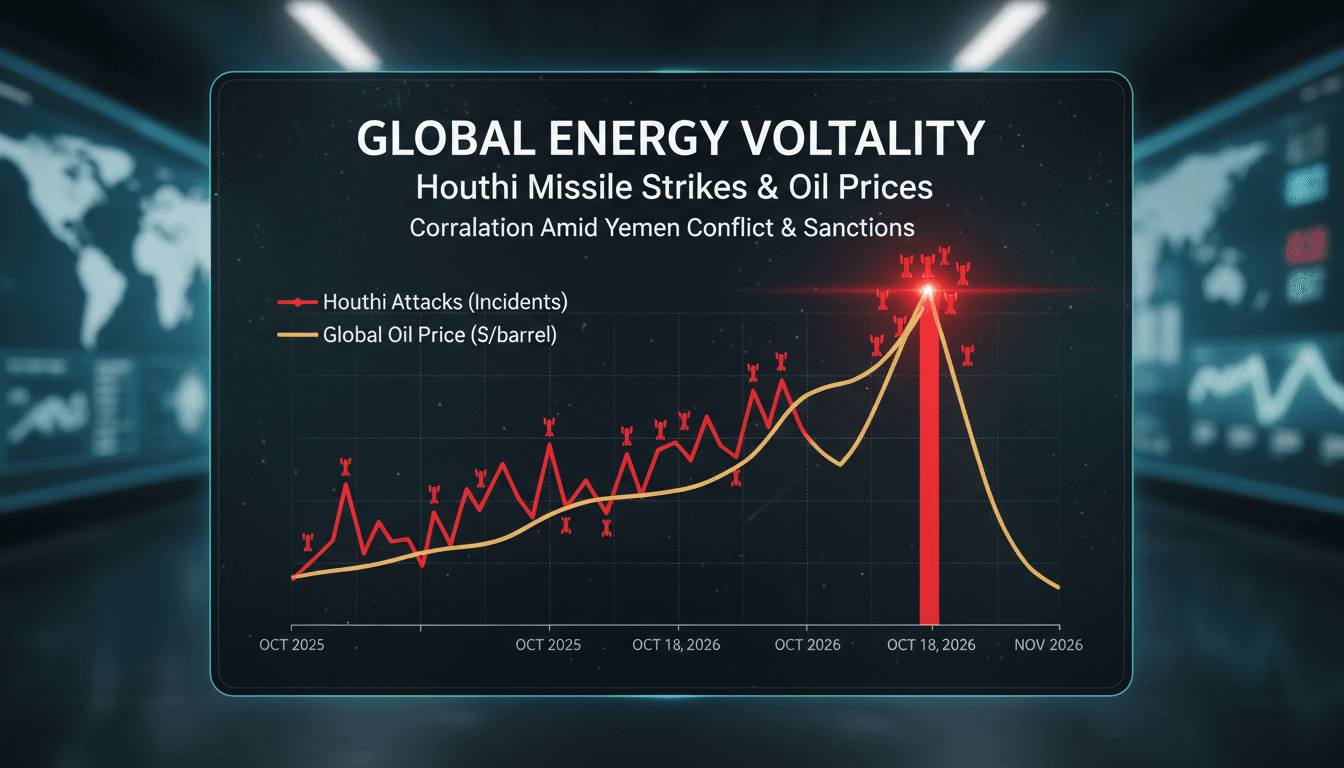
- Houthi forces launched six missile and drone attacks on Saudi Aramco facilities and airports on October 18, 2026.
- Oil prices rebounded after initial losses due to U.S. sanctions on Russia, with Brent crude settling near $109.44 per barrel.
- Geopolitical tensions remain high, particularly around the Bab el-Mandeb Strait and Strait of Hormuz, crucial for global oil transport.
The context you actually need
- The Yemen conflict has intensified, with Houthis retaliating against Saudi-led coalition actions, affecting regional stability.
- Saudi Arabia's energy infrastructure is under threat, raising concerns about supply disruptions that could ripple through global markets.
- U.S. sanctions on Russian energy have complicated the situation, as they aim to ease domestic fuel prices while potentially destabilizing international oil markets.
What's really happening
On October 18, 2026, the Iran-backed Houthi movement executed a series of coordinated missile and drone strikes targeting key Saudi energy infrastructure, including facilities operated by Saudi Aramco in Yanbu and Shaybah, as well as airports in Riyadh and Abha. This escalation is a direct response to ongoing Saudi-led coalition military actions in Yemen, which have intensified in recent months. The Houthis control strategic territories near the Bab el-Mandeb Strait, a critical chokepoint for global oil shipments, making their military capabilities particularly concerning for international markets.
The immediate aftermath of the attacks saw oil prices initially dip due to a waiver of U.S. sanctions on Russian energy exports, aimed at alleviating domestic fuel costs ahead of the midterm elections. However, as fears of supply disruptions grew, prices quickly rebounded. Brent crude settled at approximately $109.44 per barrel, while West Texas Intermediate (WTI) reached around $98.45. This volatility reflects the market's sensitivity to geopolitical tensions, particularly in regions that account for a significant portion of global oil supply.
The situation is further complicated by Iranian threats regarding the Strait of Hormuz, through which about 20% of the world's oil flows. Any effective closure of this strait could lead to severe supply shortages, driving prices even higher. Analysts are closely monitoring these developments, as sustained disruptions in the Middle East could lead to long-term price increases and inflationary pressures globally.
As the conflict continues, the implications extend beyond immediate price fluctuations. The ongoing instability in the region could deter investment in energy infrastructure and lead to a reevaluation of energy security strategies among importing nations. Countries heavily reliant on oil imports, particularly in Europe and Asia, may face increased costs, prompting shifts in energy policy and consumption patterns.
Who feels it first (and how)
- Energy consumers: Higher fuel prices will impact transportation and heating costs.
- Logistics companies: Increased shipping costs due to oil price volatility will affect operational budgets.
- Aviation sector: Airlines may face rising fuel costs, leading to potential fare increases.
- Investors in Gulf markets: Heightened instability could lead to declines in stock prices and increased market volatility.
What to watch next
- Oil price trends: Monitor Brent and WTI prices for signs of sustained volatility or upward pressure.
- Geopolitical developments: Keep an eye on further Houthi attacks or Saudi responses that could escalate tensions.
- U.S. energy policy changes: Watch for any shifts in U.S. sanctions or energy strategies that could impact global supply dynamics.
Oil prices are likely to remain volatile due to geopolitical tensions.
Increased costs for consumers and businesses reliant on oil and energy.
The long-term impact on global energy security and investment in the region.
Frequently Asked Questions
- Why it matters?
- The escalation of conflict in Yemen directly impacts global oil supply chains and prices.
- What happened (in 30 seconds)?
- Houthi forces launched six missile and drone attacks on Saudi Aramco facilities and airports on October 18, 2026. Oil prices rebounded after initial losses due to U.S. sanctions on Russia, with Brent crude settling near $109.44 per barrel. Geopolitical tensions remain high, particularly around the Bab el-Mandeb Strait and Strait of Hormuz, crucial for global oil transport.
- What's really happening?
- On October 18, 2026, the Iran-backed Houthi movement executed a series of coordinated missile and drone strikes targeting key Saudi energy infrastructure, including facilities operated by Saudi Aramco in Yanbu and Shaybah, as well as airports in Riyadh and Abha. This escalation is a direct response to ongoing Saudi-led coalition military actions in Yemen, which have intensified in recent months. The Houthis control strategic territories near the Bab el-Mandeb Strait, a critical chokepoint for gl
- Who feels it first (and how)?
- Energy consumers: Higher fuel prices will impact transportation and heating costs. Logistics companies: Increased shipping costs due to oil price volatility will affect operational budgets. Aviation sector: Airlines may face rising fuel costs, leading to potential fare increases. Investors in Gulf markets: Heightened instability could lead to declines in stock prices and increased market volatility.
- What to watch next?
- Oil price trends: Monitor Brent and WTI prices for signs of sustained volatility or upward pressure. Geopolitical developments: Keep an eye on further Houthi attacks or Saudi responses that could escalate tensions. U.S. energy policy changes: Watch for any shifts in U.S. sanctions or energy strategies that could impact global supply dynamics.
Oil, metals, and agriculture: supply/demand headlines, OPEC chatter, inventories, and price action.
"Solid tape for energy and metals traders tracking macro and micro catalysts."
— A47 Editor
Oil prices pare losses after more Houthi attacks on Saudi energy infrastructure
Oil prices have seen a reduction in losses following a series of Houthi attacks on Saudi energy infrastructure, reflecting ongoing geopolitical tensions in the region. These attacks have raised concerns about the stability of oil supplies from Saudi ...
Global political, business, and cultural coverage from WSJ international desks.
"The Wall Street Journal offers extensive international reporting with a reputation for financial insight and a center-right editorial stance."
— A47 Editor
Oil Futures Pull Back as U.S. Waives Some Russia Sanctions
Oil futures experienced a decline following President Trump's decision to waive newly imposed sanctions on Russia, a move that has raised concerns about the implications for global oil markets. Despite this pullback, persistent supply risks in the Mi...
Global business headlines with AI angles.
"General business outlet that frequently covers AI."
— A47 Editor
Trump Eased Sanctions on Russian Energy. Oil Prices Are Climbing Down.
Former President Donald Trump has eased sanctions on Russian energy just days before they were set to take effect, a move that has raised concerns amid ongoing tensions in Ukraine. This decision allows for greater flexibility in Russian energy operat...
Oil, metals, and agriculture: supply/demand headlines, OPEC chatter, inventories, and price action.
"Solid tape for energy and metals traders tracking macro and micro catalysts."
— A47 Editor
Oil slips as Trump’s sanction waiver may lead to more Russian fuel supplies
Oil prices have slipped following former President Donald Trump's decision to exempt Russia from further sanctions, allowing the import of 300,000 tons of diesel fuel. This waiver is part of an agreement with Russian President Vladimir Putin aimed at...