
Brazil Achieves Record Low Amazon Deforestation Rate Since 1988
Why it matters
This milestone in deforestation rates signals a potential shift in environmental policy that could influence global climate stability and agricultural practices.
What happened (in 30 seconds)
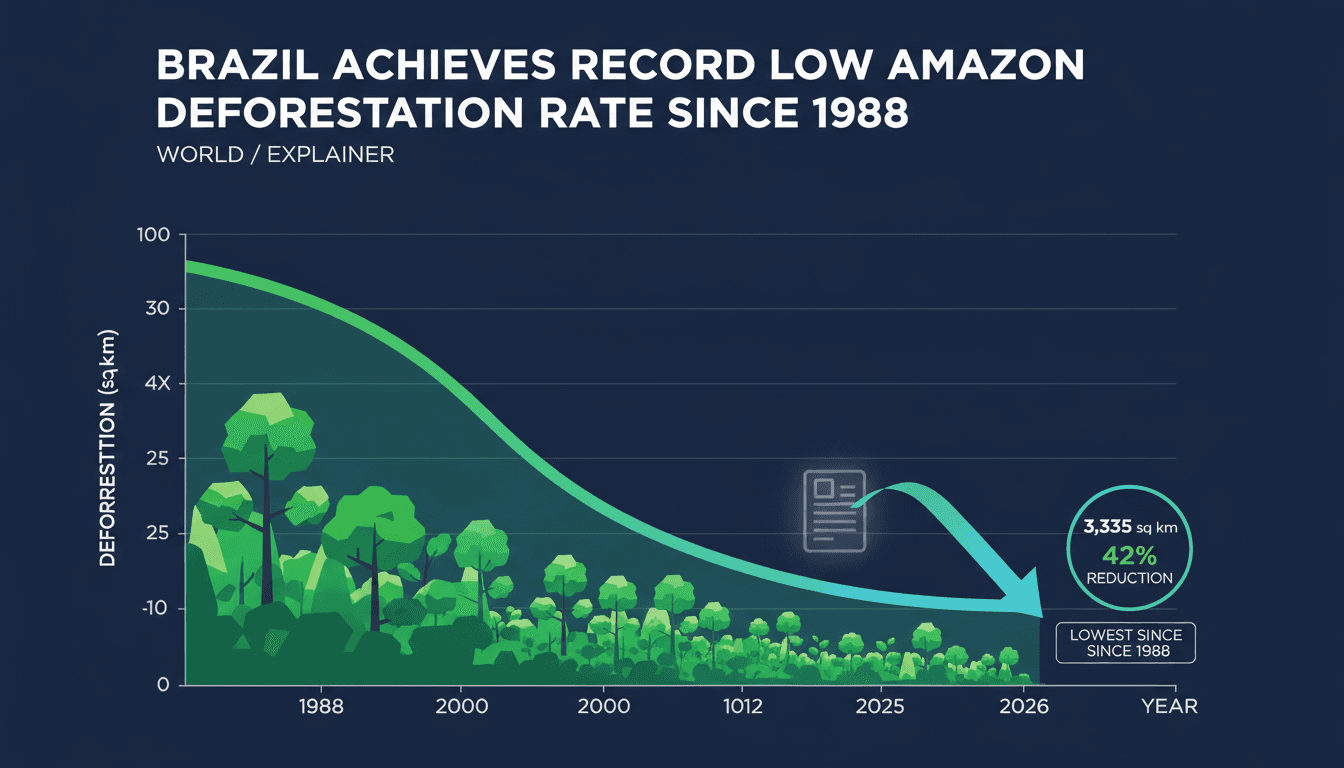
- Brazil announced a record low Amazon deforestation rate of 3,335 square kilometers for the year ending July 2026, a 42% decrease from the previous year.
- The reduction is attributed to President Lula's administration, which reinstated strict enforcement measures and reversed previous policies that encouraged deforestation.
- This announcement comes just ahead of Brazil's presidential runoff election, providing a political boost to Lula's campaign.
The context you actually need
- Deforestation rates surged during Jair Bolsonaro's presidency (2019-2022), averaging about 11,600 square kilometers annually, which raised global concerns about climate change.
- Lula's return to office in January 2023 marked a policy shift, reinstating the Action Plan for the Prevention and Control of Deforestation in the Legal Amazon (PPCDAm) and increasing penalties for illegal activities.
- Cumulative reductions in deforestation have reached 71.2% over four years, showcasing the effectiveness of Lula's environmental policies.
What's really happening
The recent announcement from Brazil's National Institute for Space Research (INPE) regarding the record low deforestation rate in the Amazon is a significant environmental milestone. The figure of 3,335 square kilometers cleared between August 2025 and July 2026 represents a 42% decline from the previous year and is the lowest since monitoring began in 1988. This achievement is largely attributed to the policy reversals and enforcement measures implemented by President Luiz Inácio Lula da Silva's administration, which took office in January 2023.
Under Lula, Brazil has reinstated the Action Plan for the Prevention and Control of Deforestation in the Legal Amazon (PPCDAm), which had been dismantled during the Bolsonaro administration. This plan includes increased satellite monitoring, stricter penalties for illegal logging, and a commitment to achieving zero illegal deforestation by 2030. The Brazilian government has also engaged with environmental organizations, such as Observatório do Clima, to ensure that conservation efforts align with agricultural productivity, demonstrating that economic growth and environmental protection can coexist.
The implications of this reduction in deforestation extend beyond Brazil. The Amazon rainforest plays a crucial role in global climate regulation, acting as a significant carbon sink. By reducing deforestation, Brazil is contributing to the stabilization of global climate patterns, which can have far-reaching effects on weather systems, agricultural yields, and water availability in various regions, including arid zones like Dubai.
Moreover, the political context surrounding this announcement cannot be overlooked. The timing, just days before Brazil's presidential runoff election, suggests that Lula's administration is leveraging this achievement to bolster its political capital. The opposition, aligned with previous policies that favored deforestation, has remained relatively quiet in response to the announcement, indicating a potential shift in public sentiment towards environmental conservation.
As the world grapples with climate change, Brazil's success in reducing deforestation could serve as a model for other nations facing similar challenges. The ongoing commitment to environmental protection, coupled with economic incentives for sustainable practices, may encourage other countries to adopt similar policies, creating a ripple effect in global conservation efforts.
Who feels it first (and how)
- Environmental NGOs: Groups focused on conservation will likely see increased support and funding as public interest in environmental issues grows.
- Agricultural sectors: Farmers and agribusinesses may benefit from sustainable practices that align with conservation efforts, potentially leading to new markets for eco-friendly products.
- Global climate stakeholders: Countries and organizations focused on climate change mitigation will monitor Brazil's progress as a benchmark for their own policies.
What to watch next
- Election outcomes: The results of the October 25 presidential runoff will determine the future of Brazil's environmental policies and their global implications.
- International agreements: Watch for Brazil's participation in global climate agreements and how its deforestation rates influence negotiations.
- Market reactions: Monitor commodity prices and investment flows in response to Brazil's environmental policies and their perceived effectiveness.
Brazil achieved a record low deforestation rate, significantly impacting global climate stabilization efforts.
Lula's administration will continue to enforce strict environmental policies, influencing other nations' approaches to deforestation.
The long-term economic impacts on Brazil's agricultural sector and how they will adapt to sustainable practices remain uncertain.
Frequently Asked Questions
- Why it matters?
- This milestone in deforestation rates signals a potential shift in environmental policy that could influence global climate stability and agricultural practices.
- What happened (in 30 seconds)?
- Brazil announced a record low Amazon deforestation rate of 3,335 square kilometers for the year ending July 2026, a 42% decrease from the previous year. The reduction is attributed to President Lula's administration, which reinstated strict enforcement measures and reversed previous policies that encouraged deforestation. This announcement comes just ahead of Brazil's presidential runoff election, providing a political boost to Lula's campaign.
- What's really happening?
- The recent announcement from Brazil's National Institute for Space Research (INPE) regarding the record low deforestation rate in the Amazon is a significant environmental milestone. The figure of 3,335 square kilometers cleared between August 2025 and July 2026 represents a 42% decline from the previous year and is the lowest since monitoring began in 1988. This achievement is largely attributed to the policy reversals and enforcement measures implemented by President Luiz Inácio Lula da Silva'
- Who feels it first (and how)?
- Environmental NGOs: Groups focused on conservation will likely see increased support and funding as public interest in environmental issues grows. Agricultural sectors: Farmers and agribusinesses may benefit from sustainable practices that align with conservation efforts, potentially leading to new markets for eco-friendly products. Global climate stakeholders: Countries and organizations focused on climate change mitigation will monitor Brazil's progress as a benchmark for their own policies.
- What to watch next?
- Election outcomes: The results of the October 25 presidential runoff will determine the future of Brazil's environmental policies and their global implications. International agreements: Watch for Brazil's participation in global climate agreements and how its deforestation rates influence negotiations. Market reactions: Monitor commodity prices and investment flows in response to Brazil's environmental policies and their perceived effectiveness.
24/7 international news from a French perspective in multiple languages.
"France 24 is viewed as a globally focused outlet with balanced coverage and a European perspective."
— A47 Editor
Brazil: Amazon deforestation at 40-year low
Deforestation in the Amazon rainforest has reached its lowest level in 40 years, a significant achievement for Brazil as President Lula seeks to enhance his environmental record ahead of the presidential election runoff against Flávio Bolsonaro.
Reports on climate change, environmental science, sustainability, and nature.
"BBC News is widely regarded as a reputable international news organization, known for its impartial tone and public service mandate."
— A47 Editor
Brazil sees record fall in Amazon deforestation as key election looms
Brazil has reported a record decline in Amazon rainforest deforestation, a significant shift from the previous administration under Jair Bolsonaro, where deforestation rates surged. This positive trend is crucial as the Amazon plays a vital role in m...
International coverage of politics, culture, and current affairs.
"BBC News is widely regarded as a reputable international news organization, known for its impartial tone and public service mandate."
— A47 Editor
Brazil sees record fall in Amazon deforestation as key election looms
Brazil has reported a record decline in Amazon rainforest deforestation, a significant shift from the previous administration under Jair Bolsonaro, where deforestation rates surged. This positive trend is crucial as the Amazon plays a vital role in m...
International coverage from The Guardian's global desks.
"The Guardian is known for its progressive editorial stance and in-depth analysis."
— A47 Editor
Brazilian Amazon deforestation falls to lowest on record as pivotal vote looms
Deforestation in the Brazilian Amazon has reached its lowest level since records began in 1988, marking a significant achievement for President Luiz Inacio Lula da Silva ahead of the presidential election run-off on October 25. This decline in forest...