
Qatar Mediates Renewed US-Iran Proposal Exchange as Strait of Hormuz Stalemate Persists
Why it matters
The viability of global maritime logistics and regional energy flows rests on whether shuttle diplomacy can de-escalate mutual blockades across the Strait of Hormuz before positions harden further.
What happened (in 30 seconds)
- Active shuttle diplomacy in Tehran: On November 2, 2026, Qatari Prime Minister and Foreign Minister Sheikh Mohammed bin Abdulrahman bin Jassim Al-Thani held over three hours of direct discussions with Iranian Parliament Speaker Mohammad Bagher Ghalibaf following an earlier 12-hour marathon session on October 30–31.
- Real-time exchange of proposals: Qatari and Pakistani mediators are transmitting live draft frameworks between Washington and Tehran, targeting an interim confidence-building agreement centered on phased maritime reopening and economic relief.
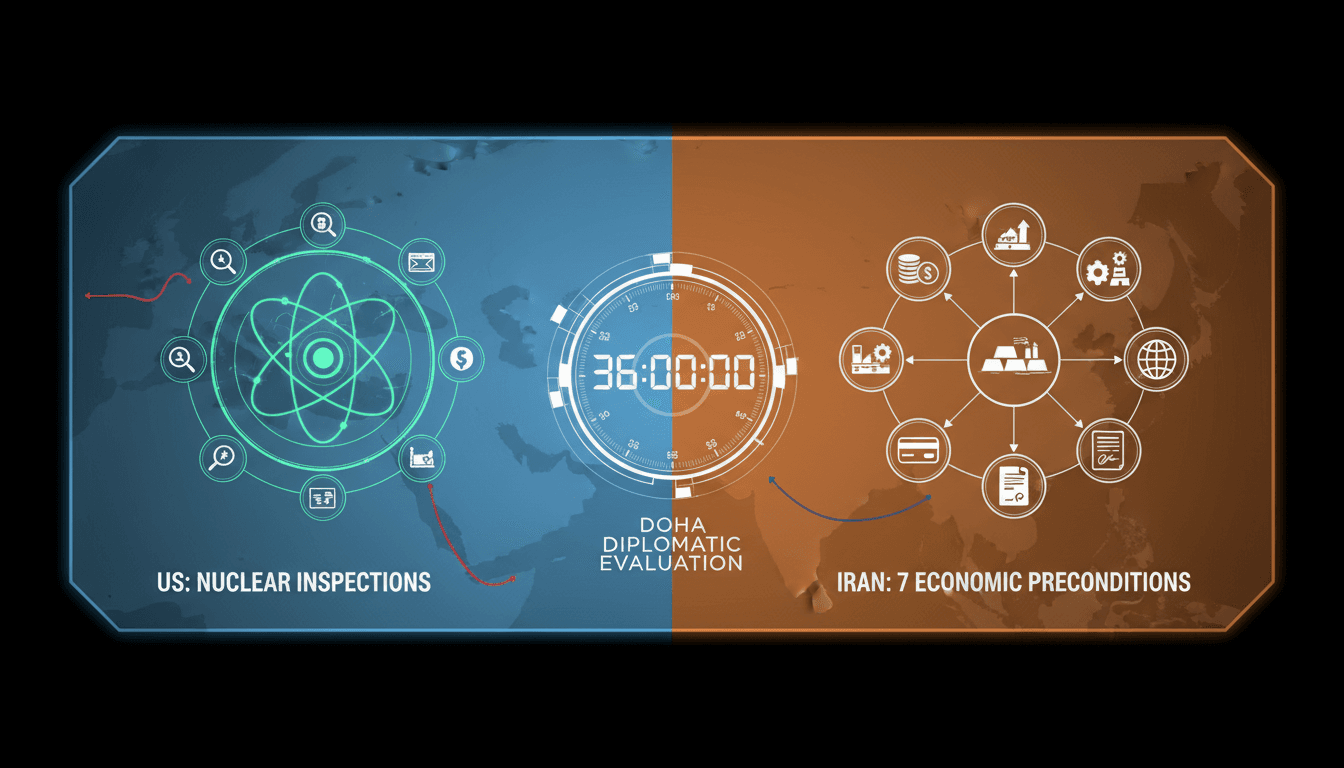
- Significant structural gaps remain: While both sides are reviewing the texts and evaluating responses expected within 36 hours, Iranian officials describe current terms as unconvincing, and no formal agreement has been reached.
The context you actually need
- A multi-stage conflict cycle: The standoff originated with US and Israeli strikes on Iranian targets in late February 2026, triggering reciprocal maritime blockades in the Strait of Hormuz that halted commercial stability.
- A previously collapsed framework: A preliminary ceasefire signed on June 17, 2026, fell apart within weeks, reinforcing profound institutional skepticism on both sides regarding compliance and enforcement mechanisms.
- The leverage at the table: Iran holds an estimated 440 kg stockpile of highly enriched uranium located at sites damaged during prior strikes, creating a core point of contention alongside navigation rights, frozen funds, and sanctions relief.
What's really happening
The negotiation currently managed by Doha and Islamabad is an exercise in sequencing and verified concessions. The operational core of the standoff is not whether both sides desire an exit from the mutual blockade of the Strait of Hormuz, but rather who must absorb the first-mover risk.
For the United States, the primary objective is securing verifiable constraints on nuclear activity and immediate maritime security guarantees from the outset. Washington is hesitant to loosen commercial blockades or unlock frozen sovereign assets without tangible, front-loaded concessions on uranium stocks, particularly given the estimated 440 kg stockpile of highly enriched material held across Iranian sites. In turn, US leadership is calibrating its timeline against domestic political considerations, weighing interim diplomatic wins against potential policy shifts following the midterm elections.
For Tehran, the incentive structure is inverted. Senior Iranian negotiators, including Parliament Speaker Mohammad Bagher Ghalibaf and Foreign Minister Abbas Araqchi, have explicitly framed the reopening of the Strait of Hormuz around seven specific preconditions. These mandate immediate sanctions relief, an end to US-backed blockades, and restored access to frozen sovereign capital before long-term nuclear governance is formally deliberated. Having observed the breakdown of the June 17 ceasefire within weeks of signature, Tehran’s leadership treats deferred economic relief as an unacceptable security risk.
This dynamic explains why Qatari Foreign Ministry spokesman Majed Al Ansari must manage real-time text revisions rather than a single comprehensive treaty. Qatar and Pakistan have structured their draft frameworks as a modular interim confidence-building mechanism. The core proposal offers a compressed schedule: a phased, verified reopening of the Strait of Hormuz occurs in parallel with targeted US adjustments to maritime interdiction protocols and liquidity releases.
The trade-off is clear: Washington is being asked to provide liquidity and trade concessions before achieving full nuclear transparency, while Tehran is being asked to surrender its primary geographical leverage—the closure of a global maritime transit route—before all seven of its strategic demands are met. Because neither party is willing to rely on goodwill, the mediation functions purely on transactional step-by-step synchronization, where any misstep halts the entire chain of implementation.
Who feels it first (and how)
- Gulf logistics and fleet operators: Maritime transport firms navigating the Persian Gulf absorb real-time war-risk insurance adjustments based on the stability of navigation rights through Hormuz.
- Energy trading desks: Analysts and procurement managers pricing crude and refined products experience prompt-month volatility as supply corridors alternate between reopening talks and deadlock.
- Corporate operators in Dubai: Regional headquarters and business leaders reliant on just-in-time sea freight face continued inventory planning buffers and supply chain hedging while the corridor remains restricted.
- Multinational treasury teams: Corporate finance divisions dealing with Gulf-linked contracts must plan for currency and liquidity shifts dictated by the trajectory of frozen asset negotiations and bilateral sanctions.
What to watch next
- The 36-hour feedback window: Review cycles across Washington and Tehran following the November 2 meetings will signal whether technical amendments bridge the reported structural gaps.
- Formal positioning on the seven preconditions: Any shift by Iranian authorities away from strict sequential compliance on all seven demands will indicate true flexibility on the maritime timeline.
- Post-midterm administrative posture: Signals from the White House regarding post-election defense commitments or alternative economic measures will determine whether Washington maintains its current negotiating runway.
Qatar and Pakistan are actively running real-time mediation; negotiations focus on the Strait of Hormuz blockade and nuclear inspections; a prior agreement failed in mid-2026; Iran holds approximately 440 kg of highly enriched uranium; and gaps remain substantial.
An initial agreement, if achieved, will take the form of an interim, highly specific confidence-building framework rather than a broad, permanent diplomatic resolution.
Whether the US administration will accept phased economic concessions without prior nuclear guarantees, and whether Tehran will compromise on its seven non-negotiable preconditions to restore maritime transit.
Frequently Asked Questions
- Why it matters?
- The viability of global maritime logistics and regional energy flows rests on whether shuttle diplomacy can de-escalate mutual blockades across the Strait of Hormuz before positions harden further.
- What happened (in 30 seconds)?
- Active shuttle diplomacy in Tehran: On November 2, 2026, Qatari Prime Minister and Foreign Minister Sheikh Mohammed bin Abdulrahman bin Jassim Al-Thani held over three hours of direct discussions with Iranian Parliament Speaker Mohammad Bagher Ghalibaf following an earlier 12-hour marathon session on October 30–31. Real-time exchange of proposals: Qatari and Pakistani mediators are transmitting live draft frameworks between Washington and Tehran, targeting an interim confidence-building agreemen
- What's really happening?
- The negotiation currently managed by Doha and Islamabad is an exercise in sequencing and verified concessions. The operational core of the standoff is not whether both sides desire an exit from the mutual blockade of the Strait of Hormuz, but rather who must absorb the first-mover risk. For the United States, the primary objective is securing verifiable constraints on nuclear activity and immediate maritime security guarantees from the outset. Washington is hesitant to loosen commercial blocka
- Who feels it first (and how)?
- Gulf logistics and fleet operators: Maritime transport firms navigating the Persian Gulf absorb real-time war-risk insurance adjustments based on the stability of navigation rights through Hormuz. Energy trading desks: Analysts and procurement managers pricing crude and refined products experience prompt-month volatility as supply corridors alternate between reopening talks and deadlock. Corporate operators in Dubai: Regional headquarters and business leaders reliant on just-in-time sea freight
- What to watch next?
- The 36-hour feedback window: Review cycles across Washington and Tehran following the November 2 meetings will signal whether technical amendments bridge the reported structural gaps. Formal positioning on the seven preconditions: Any shift by Iranian authorities away from strict sequential compliance on all seven demands will indicate true flexibility on the maritime timeline. Post-midterm administrative posture: Signals from the White House regarding post-election defense commitments or altern
English-language reporting on Saudi politics, policy, and society.
"Saudi Gazette reflects mainstream Saudi institutional perspectives."
— A47 Editor
Qatar sees hope for US-Iran deal as mediators exchange proposals in real time
Qatar said on Tuesday it remains hopeful that a deal can be reached between the United States and Iran despite fresh US strikes, as mediators exchange proposals in real time after talks in Tehran. A Qatari delegation met Iranian officials for more th...
Global news coverage with extensive reporting on Middle Eastern conflicts and geopolitics.
"Al Jazeera is a Qatar-based broadcaster known for wide regional coverage and alternative perspectives."
— A47 Editor
Iran commander sets out five conditions for regional security
Iran's top military commander has set out five conditions for regional security, as Qatar, acting as mediator, says the United States and Iran are studying proposals to resume negotiations and that Doha is hopeful an agreement can be reached.
Comprehensive coverage of Middle Eastern and global issues.
"Al Jazeera is a prominent voice from the Global South, especially the Middle East, with an emphasis on underreported stories."
— A47 Editor
Iran commander sets out five conditions for regional security
Iran's top military commander has set out five conditions for regional security, as Qatar, acting as mediator, says the United States and Iran are studying proposals to resume negotiations and that Doha is hopeful an agreement can be reached.
Regional coverage and analysis focused on politics, diplomacy, and business across the Middle East.
"Al-Monitor is known for analytical reporting on Middle East politics and policy developments."
— A47 Editor
Iranians have left Doha talks, draft proposal for US deal being circulated, official says
Iranian negotiators have left talks with Qatari mediators in Doha aimed at ending the war with the United States, and a draft proposal for a deal is being circulated with a follow-up meeting possible, an official briefed on the talks said on Monday. ...