
Trilateral Abu Dhabi Talks Between Russia Ukraine and United States Fail to Shift Putin's Core Security Demands
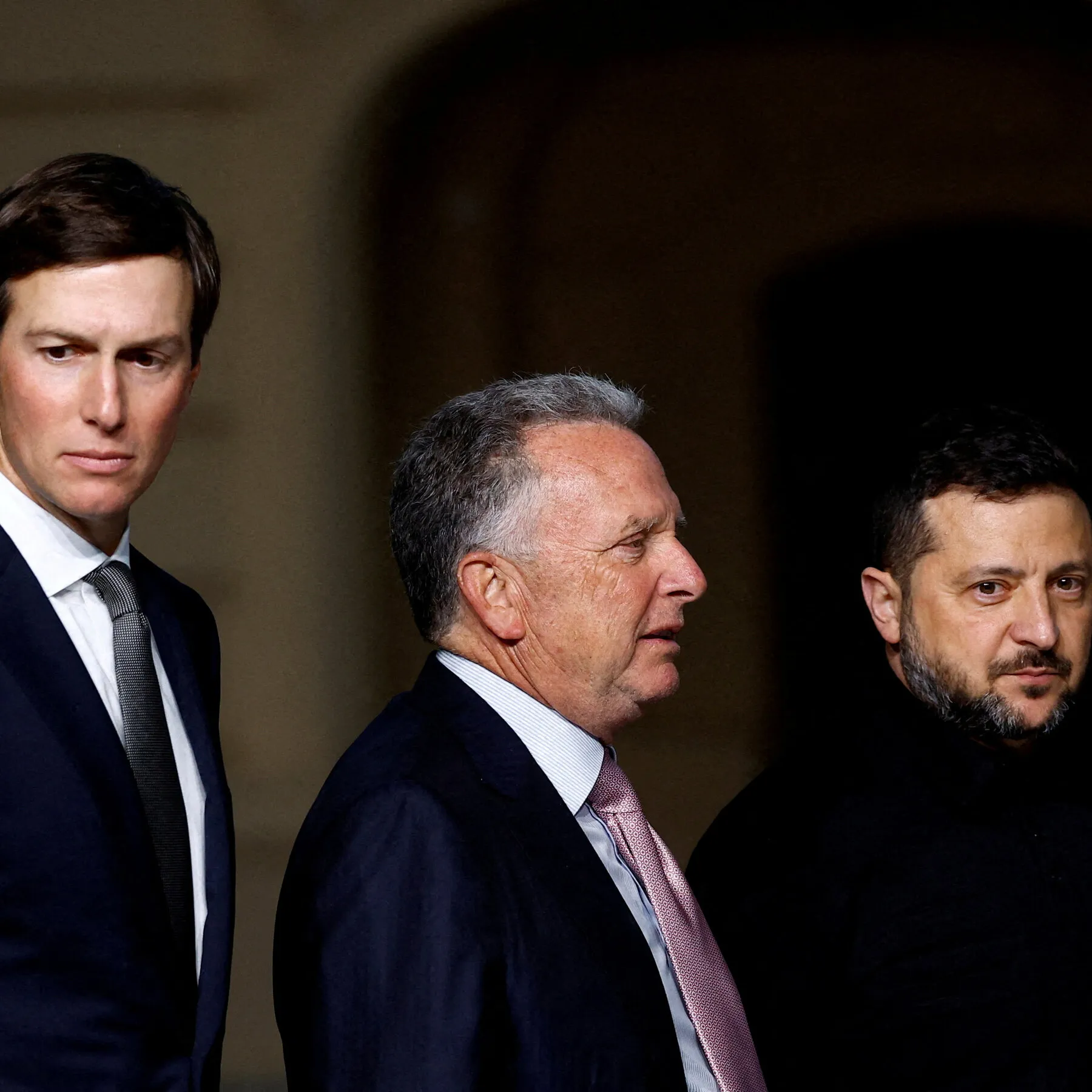
For global operators navigating cross-border trade, persistent core security demands will keep geopolitical risk premia and regional compliance barriers firmly in place regardless of transactional diplomatic overtures.
Why it matters
The divergence between commercial incentives and structural security objectives signals that baseline sanctions regimes and realigned international supply corridors will remain permanent operational realities.
What happened (in 30 seconds)
- Trilateral negotiations convened in Abu Dhabi: Envoys Steve Witkoff and Jared Kushner led a nearly four-hour session on November 10, 2026, marking the first U.S.-mediated meeting between Russian and Ukrainian representatives in nine months.
- Maximalist security demands remained static: The Russian delegation, led by Vladimir Medinsky, reiterated non-negotiable requirements covering Ukrainian military limitations, formal NATO exclusion, and territorial withdrawals.
- Commercial proposals offered insufficient leverage: Despite an emphasis by the U.S. administration on transactional economic partnerships to build goodwill, Moscow maintained that core security architectures take absolute priority over bilateral trade incentives.
The context you actually need
- A multi-year territorial baseline: Approximately one-fifth of Ukrainian territory remains under Russian control as of late 2026, establishing a physical reality that heavily influences diplomatic leverage on the ground.
- The limits of commercial diplomacy: Preceding consultations in early 2026 attempted to decouple commercial initiatives from sovereign territorial integrity, but historical posture confirms sovereign alignment outweighs corporate inducements.
- The Gulf’s convening role: Hosted in the UAE capital, the talks underscore the region’s established position as a neutral venue for complex multilateral mediation, directly impacting energy market sentiment without introducing local economic volatility.
What's really happening
The November 10, 2026 meetings in Abu Dhabi reveal a fundamental disconnect in negotiation architecture: the tension between transactional diplomacy and existential security paradigms. The U.S. negotiating team entered the talks relying on an incentive framework rooted in commercial cooperation. Under this model, prospective business partnerships and the easing of economic isolation are presented as valuable leverage points designed to purchase tactical flexibility.
However, an incentive-based structural analysis shows why this calculus has not shifted Moscow’s strategic baseline. For the Russian leadership, the core objectives articulated since 2022—codified limits on Ukrainian sovereign defense capability, absolute prohibitions on NATO accession, and the formalized recognition of territorial control—are systemic priorities. Within this structural hierarchy, potential corporate investments or trade mechanisms do not offset the perceived long-term costs of compromising on sovereign strategic depth.
The four-hour session, which brought together Ukrainian Defense Minister Rustem Umerov and Russian negotiator Vladimir Medinsky alongside U.S. intermediaries, demonstrated that economic engagement cannot bridge competing security architectures. While U.S. officials cited constructive movement on peripheral operational tracks such as humanitarian coordination, the structural gaps on territorial borders and defense treaties remain intact.
For the international market, this structural stalemate clarifies forward expectations. The diplomatic strategy assumed that the economic friction accumulated since 2022 could be neutralized through private-sector upside. In reality, modern security architecture operates largely independent of corporate deal-making. Consequently, international firms must understand that geopolitical realignment is not a temporary pricing anomaly subject to swift diplomatic resolution. The persistence of Moscow’s non-negotiable red lines guarantees that the fragmentation of global supply chains, energy distribution corridors, and dual-track financial clearing channels will remain the baseline operating environment for the foreseeable future.
Who feels it first (and how)
- Supply chain and logistics planners: Experience continued routing friction and elevated transit insurance costs across Eastern European transport nodes as territorial baselines hold.
- Cross-border enterprise legal teams: Must sustain complex sanctions monitoring programs rather than planning for regulatory normalization or cross-border contract enforcement.
- Gulf-based energy and trading desks: Benefit from localized diplomatic stability in the UAE while recalibrating strategic reserves against prolonged European structural gridlock.
- Multinational corporate treasurers: Continue hedging against prolonged currency divergence and capital flow restrictions rather than budgeting for market reintegration.
What to watch next
- European sovereign defense spending metrics: Signals whether continental governments will accelerate independent security commitments amid static frontlines and persistent non-alignment demands.
- Follow-up bilateral technical sessions: Will indicate if small-scale humanitarian frameworks can survive without consensus on formal territorial demarcations.
- OPEC+ coordination postures: Tracks whether regional mediation momentum impacts Gulf energy producers' production policies relative to broader Russian export volumes.
Delegations met for nearly four hours in Abu Dhabi under U.S. mediation on November 10, 2026, with no concessions granted on Russian territorial or NATO non-membership demands.
Corporate incentive packages will continue to fall short of producing diplomatic concessions on fundamental European border definitions.
The exact compromise threshold, if any, at which the sovereign leadership in Kyiv or Moscow would accept intermediary security guarantees without definitive treaties.
Frequently Asked Questions
- Why it matters?
- The divergence between commercial incentives and structural security objectives signals that baseline sanctions regimes and realigned international supply corridors will remain permanent operational realities.
- What happened (in 30 seconds)?
- Trilateral negotiations convened in Abu Dhabi: Envoys Steve Witkoff and Jared Kushner led a nearly four-hour session on November 10, 2026, marking the first U.S.-mediated meeting between Russian and Ukrainian representatives in nine months. Maximalist security demands remained static: The Russian delegation, led by Vladimir Medinsky, reiterated non-negotiable requirements covering Ukrainian military limitations, formal NATO exclusion, and territorial withdrawals. Commercial proposals offered ins
- What's really happening?
- The November 10, 2026 meetings in Abu Dhabi reveal a fundamental disconnect in negotiation architecture: the tension between transactional diplomacy and existential security paradigms. The U.S. negotiating team entered the talks relying on an incentive framework rooted in commercial cooperation. Under this model, prospective business partnerships and the easing of economic isolation are presented as valuable leverage points designed to purchase tactical flexibility. However, an incentive-based
- Who feels it first (and how)?
- Supply chain and logistics planners: Experience continued routing friction and elevated transit insurance costs across Eastern European transport nodes as territorial baselines hold. Cross-border enterprise legal teams: Must sustain complex sanctions monitoring programs rather than planning for regulatory normalization or cross-border contract enforcement. Gulf-based energy and trading desks: Benefit from localized diplomatic stability in the UAE while recalibrating strategic reserves against pr
- What to watch next?
- European sovereign defense spending metrics: Signals whether continental governments will accelerate independent security commitments amid static frontlines and persistent non-alignment demands. Follow-up bilateral technical sessions: Will indicate if small-scale humanitarian frameworks can survive without consensus on formal territorial demarcations. OPEC+ coordination postures: Tracks whether regional mediation momentum impacts Gulf energy producers' production policies relative to broader Rus
Conservative-leaning coverage of current events.
"Fox News is a highly influential conservative news outlet known for right-leaning political commentary and coverage."
— A47 Editor
Kushner enters Ukraine peace talks as Trump eyes securing safeguards against another Russian invasion
Jared Kushner and Steve Witkoff have entered Ukraine peace talks as the United States pushes for a NATO-like security guarantee for Ukraine, aimed at deterring another Russian invasion, as first trilateral talks in Abu Dhabi take up territorial dispu...
Markets, economy, and company analysis from NYT’s business desk.
"The New York Times is a globally recognized newspaper offering authoritative reporting with a center-left editorial stance."
— A47 Editor
Why U.S. Business Deals Are Unlikely to Get Putin to Give Any Ground
President Vladimir V. Putin of Russia has shown a willingness to endure a high price to achieve his aims in Ukraine, and analysts say he sees little reason to stop fighting now, even as U.S. envoys Jared Kushner and Steve Witkoff prepare for further ...
International stories from NPR’s global desk.
"NPR is an American public media organization known for thoughtful reporting and a slightly left-leaning editorial tone."
— A47 Editor
Kushner and Witkoff renew peace talks to end war between Russia and Ukraine
Envoys Jared Kushner and Steve Witkoff, representing President Donald Trump, are in Abu Dhabi with negotiators from Russia and Ukraine to resume peace talks aimed at ending the nearly five-year full-scale war triggered by Moscow's invasion of Ukraine...