
Wall Street Adopts Catastrophe Models to Forecast Economic Impact of Military Conflicts
Here's what it means for you.
The increasing use of catastrophe modeling techniques by Wall Street signifies a pivotal shift in how financial institutions assess risks associated with military conflicts. As geopolitical tensions rise, the adaptation of these models, originally designed for natural disasters, highlights the urgency for investors, banks, and insurers to refine their risk management strategies. This evolution in predictive analytics could reshape investment decisions and policy-making in response to global instability.
What happened
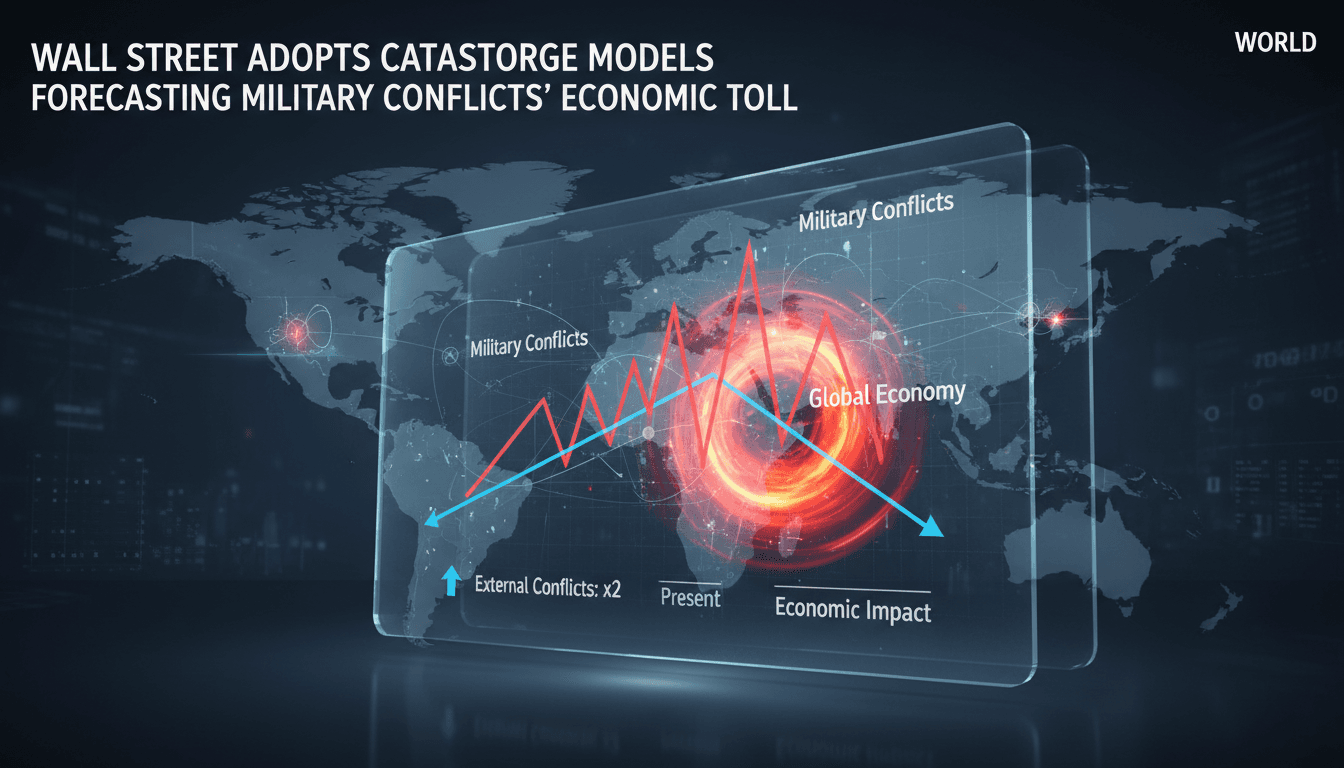
Wall Street is now adopting catastrophe modeling techniques to forecast the economic impacts of military conflicts. This shift is a response to the significant rise in the number of countries engaged in external conflicts, which has doubled since 2008. Financial institutions are increasingly recognizing the need to adapt their risk assessment strategies to better manage the economic fallout from these conflicts.
The economic cost of military conflicts is staggering, estimated at $22 trillion. This figure underscores the importance of effective risk management strategies as investors, banks, and insurers seek to mitigate the associated risks. By leveraging advanced modeling techniques, these institutions aim to navigate the complexities of geopolitical instability.
The Context
The adaptation of catastrophe models for military conflict predictions is driven by the increasing complexity of global risks. Since 2008, the number of countries involved in external conflicts has surged, prompting a reevaluation of traditional risk assessment methodologies. Financial institutions are racing to incorporate war into their risk scenarios, recognizing that the economic ramifications of these conflicts can be profound.
As geopolitical tensions escalate, the urgency for accurate predictive models becomes more pronounced. The integration of these advanced techniques into financial risk assessments is likely to become a standard practice, emphasizing the importance of preparedness in the face of uncertainty. This evolution reflects a broader trend in the financial sector to adapt to changing global dynamics.
Takeaway
As geopolitical tensions continue to rise, financial institutions will likely refine their predictive models to better navigate the associated risks. Monitoring developments in military conflicts globally will be crucial for investors and policymakers alike. Additionally, advancements in data analytics and modeling techniques in finance will play a significant role in shaping future risk assessments.
The integration of catastrophe modeling into financial strategies represents a proactive approach to managing the economic impacts of military conflicts. This trend highlights the necessity for stakeholders to remain vigilant and adaptable in an increasingly volatile global landscape.
Corporate leadership, finance, technology, and market trends.
"Fortune covers financial trends, leadership, and innovation with a pragmatic editorial approach."
— A47 Editor
Wall Street is gaining access to new catastrophe models to help predict wars
Wall Street is gaining access to new catastrophe models that are being adapted from natural disaster predictions to forecast military conflicts. This innovative approach is being driven by the need for investors, banks, and insurers to better underst...
Business and economy coverage focused on Dubai, the UAE, Saudi Arabia, and the wider Middle East.
"Arabian Business is a well-known regional business outlet with strong focus on Gulf markets, leadership, and investment stories."
— A47 Editor
Wall Street using new data models to incorporate war into its risk scenarios
Wall Street is increasingly utilizing new data models to incorporate the impact of wars into its risk scenarios, as the number of countries involved in external conflicts has doubled since 2008, resulting in an economic cost of $22 trillion. This shi...
Global markets, investing, and macroeconomics from a premier financial newsroom.
"Bloomberg is respected for in-depth financial reporting and data-driven analysis."
— A47 Editor
Wall Street Is Gaining Access to New Catastrophe Models to Help Predict Wars
Wall Street is adapting its risk assessment strategies to include military conflicts, utilizing new catastrophe models originally designed for natural disasters. This shift reflects a growing recognition of the impact that wars can have on financial ...