
El Niño Floods Strike Northern Peru and Coastal Ecuador with Rescues and Evacuations on November 28 2026
Why it matters
A historically strong El Niño event is driving severe infrastructure destruction across Peru and Ecuador, dampening regional GDP growth and accelerating food-driven inflation across the Pacific coastline.
What happened (in 30 seconds)
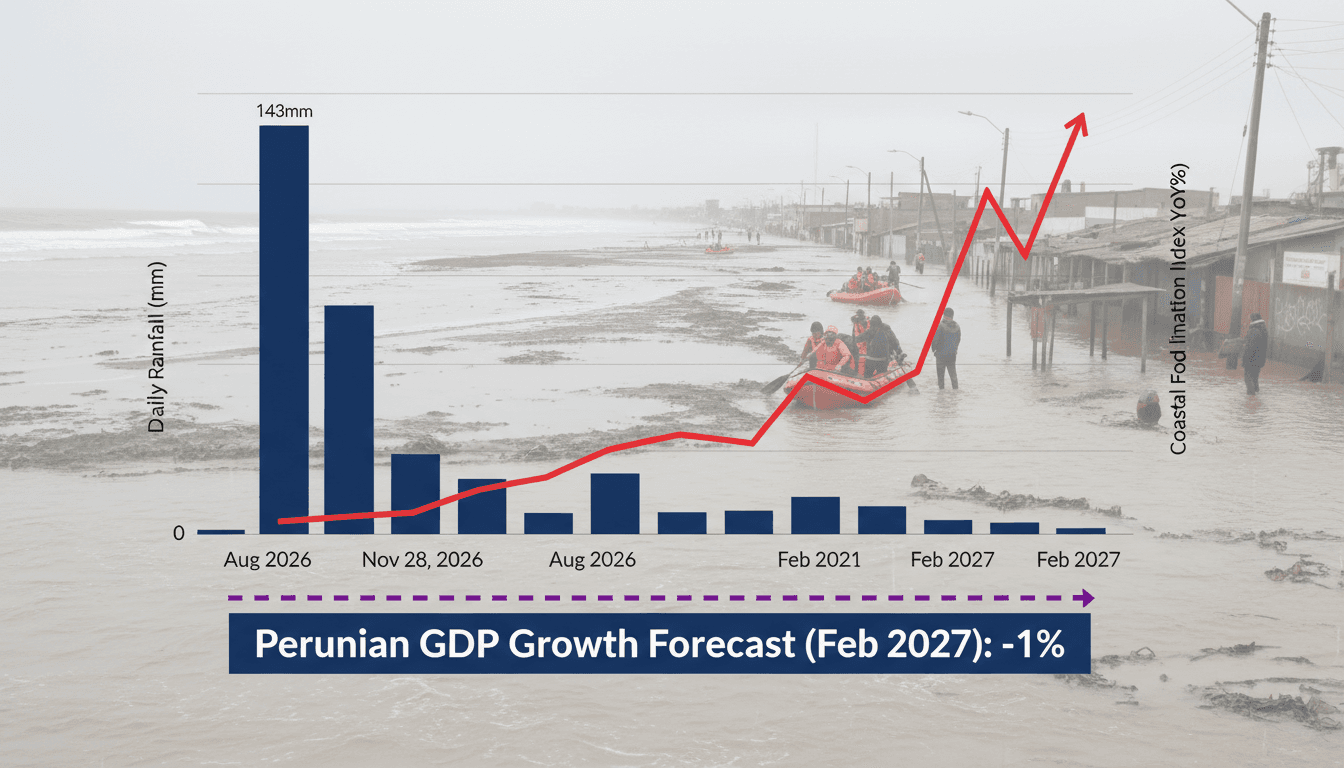
- Record deluges hit South America's Pacific rim: On November 28, 2026, intense river overflows inundated northern Peru and coastal Ecuador, flooding urban centers such as Piura to waist height following 143mm of rain in a single 24-hour window.
- Human and operational disruptions escalated: In Ecuador, 34 deaths have been recorded since August alongside 47,000 affected residents, evacuations in Esmeraldas, over 50 damaged highway sections, and the forced relocation of voting stations across five provinces.
- Emergency protocols expanded: Peruvian President Keiko Fujimori deployed the Peruvian National Police and local emergency teams to rescue 400 stranded residents in Piura, while forecasters maintained red alerts through February 2027.
The context you actually need
- A supercharged cyclical baseline: El Niño represents a natural warming pattern in the tropical Pacific Ocean that shifts global precipitation; this cycle attained rare "super" status in September 2026, intensified by broader climate changes.
- Advance declarations materialized: Both Peru and Ecuador instituted preemptive national states of emergency earlier in 2026, modeling severe vulnerabilities across primary sectors including crop agriculture, maritime fishing, and transit networks.
- Direct macroeconomic drag: Lima registered annual inflation above 5% in October 2026 on the back of rising grocery and fish costs, with Peru's central bank projecting a reduction of nearly one full percentage point from baseline GDP growth.
What's really happening
The November 28 inundation across northern Peru and Ecuador exposes the acute economic vulnerability of Pacific littoral economies during peak El Niño episodes. When sea surface temperatures rise in the eastern equatorial Pacific, atmospheric moisture surges, shifting typical arid coastal belts into corridors of sustained, concentrated precipitation. In Piura, 143mm of rain fell within 24 hours—a volume sufficient to swamp coastal drainage systems, paralyze municipal operations, and trap residents across major population hubs.
The structural impact extends far beyond immediate disaster response. The physical geography of northern Peru and coastal Ecuador houses critical agricultural production and primary fisheries. Persistent oceanic warming drives commercial fish species away from traditional coastal waters, compressing landing volumes for key marine exports. Simultaneously, river deluges waterlog industrial croplands and disrupt harvest schedules. These supply contractions immediately enter the consumer basket: agricultural losses and reduced fish yields pushed Lima’s annual inflation rate above 5% in October 2026, forcing households to reallocate discretionary spending toward basic foodstuffs.
Transit infrastructure acts as the secondary choke point. With over 50 highway segments severed or damaged in Ecuador, domestic transit routes connecting interior agricultural valleys to coastal commercial ports are compromised. The resulting friction increases shipping overheads, extends delivery lead times, and strands regional merchandise. In Ecuador, logistics failures reached the administrative core, requiring the relocation of polling locations across five provinces for scheduled local elections on November 29.
These supply shocks generate direct fiscal consequences. National budgets in Quito and Lima must pivot toward emergency infrastructure rehabilitation, municipal drainage repairs, and humanitarian transfers. Peru's central bank has factored these headwinds into its baseline outlook, projecting that the ongoing climate shock will shave nearly one percentage point off domestic GDP expansion. Because forecasters warn that extraordinary ocean warming will persist through February 2027, commercial operators face a prolonged cycle of elevated transportation costs, reduced primary output, and suppressed domestic demand.
Who feels it first (and how)
- Coastal agricultural and fisheries producers: Operators in Piura, Tumbes, and coastal Ecuador face direct asset loss from waterlogged fields, road damage, and disrupted marine stocks.
- Urban consumers in coastal metros: Residents in Lima and regional urban centers absorb food-driven price spikes as essential groceries push urban inflation above 5%.
- Logistics and freight operators: Regional transit companies bear elevated vehicle maintenance costs and route delays across more than 50 damaged road corridors in Ecuador.
- Local municipal administrations: Civic authorities encounter immediate budget reallocations to cover emergency housing, drainage pumping, and polling station relocations.
What to watch next
- February 2027 ocean temperature thresholds: Continued red-alert marine readings through early 2027 will determine whether agricultural losses roll into the primary Q1 harvest season.
- Central bank policy adjustments: Track upcoming rate announcements from Peru’s central bank to see if monetary policy tightens to counteract stubborn food inflation amid the projected 1% hit to GDP.
- Infrastructure restoration timelines: Monitor repair schedules along Ecuador’s highway network and Peruvian urban corridors to gauge how quickly commercial supply lines recover.
Piura absorbed 143mm of rainfall in 24 hours on November 27–28; Ecuador has recorded 34 casualties and 47,000 individuals affected since August 2026; food inflation pushed Lima's annual rate beyond 5%.
Red-alert rainfall patterns will maintain operational delays across logistics networks and agricultural processing hubs along the Peru-Ecuador border through February 2027.
The exact duration required to repair over 50 severed road corridors in Ecuador and whether secondary crop yields will recover before mid-2027.
Frequently Asked Questions
- Why it matters?
- A historically strong El Niño event is driving severe infrastructure destruction across Peru and Ecuador, dampening regional GDP growth and accelerating food-driven inflation across the Pacific coastline.
- What happened (in 30 seconds)?
- Record deluges hit South America's Pacific rim: On November 28, 2026, intense river overflows inundated northern Peru and coastal Ecuador, flooding urban centers such as Piura to waist height following 143mm of rain in a single 24-hour window. Human and operational disruptions escalated: In Ecuador, 34 deaths have been recorded since August alongside 47,000 affected residents, evacuations in Esmeraldas, over 50 damaged highway sections, and the forced relocation of voting stations across five pr
- What's really happening?
- The November 28 inundation across northern Peru and Ecuador exposes the acute economic vulnerability of Pacific littoral economies during peak El Niño episodes. When sea surface temperatures rise in the eastern equatorial Pacific, atmospheric moisture surges, shifting typical arid coastal belts into corridors of sustained, concentrated precipitation. In Piura, 143mm of rain fell within 24 hours—a volume sufficient to swamp coastal drainage systems, paralyze municipal operations, and trap residen
- Who feels it first (and how)?
- Coastal agricultural and fisheries producers: Operators in Piura, Tumbes, and coastal Ecuador face direct asset loss from waterlogged fields, road damage, and disrupted marine stocks. Urban consumers in coastal metros: Residents in Lima and regional urban centers absorb food-driven price spikes as essential groceries push urban inflation above 5%. Logistics and freight operators: Regional transit companies bear elevated vehicle maintenance costs and route delays across more than 50 damaged road
- What to watch next?
- February 2027 ocean temperature thresholds: Continued red-alert marine readings through early 2027 will determine whether agricultural losses roll into the primary Q1 harvest season. Central bank policy adjustments: Track upcoming rate announcements from Peru’s central bank to see if monetary policy tightens to counteract stubborn food inflation amid the projected 1% hit to GDP. Infrastructure restoration timelines: Monitor repair schedules along Ecuador’s highway network and Peruvian urban corr
Global news coverage with extensive reporting on Middle Eastern conflicts and geopolitics.
"Al Jazeera is a Qatar-based broadcaster known for wide regional coverage and alternative perspectives."
— A47 Editor
El Nino floods hit Peru and Ecuador, forcing rescues and evacuations
Floods linked to El Niño have killed at least 34 people in Ecuador since August, forcing rescues and evacuations across parts of Peru and Ecuador, as forecasters warn that heavy rain will continue.
Comprehensive coverage of Middle Eastern and global issues.
"Al Jazeera is a prominent voice from the Global South, especially the Middle East, with an emphasis on underreported stories."
— A47 Editor
El Nino floods hit Peru and Ecuador, forcing rescues and evacuations
Floods linked to El Niño have killed at least 34 people in Ecuador since August, forcing rescues and evacuations across parts of Peru and Ecuador, as forecasters warn that heavy rain will continue.
Conservative-leaning political and national coverage.
"The Washington Times is a conservative-leaning newspaper known for its political coverage and advocacy of right-of-center viewpoints."
— A47 Editor
Rivers overflow in Peru and Ecuador as a powerful El Nino drenches the region
Rivers overflowed across northern Peru and coastal Ecuador on Saturday, prompting water rescues, evacuations and road closures as relentless storms dumped rain on the region, according to The Washington Times.
Global news coverage with extensive reporting on Middle Eastern conflicts and geopolitics.
"Al Jazeera is a Qatar-based broadcaster known for wide regional coverage and alternative perspectives."
— A47 Editor
El Nino-linked deluges flood cities in Peru, Ecuador
El Niño-linked torrential rains have flooded cities in Peru and Ecuador, with heavy rains affecting about 2,000 families in Peru's Piura region and roughly 47,000 people in Ecuador, where 34 deaths have been reported.
Comprehensive coverage of Middle Eastern and global issues.
"Al Jazeera is a prominent voice from the Global South, especially the Middle East, with an emphasis on underreported stories."
— A47 Editor
El Nino-linked deluges flood cities in Peru, Ecuador
El Niño-linked torrential rains have flooded cities in Peru and Ecuador, with heavy rains affecting about 2,000 families in Peru's Piura region and roughly 47,000 people in Ecuador, where 34 deaths have been reported.