
West African leaders approve $25 billion gas pipeline from Nigeria to Morocco
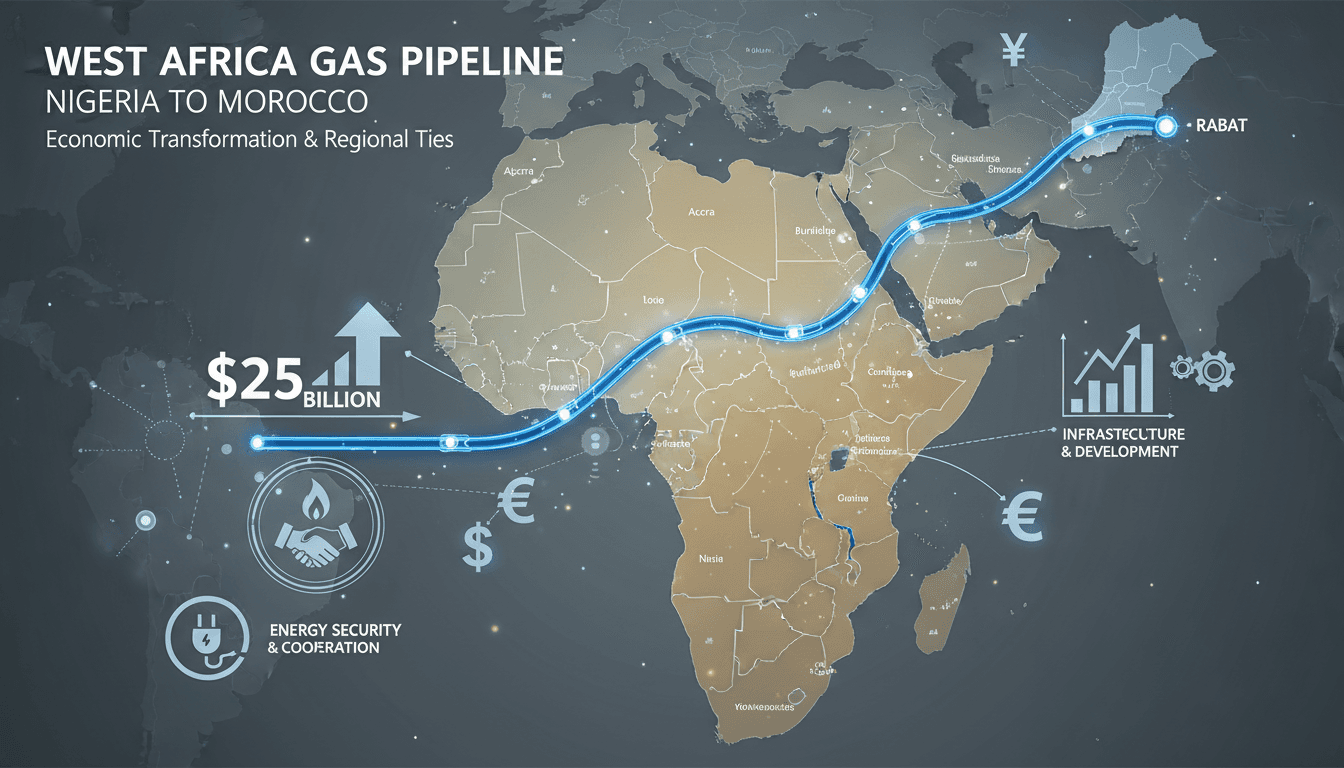
Here's what it means for you.
The approval of the Nigeria-Morocco gas pipeline represents a significant step towards enhancing energy security in West Africa. This $25 billion project is poised to transform the region's energy landscape, fostering economic cooperation among 14 countries. As construction is set to begin in 2028, stakeholders should prepare for shifts in energy supply dynamics and infrastructure development. The pipeline's extensive reach of 6,000 kilometers underscores the commitment of West African leaders to collaborate on energy initiatives. This project could also attract international investments, further integrating the region into the global energy market.
What happened
Leaders from 14 West African countries have officially approved a major gas pipeline project linking Nigeria to Morocco. This ambitious initiative, which will span 6,000 kilometers along the Atlantic coast, is expected to begin construction in 2028. The project was greenlit during a summit of the Economic Community of West African States (ECOWAS), highlighting the collective effort to enhance regional energy cooperation.
The pipeline aims to facilitate the transportation of natural gas from Nigeria, a country rich in gas reserves, to Morocco. This development is anticipated to significantly boost gas supply and infrastructure in West Africa, addressing energy needs across the region.
The Context
The approval of the Nigeria-Morocco gas pipeline comes at a time when energy security is a pressing concern for many West African nations. By connecting Nigeria's vast gas resources with Morocco, the project seeks to enhance economic cooperation and energy access throughout the region. The initiative reflects a broader strategy among West African leaders to collaborate on energy infrastructure and security.
This project traverses 14 countries, indicating a strong commitment to regional integration. The pipeline not only aims to improve energy supply but also to foster economic growth and development across the participating nations.
Takeaway
As the Nigeria-Morocco gas pipeline progresses towards its 2028 construction start date, it will be essential to monitor its impact on regional energy dynamics. The project is expected to attract partnerships and investments from international energy companies, which could further enhance its viability. Observers should keep an eye on how this initiative influences economic partnerships and energy cooperation in West Africa.
The successful implementation of this pipeline could serve as a model for future regional projects, potentially altering the energy landscape and strengthening ties among West African nations.
Arabic-language political and world news coverage for UAE readers.
"Emarat Al Youm world coverage usually presents international developments through a UAE and Arab audience lens."
— A47 Editor
مشروع لخط أنابيب غاز بين نيجيريا والمغرب مشروع لخط أنابيب غاز بين نيجيريا والمغرب
Leaders of West African countries approved the construction of a gas pipeline connecting Nigeria and Morocco during a summit, which will span 6,000 kilometers across 13 nations along the Atlantic coast. This project aims to enhance energy cooperation...
Corporate news, economic trends, and markets with UK and global scope.
"BBC News is widely regarded as reputable and impartial, with a public service mandate."
— A47 Editor
West Africa signs off $25bn mega gas-pipeline plan
West African nations have approved a $25 billion mega gas-pipeline project that will span 6,000 kilometers along the Atlantic coast, set to commence construction in 2028. This ambitious infrastructure initiative aims to enhance regional energy connec...
Pan-Arab news coverage spanning politics, business, sports, and regional affairs.
"Asharq Al-Awsat reflects a broad Arab editorial perspective with strong attention to regional geopolitics."
— A47 Editor
قادة غرب أفريقيا يقرون مشروع خط أنابيب الغاز بين نيجيريا والمغرب
Leaders of West African nations have signed an agreement to establish a gas pipeline connecting Nigeria and Morocco during the Economic Community of West African States summit. This initiative aims to enhance energy cooperation and infrastructure dev...