
U.S.-Iran conflict escalates leading to significant oil price surge
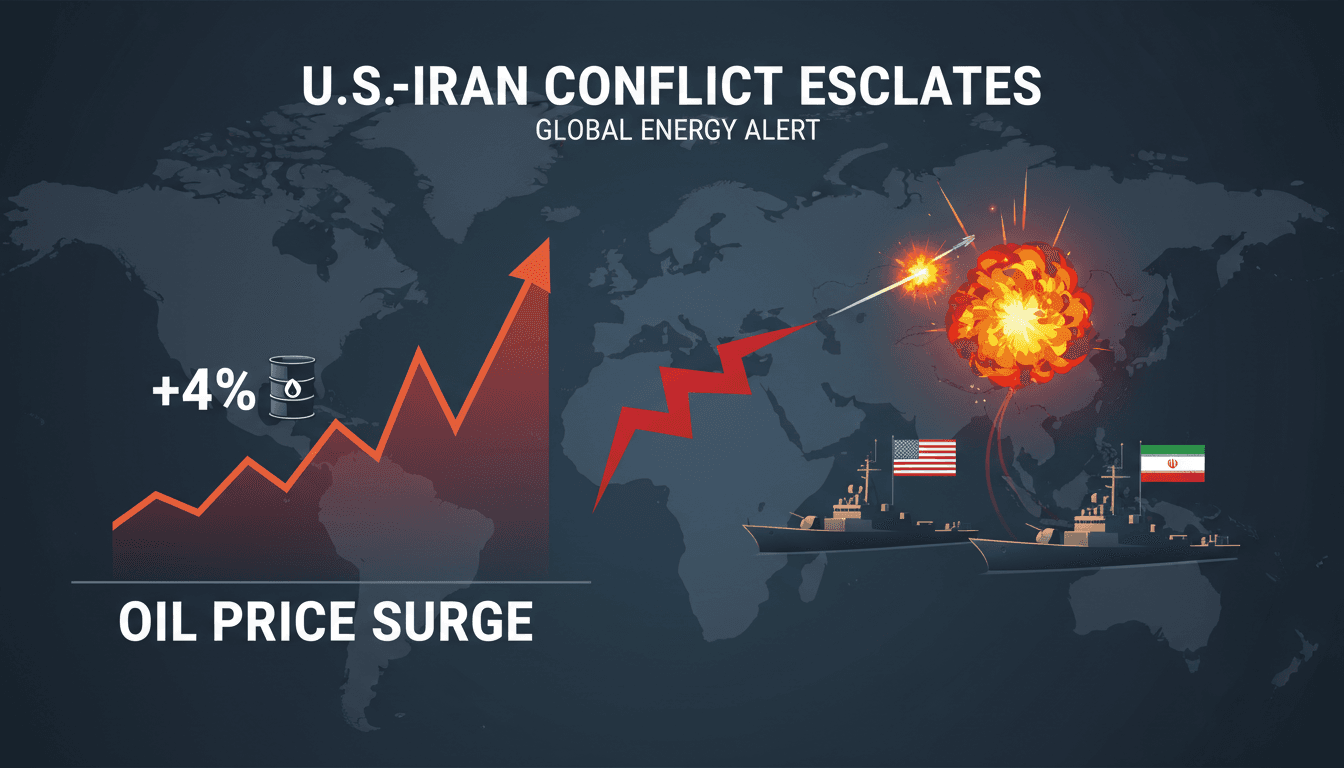
Here's what it means for you.
The recent escalation in military actions between the U.S. and Iran has significant implications for global oil markets. With oil prices surging over four percent, consumers and businesses alike may face increased costs. The situation underscores the fragility of energy security and the potential for long-term disruptions in maritime trade routes. As tensions rise, stakeholders in the energy sector must prepare for volatility. Policymakers will need to monitor developments closely to mitigate risks associated with supply chain disruptions.
What happened
Oil prices have surged over four percent amid escalating hostilities between the U.S. and Iran, particularly affecting shipping in the Strait of Hormuz. The U.S. has intensified military strikes against Iranian targets, marking a significant escalation in the ongoing conflict. In response, Iran has threatened to close key oil routes, raising concerns about further disruptions to global supply.
This week alone, oil prices have increased nearly 12%, reflecting heightened market volatility due to geopolitical tensions. Shipping traffic through the Persian Gulf has decreased, contributing to the rising prices and signaling potential long-term impacts on energy markets.
The Context
The conflict between the U.S. and Iran has deep historical roots, with both nations having a fraught relationship that has escalated in recent years. The U.S. military's recent air strikes against Iranian targets represent a significant shift in strategy, aimed at curbing Iran's influence in the region. Iran's threats to close the Red Sea oil route highlight the precarious nature of global energy supply chains.
The Strait of Hormuz is a critical chokepoint for oil shipments, and any disruption there can have immediate and far-reaching effects on global oil prices. As military actions continue, the potential for broader implications on energy security and maritime routes becomes increasingly concerning.
Takeaway
As the situation in the Middle East remains precarious, stakeholders should closely monitor U.S. military actions and Iran's responses. The potential for further escalation could lead to increased oil prices and supply disruptions, impacting global markets. Analysts suggest that the ongoing conflict may have long-term ramifications for energy security and trade routes.
In the coming days, it will be crucial to observe how both nations navigate this heightened tension and what measures they may take to either escalate or de-escalate the conflict.
Comprehensive coverage of global events, politics, and international issues.
"NBC News is a mainstream outlet known for comprehensive national and international coverage with a centrist to slightly left-leaning editorial tone."
— A47 Editor
Gas prices rise as U.S. and Iran escalate attacks
Gas prices in the U.S. have surged to nearly four dollars a gallon, coinciding with a more than four percent spike in oil prices, as tensions escalate between the U.S. and Iran, particularly around the strategic Strait of Hormuz. Recent military acti...
Markets, economy, and company analysis from NYT’s business desk.
"The New York Times is a globally recognized newspaper offering authoritative reporting with a center-left editorial stance."
— A47 Editor
Oil Prices Rise to Highest Level in a Month as Shipping in the Persian Gulf Nears a Halt
Oil prices have surged to their highest level in a month as shipping traffic in the Persian Gulf has significantly declined, attributed to ongoing military tensions stemming from the conflict between the U.S. and Iran. The situation has been exacerba...
Markets desk coverage, trading insights, and investor updates.
"WSJ’s markets reporting provides in-depth analysis and context for investors."
— A47 Editor
Oil Futures Rise on Middle East Escalation Fears
Crude oil futures have seen significant gains, driven by escalating military actions from the U.S. against Iranian targets and Iran's retaliatory threats towards neighboring Gulf countries. This situation has heightened fears of supply disruptions in...
International stories from NPR’s global desk.
"NPR is an American public media organization known for thoughtful reporting and a slightly left-leaning editorial tone."
— A47 Editor
The U.S.-Iran battle over the Strait of Hormuz raises risks for global waterways
The ongoing military confrontations between the United States and Iran over the Strait of Hormuz have escalated, with both nations claiming control over this strategically vital waterway. Recent airstrikes by the U.S. and threats from Iran to block o...
Global business headlines with AI angles.
"General business outlet that frequently covers AI."
— A47 Editor
U.S.-Iran Clashes Have Expanded To Key Infrastructure. Oil Is Rising
Clashes between the U.S. and Iran have intensified, particularly affecting key infrastructure, leading to a notable rise in oil prices. This escalation follows a series of military exchanges and Iranian attacks on commercial vessels in the strategica...
Business, markets, economy, and corporate news with strong UAE and regional relevance.
"Emirates 24|7 business coverage tends to center UAE markets, property, regulation, and regional economic developments."
— A47 Editor
Oil rises on intensifying US-Iran hostilities, threat of Red Sea closure
Oil prices increased as tensions escalated between the U.S. and Iran, with military actions intensifying across the Gulf, including airstrikes and a blockade on Iranian ports. Brent crude futures rose to $84.93 per barrel, while U.S. West Texas Inter...