
Venezuela hit by two powerful earthquakes causing widespread destruction
Here's what it means for you.
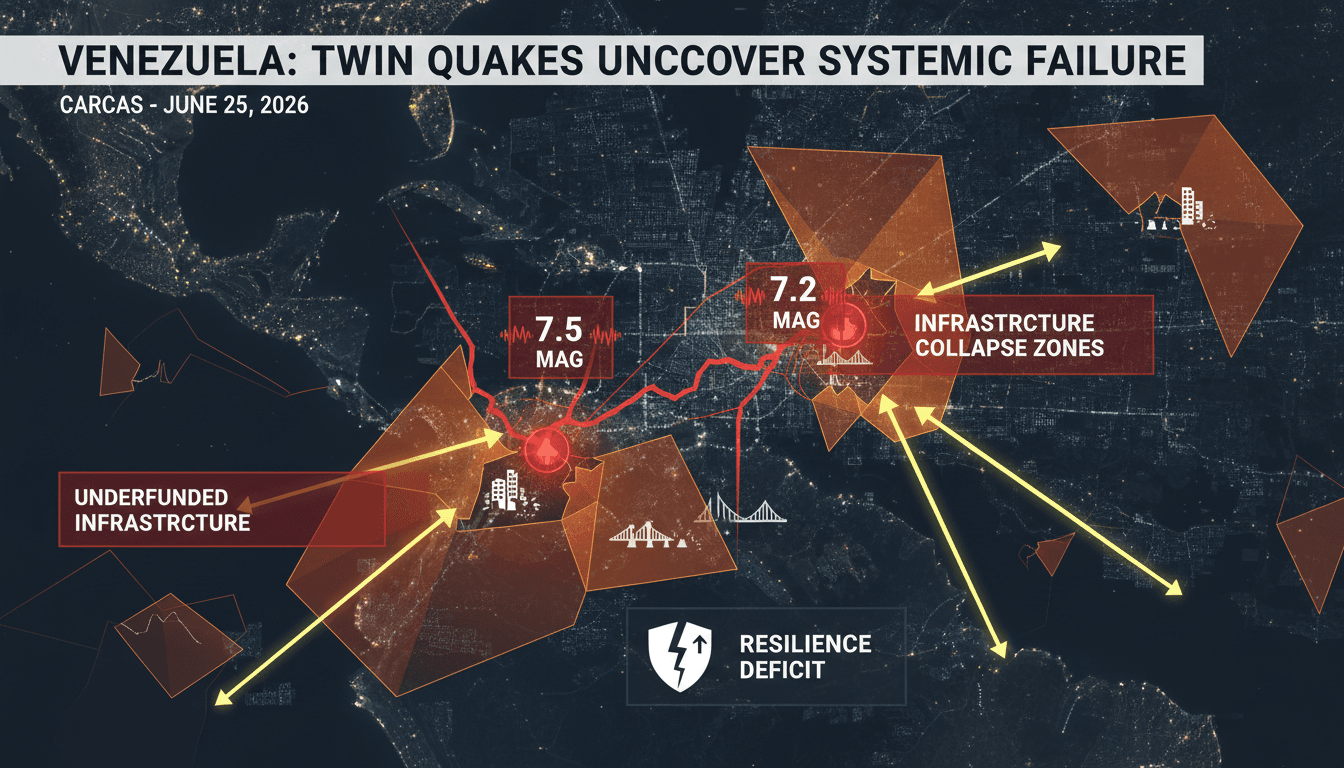
The recent earthquakes in Caracas highlight the critical vulnerabilities in Venezuela's infrastructure, which has been neglected for years. This disaster not only poses immediate humanitarian challenges but also raises questions about the country's long-term disaster preparedness and resilience strategies. Stakeholders must prioritize infrastructure improvements to safeguard against future calamities.
What happened
On June 25, 2026, Caracas was struck by two significant earthquakes measuring 7.5 and 7.2 on the Richter scale. The tremors caused extensive damage across the city, leading to numerous casualties and overwhelming local hospitals. Buildings collapsed, and emergency services were quickly mobilized to respond to the crisis, treating victims suffering from panic attacks and fractures.
The earthquakes occurred within minutes of each other, compounding the destruction and complicating rescue efforts. As hospitals began treating a surge of patients, the situation escalated into a humanitarian crisis, underscoring the urgent need for immediate assistance.
The Context
Caracas has long been vulnerable to seismic activity due to its inadequate infrastructure, which has suffered from years of underfunding. The recent earthquakes have exposed the critical flaws in the city's preparedness for such disasters. With the population already facing numerous challenges, the impact of these earthquakes is particularly severe.
The timing of the earthquakes could not have been worse, as the city grapples with ongoing economic and social issues. The need for improved disaster preparedness and infrastructure resilience has never been more apparent, as local authorities and international organizations begin to assess the damage and coordinate recovery efforts.
Takeaway
As recovery efforts commence, there is an urgent need for both immediate humanitarian assistance and long-term infrastructure improvements in Caracas. Monitoring the health and safety of earthquake victims will be crucial in the coming days. Additionally, stakeholders should focus on rebuilding efforts that prioritize resilience against future earthquakes.
The situation serves as a stark reminder of the vulnerabilities faced by communities in disaster-prone areas. Future initiatives must address these weaknesses to mitigate the impact of similar events.
International coverage of politics, culture, and current affairs.
"BBC News is widely regarded as a reputable international news organization, known for its impartial tone and public service mandate."
— A47 Editor
Panic attacks and fractures - Venezuela hospital treats earthquake victims
On June 24, 2026, Venezuela experienced two powerful earthquakes measuring 7.1 and 7.5 in magnitude, resulting in significant destruction in Caracas. The aftermath has led to panic among residents, with many seeking treatment for injuries and psychol...
Global news coverage with extensive reporting on Middle Eastern conflicts and geopolitics.
"Al Jazeera is a Qatar-based broadcaster known for wide regional coverage and alternative perspectives."
— A47 Editor
Venezuela earthquakes: Why is Caracas so vulnerable?
On June 24, 2026, Venezuela was struck by two powerful earthquakes measuring 7.1 and 7.5 in magnitude, causing widespread destruction in Caracas. The inadequate infrastructure, a result of chronic underfunding, exacerbated the devastation, leading to...
Comprehensive coverage of Middle Eastern and global issues.
"Al Jazeera is a prominent voice from the Global South, especially the Middle East, with an emphasis on underreported stories."
— A47 Editor
Venezuela earthquakes: Why is Caracas so vulnerable?
On June 24, 2026, Venezuela was struck by two powerful earthquakes measuring 7.1 and 7.5 in magnitude, causing widespread destruction in Caracas. The inadequate infrastructure, a result of chronic underfunding, exacerbated the devastation, leading to...
Reporting on North, Central, and South America, plus the Caribbean.
"The Guardian is known for its progressive editorial stance and in-depth analysis."
— A47 Editor
The Venezuela earthquakes – in pictures
Venezuela experienced two powerful earthquakes on June 24, 2026, measuring 7.1 and 7.5 in magnitude, which struck the capital city of Caracas, leading to significant building collapses and raising concerns about casualties and infrastructure safety.