
Iran's Attacks on Shipping Escalate Tensions with the U.S. and Drive Oil Prices Higher
Here's what it means for you.
The recent escalation of tensions between Iran and the U.S. has significant implications for global oil markets. As Iran's attacks on commercial shipping contribute to rising oil prices, stakeholders must remain vigilant about the potential for increased market volatility. The evolving dynamics of oil production and shipping routes could reshape the geopolitical landscape, impacting both policy and economic strategies. In this context, businesses and investors should closely monitor developments in OPEC+ production and any diplomatic efforts aimed at de-escalating the situation. The interplay between military actions and market responses will be crucial in determining future oil price trends.
What happened
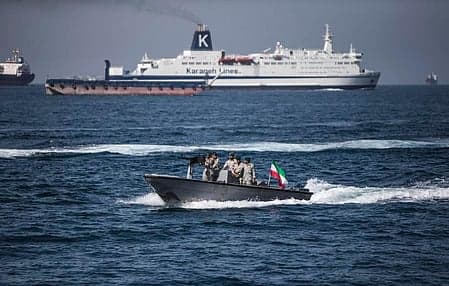
Iran's recent attacks on commercial shipping have intensified tensions with the U.S., leading to a notable rise in oil prices. These aggressive actions are perceived as a strategic maneuver by Iran to exert pressure on U.S. interests in the region. The situation has resulted in a 10% increase in oil prices, underscoring the economic ramifications of these geopolitical conflicts.
Experts are now analyzing the long-term implications of these developments, suggesting that Iran's strategic leverage may be diminishing. Alternative shipping routes and increased production from OPEC+ are factors that could weaken Iran's influence in the oil market.
The Context
The ongoing conflict between the U.S. and Iran is characterized by Iran's aggressive tactics in the shipping sector, which have historically been used to apply pressure on U.S. interests. The recent attacks are not only a demonstration of military capability but also a reflection of Iran's attempts to assert its dominance in a volatile region.
As alternative oil supply routes become more viable and OPEC+ production rises, the effectiveness of Iran's maritime strategies may be challenged. This evolving landscape is critical for understanding the future of U.S.-Iran relations and the broader implications for global oil markets.
Takeaway
Looking ahead, it is essential to monitor changes in OPEC+ production and their potential impact on oil prices. The ongoing military engagements and diplomatic efforts between the U.S. and Iran will also play a significant role in shaping the future of this conflict. As the geopolitical landscape shifts, the dynamics of oil production and shipping routes may lead to a reconfiguration of the U.S.-Iran conflict.
Stakeholders should remain alert to how these developments could influence market stability and pricing strategies in the coming months.
Conservative-leaning coverage of current events.
"Fox News is a highly influential conservative news outlet known for right-leaning political commentary and coverage."
— A47 Editor
Iran's biggest weapon against the US may be slipping away, experts say
Iran's recent attacks on commercial shipping in the Strait of Hormuz have raised oil prices, but experts suggest that alternative shipping routes and increased production from OPEC+ may be diminishing Iran's leverage over the U.S. and global markets.
Global business headlines with AI angles.
"General business outlet that frequently covers AI."
— A47 Editor
The U.S. And Iran Again Exchanged Clashes. Oil Continues To Rise As a Result
Tensions between the U.S. and Iran have escalated once again, leading to renewed clashes and a significant rise in oil prices. The situation has been exacerbated by recent Iranian attacks on commercial vessels in the Strait of Hormuz, a crucial route...
UAE-based newspaper covering Gulf politics, society, and international developments.
"Gulf News is one of the UAE’s most prominent English-language publications."
— A47 Editor
Inside Iran's ‘golden weapon’: The real story behind Tehran’s tanker attacks
Iran's recent military actions in the Strait of Hormuz, including missile strikes on commercial vessels, have escalated tensions in the region, raising concerns about maritime security and international shipping routes. These attacks are part of Iran...
A curated Gulf News feed featuring major stories across news, business, opinion, and lifestyle.
"Gulf News is a major UAE newspaper whose featured stories feed reflects a broad editorial mix shaped for a Gulf audience."
— A47 Editor
Inside Iran's ‘golden weapon’: The real story behind Tehran’s tanker attacks
Iran's recent military actions in the Strait of Hormuz, including missile strikes on commercial vessels, have escalated tensions in the region, raising concerns about maritime security and international shipping routes. These attacks are part of Iran...