
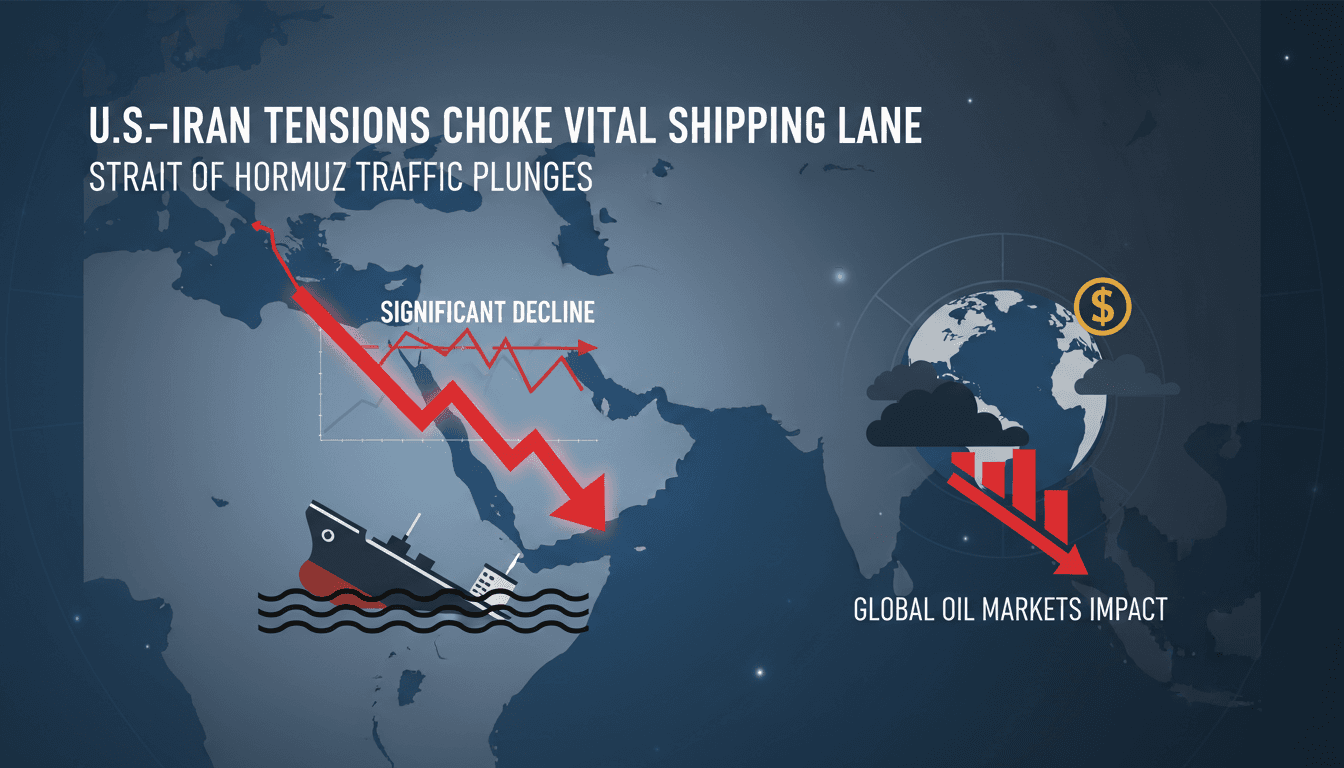
U.S.-Iran tensions lead to significant decline in Strait of Hormuz maritime traffic
Here's what it means for you.
The recent decline in maritime traffic through the Strait of Hormuz signals heightened risks for global shipping and energy markets. As tensions escalate between the U.S. and Iran, stakeholders must prepare for potential disruptions that could affect oil prices and supply chains. The situation underscores the fragility of regional stability and the importance of diplomatic efforts to mitigate conflict.
What happened
Traffic through the Strait of Hormuz has fallen to its lowest levels in over a month due to escalating U.S.-Iran strikes. This decline is attributed to Iran's aggressive military posture, which aims to assert its dominance in the region. The U.S. has responded with increased military presence, raising safety concerns for shipping in this critical chokepoint for global oil shipments.
The situation has developed rapidly, with reports of escalating military actions surfacing since July 12, 2026. By July 13, 2026, the impact on maritime traffic became evident, reaching multi-week lows. This significant decrease in shipping activity reflects the growing risks and tensions in the area.
The Context
The Strait of Hormuz is a vital passage for global oil shipments, making its stability crucial for international trade. Recent military actions have heightened fears of further conflict, as Iran seeks to leverage its position to strengthen its influence in the Middle East. The U.S. aims to maintain freedom of navigation and regional stability in response to Iranian provocations.
The ongoing conflict has implications not only for regional stakeholders but also for global markets reliant on oil transport through this strategic route. As tensions rise, the potential for conflict remains high, which could disrupt shipping and energy supplies significantly.
Takeaway
As the situation continues to evolve, monitoring diplomatic efforts aimed at de-escalating tensions will be essential. Stakeholders should keep a close eye on shipping traffic and safety in the Strait of Hormuz, as further disruptions could have far-reaching consequences. The ongoing conflict may lead to increased volatility in global shipping and energy markets, necessitating proactive measures from industry players.
Global business headlines with AI angles.
"General business outlet that frequently covers AI."
— A47 Editor
U.S. And Iran Are Continuing To Escalate. Traffic Through The Strait Of Hormuz Fell To Its Lowest In More Than a Month
Recent escalations between the U.S. and Iran have led to a significant decrease in traffic through the Strait of Hormuz, marking its lowest levels in over a month. This decline follows a series of military strikes and heightened tensions, particularl...
English-language news from Qatar covering domestic and regional affairs.
"Gulf Times reflects Qatari perspectives on regional developments."
— A47 Editor
Hormuz traffic slows to multi-week low as renewed US, Iran strikes raise safety risk
Ship traffic through the Strait of Hormuz has dropped to multi-week lows due to renewed military strikes between the U.S. and Iran, raising safety concerns for vessels in the region. Recent attacks on commercial ships have intensified tensions, leadi...
Editor-curated FT homepage stories spanning markets, business, world, and opinion.
"The Financial Times is a globally respected business publication with a centrist/center-left tone and strong markets focus."
— A47 Editor
Iran bets Trump will blink first
Iran is engaging in a high-stakes gamble with the United States over the strategic Strait of Hormuz, as tensions escalate following military actions and aggressive rhetoric from both sides. Tehran is betting that President Trump will yield first in t...
Global political, business, and cultural coverage from WSJ international desks.
"The Wall Street Journal offers extensive international reporting with a reputation for financial insight and a center-right editorial stance."
— A47 Editor
Aspiring to Regional Domination, Iran Is Ready to Escalate Over Hormuz
Recent military exchanges in the Strait of Hormuz have escalated tensions between Iran and the United States, with Iran asserting its control over this critical waterway. The situation has intensified following missile strikes on commercial vessels, ...