
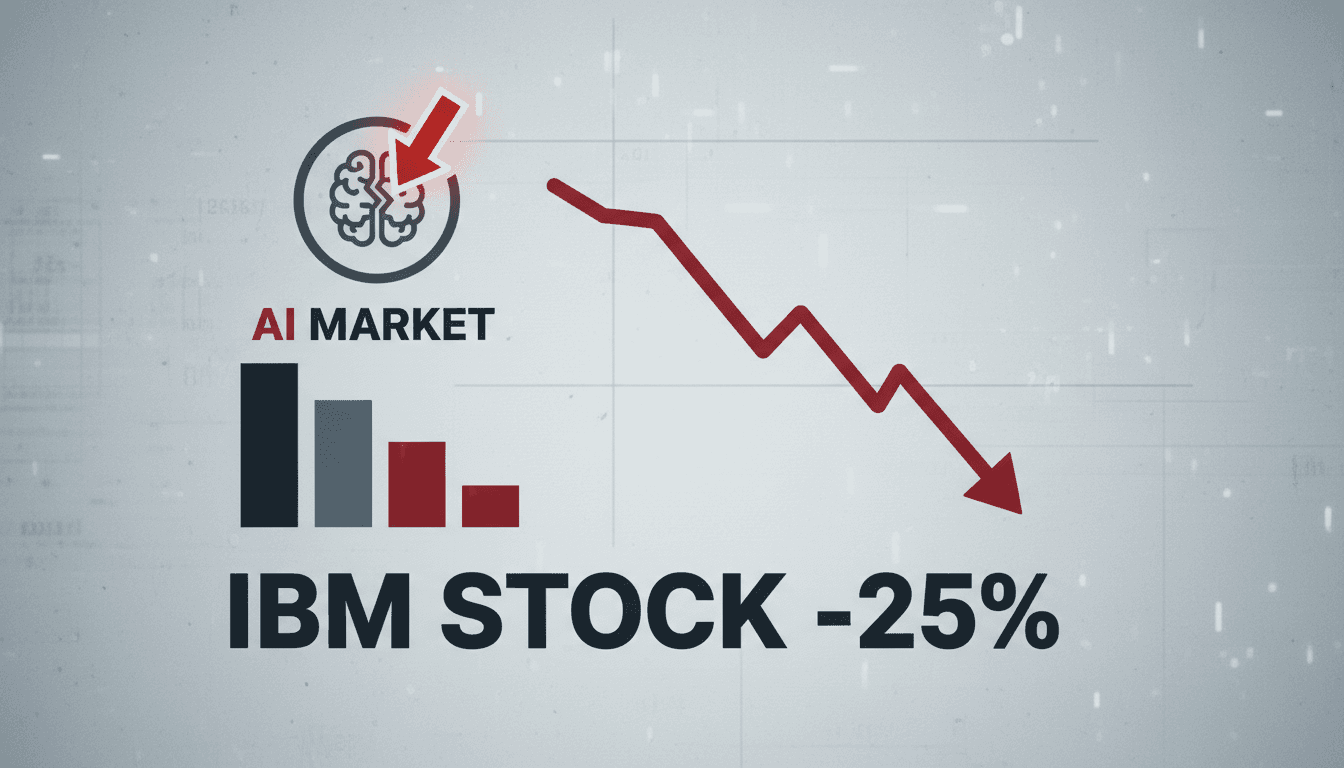
IBM stock plunges 25% amid disappointing earnings forecast
Here's what it means for you.
IBM's recent stock decline signals significant challenges for the tech giant as it grapples with investor concerns over its competitiveness in the AI market. This downturn may prompt a reevaluation of its strategic direction, impacting not only shareholders but also the broader technology landscape. As IBM navigates this turbulent period, its ability to innovate and adapt will be crucial for regaining market confidence.
What happened
On July 14, IBM shares experienced a dramatic drop of approximately 25% following the release of disappointing preliminary second-quarter results. This significant loss in stock value has raised alarms among investors, highlighting concerns about the company's financial health and future prospects. The market's reaction underscores deeper anxieties regarding IBM's ability to compete effectively in the rapidly evolving AI sector.
The preliminary earnings forecast has led to questions about the effectiveness of IBM's current strategies and its overall position in the technology landscape. As a result, the company faces mounting pressure to address these issues and reassure stakeholders about its future direction.
The Context
IBM's stock loss is one of the most significant in its history, reflecting broader challenges faced by traditional tech giants in adapting to the fast-paced technology environment. CEO Arvind Krishna is under increasing scrutiny as he navigates the company's future amidst fierce competition in the AI market. The disappointing earnings gap has intensified discussions among analysts regarding the viability of IBM's AI strategy.
As the technology sector continues to evolve, IBM's struggles serve as a cautionary tale for other companies attempting to pivot towards AI-driven solutions. The implications of this stock plunge extend beyond immediate financial concerns, potentially affecting IBM's long-term strategic positioning and innovation capabilities.
Takeaway
Moving forward, IBM must urgently reassess its strategies to remain competitive in the AI sector. Analysts will be closely monitoring any potential restructuring or strategic shifts within the company, as well as market reactions to upcoming earnings reports. The effectiveness of IBM's leadership and its ability to leverage AI technologies will be critical in regaining investor confidence and improving its market standing.
As the situation develops, stakeholders will be looking for signs of innovation and adaptability from IBM, which will be essential for the company's recovery and future growth.
Tech business coverage, major deals, product launches, and Silicon Valley trends.
"WSJ’s tech section offers authoritative reporting on the intersection of technology and business, including exclusive industry analysis."
— A47 Editor
IBM CEO Arvind Krishna Has Nowhere to Hide From AI
The once-great tech giant’s place in the new tech cycle is in disarray.
U.S. business news, corporate developments, and economy.
"The Wall Street Journal is respected for deep financial and economic reporting with a center-right editorial perspective."
— A47 Editor
IBM CEO Arvind Krishna Has Nowhere to Hide From AI
IBM's shares plummeted by 25% on July 14, 2026, marking one of the worst trading days in the company's history, as CEO Arvind Krishna acknowledged that the company failed to adapt to a significant shift in customer spending towards artificial intelli...
Stock market news, investing ideas, and trading analysis.
"TheStreet provides market news and retail-investor-focused analysis."
— A47 Editor
IBM’s historic crash exposes AI spending trap
IBM's shares plummeted by approximately 25% on July 14, 2026, marking one of the worst trading days in the company's history, following disappointing preliminary second-quarter results and a profit warning from CEO Arvind Krishna. The decline was att...