
U.S. airlines face 78% surge in fuel costs amid Iran conflict and Strait of Hormuz closure
Here's what it means for you.
The recent surge in fuel costs for U.S. airlines signals a critical challenge for the industry, as operational expenses rise sharply due to geopolitical tensions. With nearly $6.5 billion spent on fuel in April alone, airlines may need to reassess their pricing strategies to maintain profitability. This situation could lead to higher ticket prices for consumers and impact travel demand. As the conflict in Iran continues and the Strait of Hormuz remains closed, the ripple effects on global oil supply are likely to persist. Stakeholders in the airline industry must remain vigilant and adaptable to navigate these turbulent times.
What happened
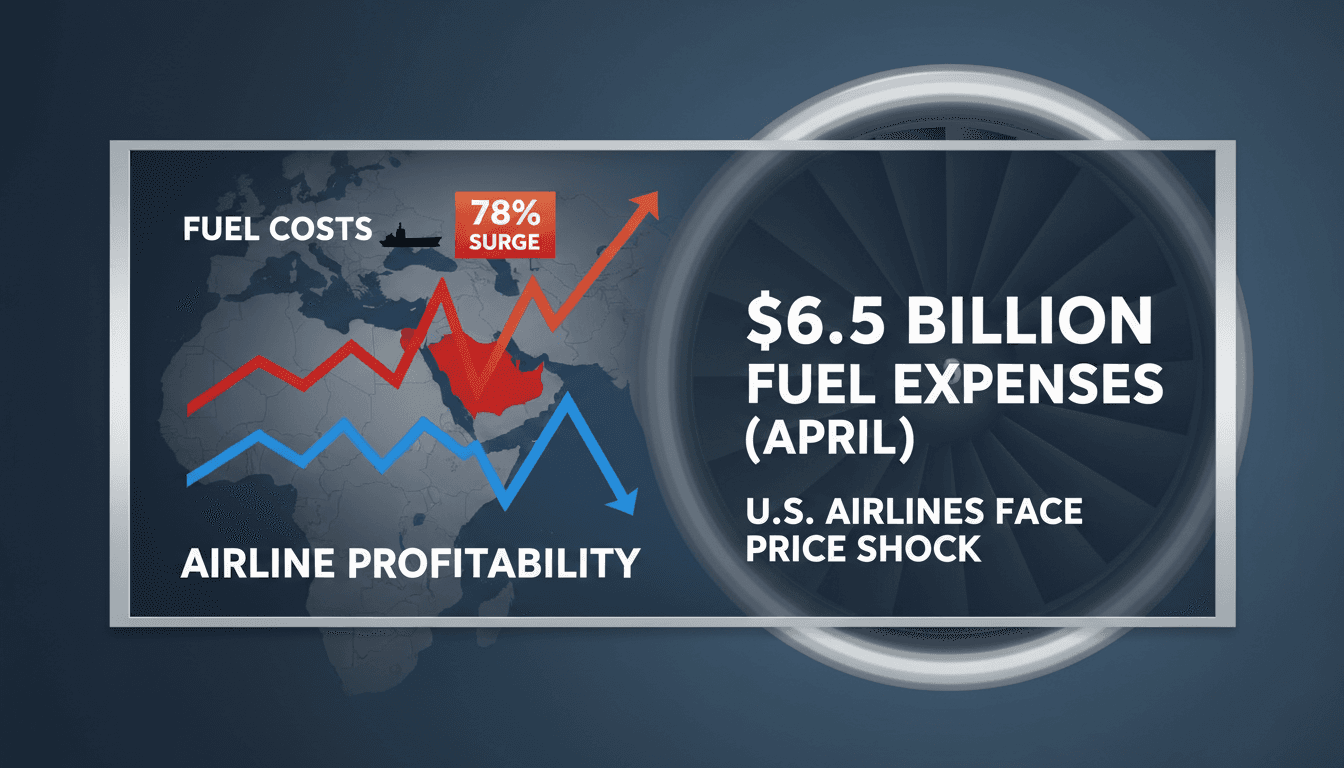
U.S. airlines have reported a staggering 78% increase in fuel costs, primarily driven by the ongoing conflict in Iran and the closure of the Strait of Hormuz. In April, the total fuel expenses for airlines reached nearly $6.5 billion, marking a significant financial burden for the industry. This increase is a direct result of geopolitical tensions that are disrupting global oil supply chains.
The war in Iran has now extended beyond 100 days, further exacerbating the situation and contributing to rising fuel prices. As a consequence, the airline industry's collective fuel bill is projected to rise by an alarming $100 billion this year, indicating a severe impact on profitability.
The Context
The closure of the Strait of Hormuz is a critical factor affecting global oil supply, as it is a vital shipping route for oil exports. The ongoing conflict in Iran has created an unstable environment, leading to increased uncertainty in the energy markets. The Bureau of Transportation Statistics has reported that fuel costs for U.S. airlines increased by more than 26% from March to April, underscoring the rapid escalation of expenses.
This situation poses a significant threat to the airline industry's recovery from the pandemic, as rising operational costs could cut profits in half this year. Airlines must navigate these challenges while balancing the need to maintain service levels and customer satisfaction.
Takeaway
As geopolitical tensions continue to evolve, the airline industry faces the pressing challenge of rising operational costs. Airlines will need to adapt their pricing strategies to mitigate the financial strain caused by soaring fuel prices. Monitoring developments in the Iran conflict and their impact on oil supply will be crucial for stakeholders.
In the coming months, it will be essential to watch for potential changes in airline pricing strategies as they respond to these unprecedented fuel costs. The industry's ability to sustain profitability while adapting to changing market conditions will be a key focus moving forward.
Corporate leadership, finance, technology, and market trends.
"Fortune covers financial trends, leadership, and innovation with a pragmatic editorial approach."
— A47 Editor
The global airline industry’s profits could be cut in half as it braces for its worst year since the pandemic
The global airline industry is facing a severe downturn, with profits projected to be halved this year due to escalating fuel costs linked to the ongoing conflict in Iran and its control over the Strait of Hormuz, which is adding an estimated $100 bi...
Breaking news, politics, business, and entertainment from the U.S. and around the world.
"The New York Post is a tabloid-format newspaper known for its sensationalist headlines and conservative-leaning editorial tone."
— A47 Editor
Jet fuel costs soar 78% in past year as Strait of Hormuz remains shut
Jet fuel costs for U.S. airlines have surged by 78% over the past year, reaching $6.5 billion in April, as reported by the Bureau of Transportation Statistics. This dramatic increase is attributed to the ongoing closure of the Strait of Hormuz, a cri...
Capitol Hill news, legislation, and policy insight.
"The Hill specializes in U.S. politics and policy, with a focus on Capitol Hill developments and a reputation for insider reporting."
— A47 Editor
Airline fuel costs jump 78 percent in past year amid war with Iran
The cost of fuel for U.S. airlines has surged by 78 percent over the past year, with April alone seeing expenditures reach nearly $6.5 billion, according to a report from the Bureau of Transportation Statistics. This increase is attributed to the ong...