
Apollo Global Management Limits Withdrawals Amid Surge in Redemption Requests
Here's what it means for you.
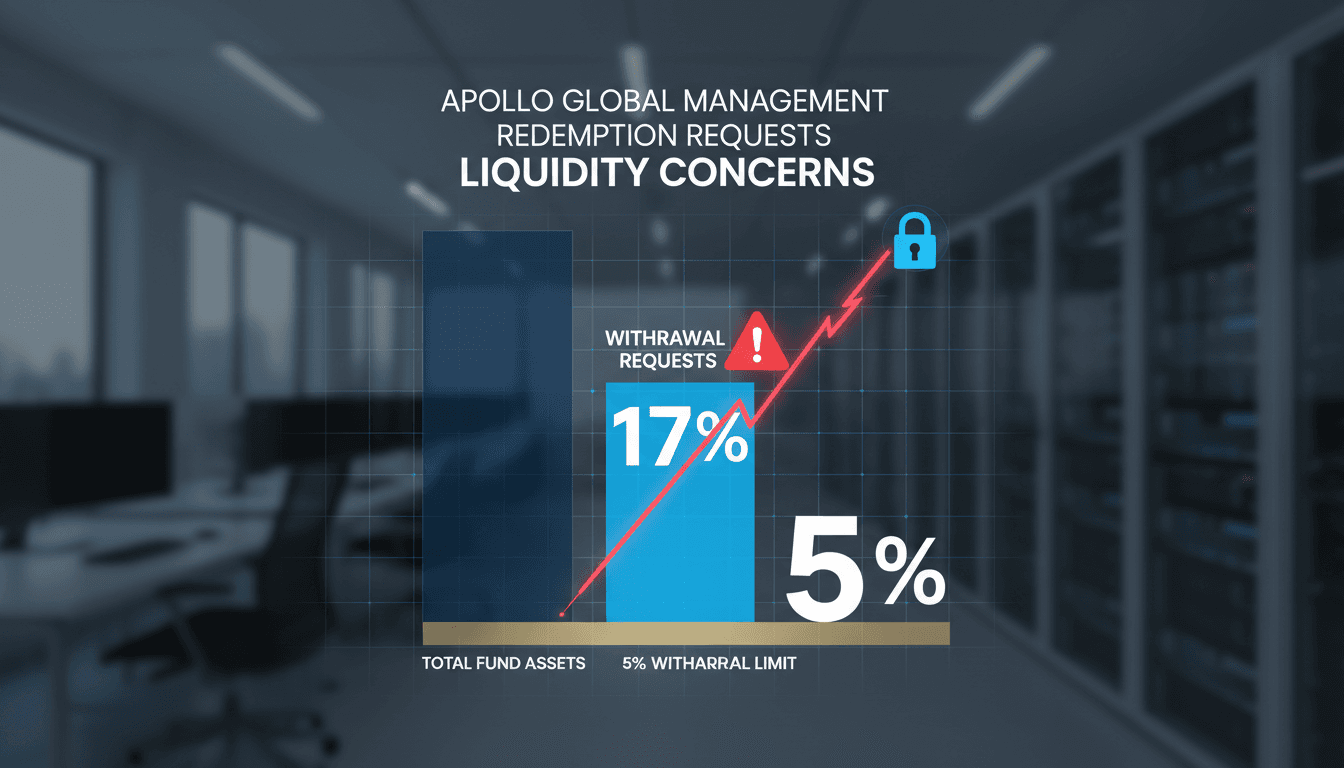
Apollo Global Management's decision to impose a 5% cap on withdrawals from its flagship private credit fund signals growing concerns about liquidity in the private credit market. Investors seeking to withdraw 17% of their capital reflect a significant lack of confidence in this asset class. This situation may prompt increased scrutiny from regulators and could lead to changes in how private credit funds manage liquidity. As the market reacts, other funds may face similar pressures, potentially reshaping investor behavior across the sector. Stakeholders should remain vigilant as the implications of this event unfold.
What happened
Apollo Global Management has announced a 5% cap on withdrawal requests from its flagship private credit fund due to a surge in redemption requests. Investors are attempting to withdraw 17% of their investments, raising alarms about the fund's liquidity. Currently, Apollo is only able to meet less than a third of these requests, highlighting the challenges faced by the fund.
This decision comes amid a broader context of investor concerns regarding the private credit market. The fund, which manages $26 billion in assets, is now navigating a difficult landscape as it seeks to balance investor demands with liquidity management.
The Context
The private credit market has been under increasing scrutiny as investors react to economic uncertainties. Apollo's flagship fund is a significant player in this space, and the recent wave of redemption requests indicates a shift in investor sentiment. The timing of these requests coincides with broader market trends that have raised questions about the stability of private credit investments.
As investors seek to withdraw substantial amounts of capital, the implications for liquidity management practices within private credit funds are becoming more pronounced. This situation may lead to a reevaluation of strategies across the industry, as stakeholders assess the risks associated with their investments.
Takeaway
Looking ahead, the situation at Apollo Global Management may prompt other private credit funds to reassess their liquidity strategies in response to similar redemption pressures. Investors will likely be monitoring how these funds adapt to maintain confidence and manage capital effectively.
Additionally, the potential for regulatory changes in the private credit market could reshape the landscape, influencing how funds operate and communicate with investors. Stakeholders should keep an eye on developments in this area as the market evolves.
Global markets, investing, and macroeconomics from a premier financial newsroom.
"Bloomberg is respected for in-depth financial reporting and data-driven analysis."
— A47 Editor
Apollo Caps Private Credit Fund After 17% Request to Exit
Apollo Global Management has imposed a 5% cap on withdrawal requests from its flagship private credit fund after facing a surge of 17% in redemption requests from investors. This decision reflects ongoing concerns about the stability of the private c...
Market-moving headlines impacting equities, bonds, and related risk assets.
"Real-time catalysts and volatility drivers across indices and sectors."
— A47 Editor
Apollo’s $26 billion private credit fund imposes 5% cap on requests to pull 17%
Apollo Global Management's $26 billion private credit fund has imposed a 5% cap on redemption requests after facing a surge of 17% from investors seeking to withdraw their funds. This decision comes amid rising market uncertainties and a significant ...
Editor-curated FT homepage stories spanning markets, business, world, and opinion.
"The Financial Times is a globally respected business publication with a centrist/center-left tone and strong markets focus."
— A47 Editor
Apollo’s flagship private credit fund hit by 17% redemption requests
Apollo's flagship private credit fund has faced a surge in redemption requests, with 17% of investors seeking to withdraw their funds, leading the vehicle to meet less than a third of these requests. This trend indicates a growing exodus of investors...