
Jellyfish swarm causes shutdown of three nuclear reactors in France
What happened
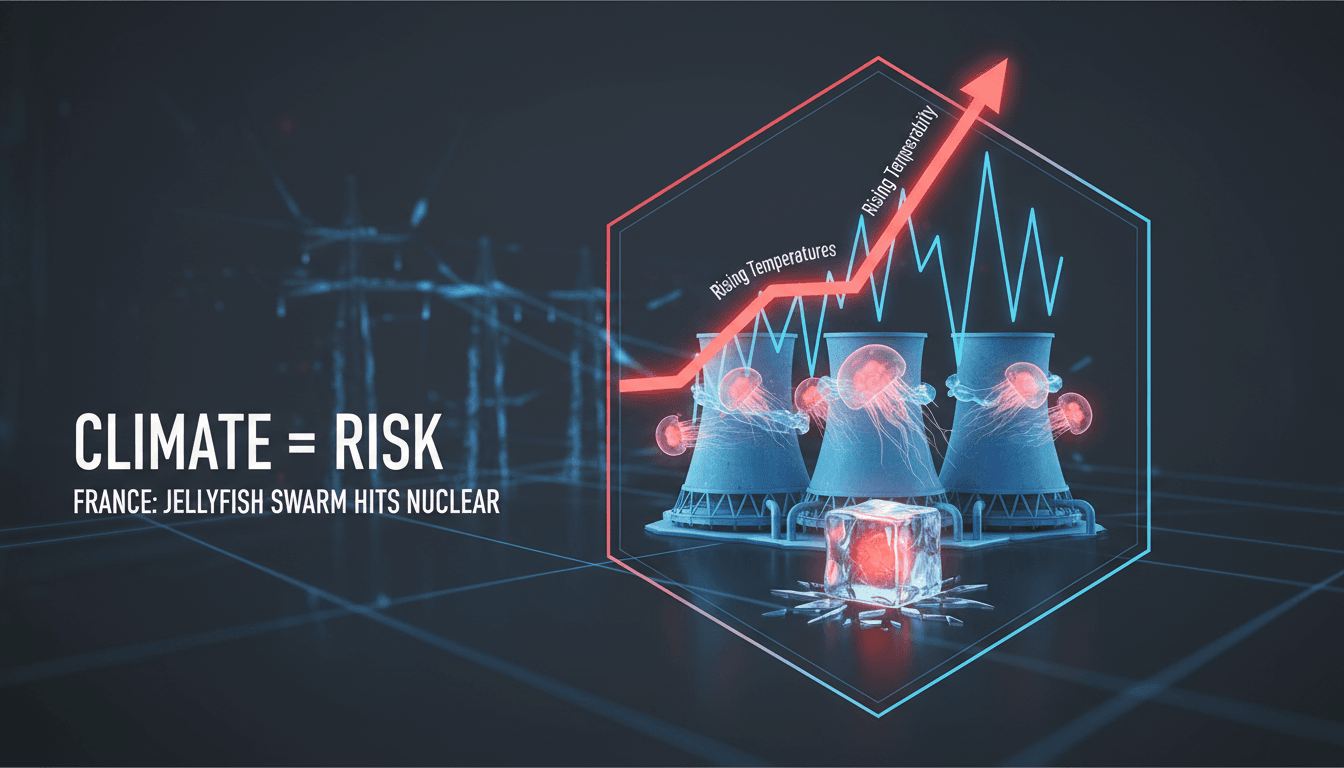
Three nuclear reactors in northern France were taken offline after jellyfish clogged their cooling pumps. This incident, confirmed by EDF, the French electricity company, has resulted in a substantial loss of 3.2 gigawatts of power generation capacity. The shutdown was announced on August 11, 2026, coinciding with forecasts of extreme temperatures in the region.
The jellyfish swarm caused significant blockages in the cooling systems, prompting immediate action to protect the reactors. This event illustrates the unexpected challenges that can arise from environmental factors affecting energy production.
The Context
The shutdown of these reactors comes at a critical time as France braces for temperatures nearing 104°F. The loss of 3.2 gigawatts represents a significant portion of the country's nuclear power capacity, raising alarms about energy supply during peak demand periods. EDF's response to this incident will be closely monitored by industry experts and policymakers alike.
As climate conditions evolve, energy providers face increasing pressure to implement new strategies that mitigate risks posed by environmental factors. The incident serves as a reminder of the need for resilience in energy infrastructure, particularly in the face of extreme weather events.
Takeaway
Looking ahead, it will be essential to monitor the impact of extreme weather on energy supply in France. The response from EDF regarding future preventive measures will be crucial in determining how effectively the company can safeguard its operations against similar disruptions.
This incident highlights the ongoing challenges faced by energy providers in maintaining a stable supply amidst changing climate conditions. Stakeholders should remain proactive in developing strategies that enhance energy resilience and infrastructure adaptation.
Corporate leadership, finance, technology, and market trends.
"Fortune covers financial trends, leadership, and innovation with a pragmatic editorial approach."
— A47 Editor
Jellyfish swarms knock out 3.2 gigawatts of French nuclear power
Recent jellyfish swarms have disrupted operations at French nuclear power plants, leading to a loss of 3.2 gigawatts of electricity generation. This incident coincides with forecasts predicting extreme temperatures in France, potentially reaching 104...
Pan-Arab news coverage spanning politics, business, sports, and regional affairs.
"Asharq Al-Awsat reflects a broad Arab editorial perspective with strong attention to regional geopolitics."
— A47 Editor
قناديل البحر تجبر محطة نووية فرنسية على إغلاق 3 مفاعلات
The French electricity company EDF announced that a nuclear power station in the northern part of the country has shut down three reactors due to a swarm of jellyfish clogging the cooling pumps used for their operation. This incident highlights the v...
Arabic-language political and world news coverage for UAE readers.
"Emarat Al Youm world coverage usually presents international developments through a UAE and Arab audience lens."
— A47 Editor
قناديل البحر تجبر محطة نووية فرنسية على إغلاق 3 مفاعلات قناديل البحر تجبر محطة نووية فرنسية على إغلاق 3 مفاعلات
French electricity company EDF announced on Tuesday that a nuclear power plant in the north of the country has shut down three reactors due to a swarm of jellyfish causing operational issues. This incident highlights the challenges faced by nuclear f...