
Paramount Skydance Seeks $1.88 Billion Bond Amid Antitrust Suit Over Warner Bros. Discovery Acquisition
Here's what it means for you.
If you're in the entertainment industry or a consumer of media, this legal battle could influence the landscape of film distribution and pricing.
Why it matters
This antitrust lawsuit could reshape competition in the media sector, affecting pricing and availability of content.
What happened (in 30 seconds)
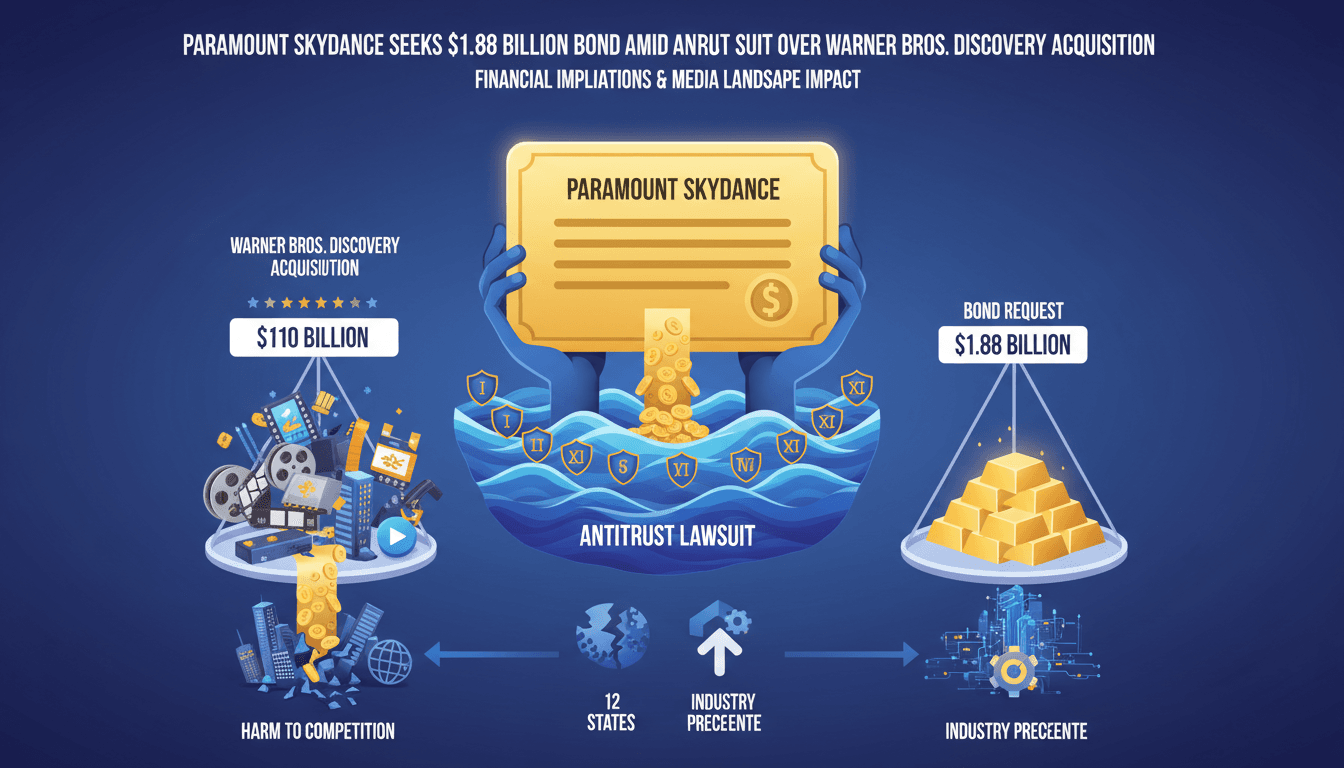
- Paramount Skydance requested a $1.88 billion bond from 12 states to cover potential losses from delays in its $110 billion acquisition of Warner Bros. Discovery.
- California Attorney General Rob Bonta criticized the bond request, calling it an attempt to pressure states into dropping the lawsuit.
- Trial proceedings are set for March 2027, with a potential $7 million daily fee if the merger misses its September 30, 2026 deadline.
The context you actually need
- The acquisition was initially proposed in September 2025, culminating in a $110.9 billion agreement announced in February 2026.
- A coalition of 12 states filed an antitrust lawsuit on July 13, 2026, claiming the merger would harm competition in film distribution and cable programming.
- Regulatory approvals from 68 countries have been secured, leaving only state lawsuits as obstacles to the merger.
What's really happening
Paramount Skydance's request for a $1.88 billion bond is a strategic move in the ongoing antitrust litigation surrounding its acquisition of Warner Bros. Discovery. The company is facing significant financial pressure due to the potential delays caused by the lawsuit filed by a coalition of 12 states, led by California. The bond is intended to cover estimated losses, including $1.7 billion in ticking fees and $190 million in incremental financing costs, should the merger not close by the deadline.
The lawsuit alleges that the merger would create a dominant entity controlling nearly one-third of U.S. theatrical films and basic cable programming, which could lead to reduced competition and higher prices for consumers. This claim is particularly significant in an industry already grappling with the impacts of streaming services and changing consumer preferences. Paramount's argument hinges on the assertion that the states have the financial resources to post the bond, which they believe would mitigate the risks associated with the merger's delay.
California AG Rob Bonta's response highlights the contentious nature of this legal battle. He accused Paramount of attempting to "blackmail" the states, suggesting that the company entered the merger agreement with full knowledge of the timeline and potential challenges. This accusation underscores the tension between corporate interests and regulatory oversight, particularly in an industry where mergers and acquisitions can significantly alter market dynamics.
Historically, antitrust challenges to mergers have taken an average of eight months to resolve, which means that the outcome of this case could have lasting implications for the media landscape. If the merger is ultimately blocked, it could set a precedent for future mergers in the entertainment sector, potentially leading to increased scrutiny of similar deals. Conversely, if the merger is approved, it could pave the way for further consolidation in the industry, impacting everything from content availability to pricing structures.
Who feels it first (and how)
- Consumers: Potentially face higher prices and fewer choices in film and cable programming.
- Film Distributors: May experience reduced competition, affecting their market strategies and pricing.
- Media Companies: Other companies in the entertainment sector could be influenced by the outcome, impacting future mergers and acquisitions.
What to watch next
- Trial outcomes: The March 2027 trial will be crucial in determining the future of the merger and could set a precedent for similar cases.
- Market reactions: Watch for shifts in stock prices and strategic moves from competitors in response to the ongoing litigation.
- Settlement discussions: Paramount's openness to settlement could lead to a quicker resolution, impacting the timeline of the merger.
Paramount Skydance has filed for a $1.88 billion bond to cover potential losses.
The trial will take place in March 2027, with significant implications for the merger.
The long-term effects on competition and pricing in the media sector remain uncertain.
Frequently Asked Questions
- Why it matters?
- This antitrust lawsuit could reshape competition in the media sector, affecting pricing and availability of content.
- What happened (in 30 seconds)?
- Paramount Skydance requested a $1.88 billion bond from 12 states to cover potential losses from delays in its $110 billion acquisition of Warner Bros. Discovery. California Attorney General Rob Bonta criticized the bond request, calling it an attempt to pressure states into dropping the lawsuit. Trial proceedings are set for March 2027, with a potential $7 million daily fee if the merger misses its September 30, 2026 deadline.
- What's really happening?
- Paramount Skydance's request for a $1.88 billion bond is a strategic move in the ongoing antitrust litigation surrounding its acquisition of Warner Bros. Discovery. The company is facing significant financial pressure due to the potential delays caused by the lawsuit filed by a coalition of 12 states, led by California. The bond is intended to cover estimated losses, including $1.7 billion in ticking fees and $190 million in incremental financing costs, should the merger not close by the deadlin
- Who feels it first (and how)?
- Consumers: Potentially face higher prices and fewer choices in film and cable programming. Film Distributors: May experience reduced competition, affecting their market strategies and pricing. Media Companies: Other companies in the entertainment sector could be influenced by the outcome, impacting future mergers and acquisitions.
- What to watch next?
- Trial outcomes: The March 2027 trial will be crucial in determining the future of the merger and could set a precedent for similar cases. Market reactions: Watch for shifts in stock prices and strategic moves from competitors in response to the ongoing litigation. Settlement discussions: Paramount's openness to settlement could lead to a quicker resolution, impacting the timeline of the merger.
Market-moving headlines impacting equities, bonds, and related risk assets.
"Real-time catalysts and volatility drivers across indices and sectors."
— A47 Editor
Paramount seeks $1.88 billion bond from state AGs over merger lawsuit
Paramount has requested a $1.88 billion bond from state attorneys general as part of its defense against a lawsuit challenging its proposed $110 billion merger with Warner Bros. Discovery. The company argues that the bond is necessary to cover potent...
U.S. business news, corporate developments, and economy.
"The Wall Street Journal is respected for deep financial and economic reporting with a center-right editorial perspective."
— A47 Editor
Paramount Wants $1.88 Billion Bond From States, Writers Challenging Warner Deal
Paramount has requested a $1.88 billion bond from states and writers who are challenging its proposed $110 billion merger with Warner Bros. Discovery, arguing that these litigants should be responsible for financial damages if they lose their lawsuit...
Hollywood, film, television, and awards coverage.
"The Los Angeles Times is a major West Coast newspaper offering in-depth reporting with a liberal editorial tone and strong regional focus."
— A47 Editor
Paramount demands $1.9 billion from states, citing Warner deal delays
Paramount has demanded $1.9 billion from a coalition of 12 states and the Writers Guild of America (WGA), citing potential financial losses due to delays in its merger with Warner Bros. Discovery, which is currently entangled in an antitrust lawsuit....
Hollywood business, film/TV deals, awards, and industry analysis.
"Variety is a leading entertainment trade publication covering Hollywood, film, TV, and media business."
— A47 Editor
Paramount Requests States and WGA Be Required to Post $1.9 Billion Bond to Cover Financial Losses While Warner Bros. Merger Is Stuck on Hold Pending Trial
Paramount Skydance has requested that a judge require the Writers Guild of America (WGA) and 12 states involved in antitrust lawsuits to post a bond of $1.88 billion to cover potential financial losses due to the delay of its merger with Warner Bros....