
BHP's Copper Division Becomes Primary Profit Driver Surpassing Iron Ore
Why it matters
This transition signals a broader industry shift towards copper, driven by electrification and renewable energy demands.
What happened (in 30 seconds)
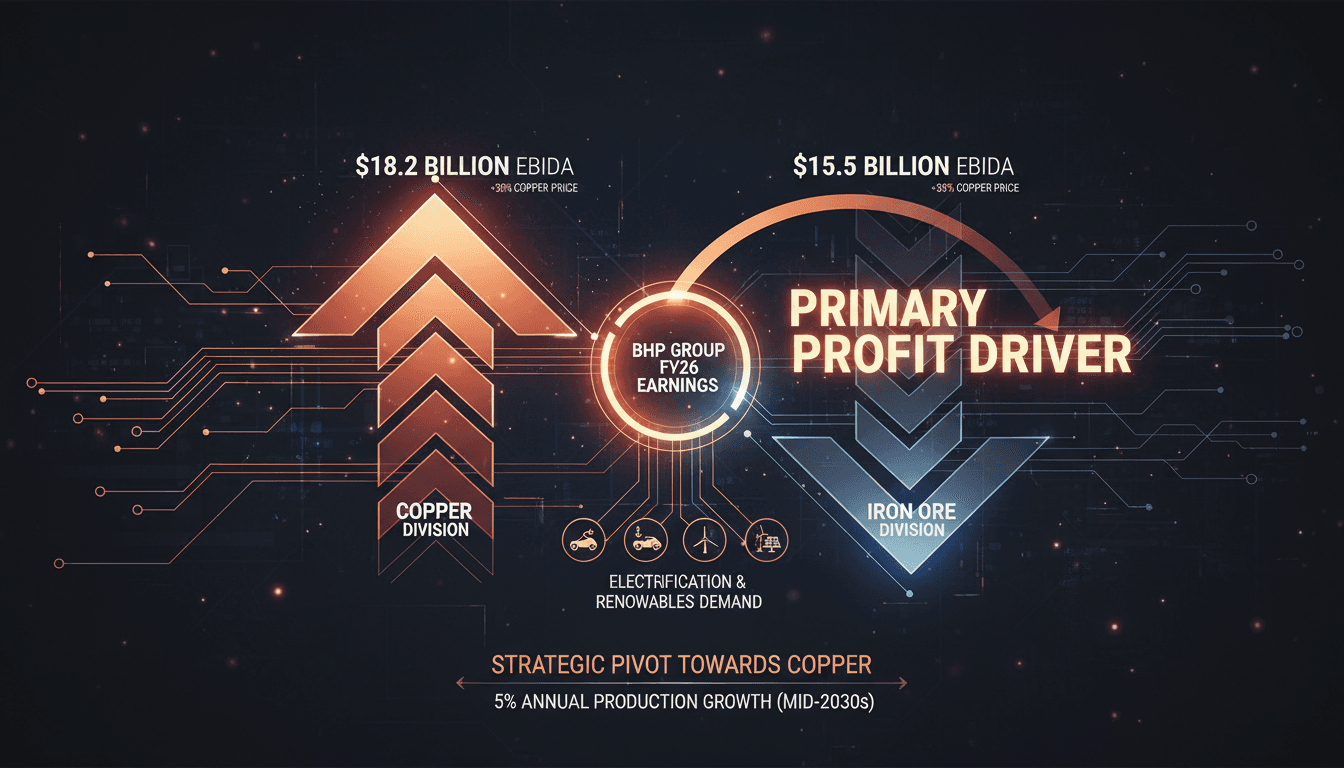
- BHP reported that its copper division generated $18.2 billion in EBITDA for FY26, surpassing iron ore for the first time.
- Group EBITDA increased by 27% year-over-year to $32.9 billion, with net profit rising 30% to $13.2 billion.
- Copper prices surged by 35%, prompting BHP to redirect capital towards copper expansion projects.
The context you actually need
- BHP historically relied on iron ore, primarily linked to China's property and steel cycles, for the majority of its earnings.
- The copper market is experiencing structural demand growth due to electrification, AI data centers, and renewable energy infrastructure.
- BHP is prioritizing copper projects, allocating over 55% of its growth capital to initiatives like the Escondida New Concentrator.
What's really happening
BHP's recent earnings report marks a pivotal moment in the mining sector, as copper has officially overtaken iron ore as the company's primary profit driver. This shift is not merely a reflection of BHP's internal strategy but is indicative of broader market dynamics that are reshaping the global commodities landscape.
Historically, BHP derived a significant portion of its earnings from iron ore, which has been closely tied to the cyclical nature of China's property and steel industries. However, as these sectors face headwinds, the demand for copper is surging, driven by the global transition towards electrification and renewable energy. The electrification of transportation, the rise of AI data centers, and the push for renewable energy infrastructure are creating a structural demand for copper that is unlikely to wane in the near future.
BHP's copper division reported an EBITDA of $18.2 billion, accounting for 54% of the company's total earnings. This is a significant increase from the previous year, where copper contributed $12.3 billion. The company's overall EBITDA rose to $32.9 billion, with net profits reaching $13.2 billion. The 35% increase in realized copper prices has been a key driver of this growth, prompting BHP to redirect its capital investments towards copper expansion projects.
Management has set ambitious targets, aiming for a 5% annual growth in copper production through the mid-2030s. This includes significant investments in projects like the Escondida New Concentrator and Copper South Australia Phase 1, which are expected to enhance production capabilities and efficiency.
While iron ore production reached a record 265 million tons, its contribution to earnings has diminished, reflecting a strategic pivot towards a more diversified portfolio focused on transition metals. This shift is likely to attract investor interest, as evidenced by the sharp rise in BHP's stock prices following the earnings announcement. Analysts are optimistic about the company's self-funding growth potential, although they also caution about the risks associated with capital expenditure intensity and project execution.
Who feels it first (and how)
- Investors in commodities: Increased focus on copper may shift investment strategies towards more sustainable and electrification-related sectors.
- Mining sector employees: Job opportunities may grow in copper operations as BHP expands its focus.
- Renewable energy companies: Higher copper demand could lead to increased costs for materials, impacting project budgets and timelines.
What to watch next
- Copper price trends: Continued strength in copper prices will be crucial for BHP's profitability and investment strategies.
- BHP's production targets: Monitoring the company's ability to meet its ambitious copper production goals will provide insights into its operational efficiency.
- Global demand for electrification: As the world shifts towards renewable energy, tracking developments in electrification will be essential for understanding copper's market trajectory.
BHP's copper division has surpassed iron ore in earnings contribution for the first time.
The demand for copper will continue to grow due to electrification and renewable energy trends.
The long-term impact of this strategic pivot on BHP's overall market position and stock performance remains to be seen.
Frequently Asked Questions
- Why it matters?
- This transition signals a broader industry shift towards copper, driven by electrification and renewable energy demands.
- What happened (in 30 seconds)?
- BHP reported that its copper division generated $18.2 billion in EBITDA for FY26, surpassing iron ore for the first time. Group EBITDA increased by 27% year-over-year to $32.9 billion, with net profit rising 30% to $13.2 billion. Copper prices surged by 35%, prompting BHP to redirect capital towards copper expansion projects.
- What's really happening?
- BHP's recent earnings report marks a pivotal moment in the mining sector, as copper has officially overtaken iron ore as the company's primary profit driver. This shift is not merely a reflection of BHP's internal strategy but is indicative of broader market dynamics that are reshaping the global commodities landscape. Historically, BHP derived a significant portion of its earnings from iron ore, which has been closely tied to the cyclical nature of China's property and steel industries. Howev
- Who feels it first (and how)?
- Investors in commodities: Increased focus on copper may shift investment strategies towards more sustainable and electrification-related sectors. Mining sector employees: Job opportunities may grow in copper operations as BHP expands its focus. Renewable energy companies: Higher copper demand could lead to increased costs for materials, impacting project budgets and timelines.
- What to watch next?
- Copper price trends: Continued strength in copper prices will be crucial for BHP's profitability and investment strategies. BHP's production targets: Monitoring the company's ability to meet its ambitious copper production goals will provide insights into its operational efficiency. Global demand for electrification: As the world shifts towards renewable energy, tracking developments in electrification will be essential for understanding copper's market trajectory.
Market-moving headlines impacting equities, bonds, and related risk assets.
"Real-time catalysts and volatility drivers across indices and sectors."
— A47 Editor
BHP: copper overtakes iron ore as primary profit driver, here’s what it means
BHP has announced that copper has overtaken iron ore as its primary profit driver, marking a significant shift in the company's revenue structure. This change comes as BHP reported record profits, with annual earnings from copper reaching $33 billion...
Markets desk coverage, trading insights, and investor updates.
"WSJ’s markets reporting provides in-depth analysis and context for investors."
— A47 Editor
BHP Annual Profit Rises on Record Copper Prices
BHP, the world's largest mining company, reported a 9% increase in annual net profit, driven by record copper prices that have surged to all-time highs. This performance underscores the company's strong position in the market amid rising demand for c...
Editor-curated FT homepage stories spanning markets, business, world, and opinion.
"The Financial Times is a globally respected business publication with a centrist/center-left tone and strong markets focus."
— A47 Editor
BHP’s copper profits outstrip iron ore for first time
BHP has reported a significant milestone as its copper profits have surpassed those from iron ore for the first time, with annual earnings reaching $33 billion, largely fueled by a surge in demand for data centers and energy networks.