
David Ellison outlines integration strategy for Warner Bros. Discovery post-merger
Why it matters
This merger reshapes the competitive landscape of the media industry, impacting content creation and distribution on a global scale.
What happened (in 30 seconds)
- David Ellison revealed his integration strategy for Warner Bros. Discovery at the Bloomberg Screentime conference on October 1, 2026.
- Paramount Skydance completed its $111 billion acquisition of Warner Bros. Discovery after settling antitrust lawsuits, allowing for a new media powerhouse.
- Integration plans focus on reducing debt and enhancing streaming capabilities, with no immediate changes for consumers.
The context you actually need
- Competitive bidding: Paramount Skydance outbid Netflix for Warner Bros. Discovery, indicating a significant shift in media acquisition strategies.
- Regulatory hurdles: The merger faced scrutiny from 12 states and the Writers Guild of America, leading to commitments for increased film production and theatrical releases.
- Financial backing: Larry Ellison's substantial equity support, along with Middle Eastern sovereign wealth funds, underscores the financial muscle behind this merger.
What's really happening
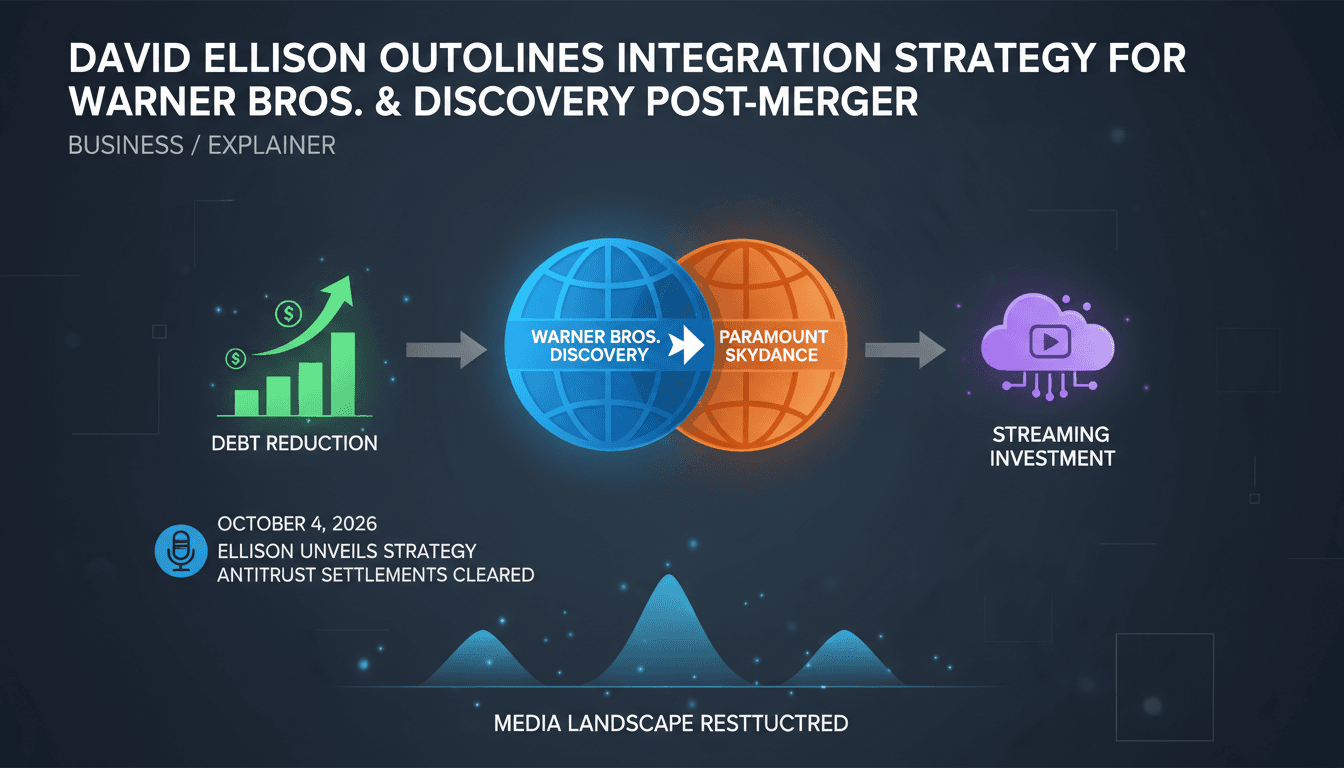
The recent merger of Paramount Skydance and Warner Bros. Discovery marks a pivotal moment in the media landscape, driven by a combination of strategic financial maneuvers and market pressures. David Ellison's integration strategy, unveiled at the Bloomberg Screentime conference, emphasizes two primary objectives: debt reduction and the enhancement of streaming infrastructure.
The acquisition, valued at $111 billion, was not just a financial transaction but a calculated move to consolidate power in an increasingly competitive market. By outbidding Netflix, Paramount Skydance has positioned itself as a formidable player, capable of leveraging a vast array of content from both Warner Bros. and Paramount Pictures. This merger is expected to create synergies that could streamline operations and reduce costs, particularly in content production and distribution.
However, the merger's approval came with significant regulatory scrutiny. The settlements with state attorneys general included commitments to invest $1.5 billion in U.S. film production and ensure a minimum of 30 annual theatrical releases. These concessions reflect a growing concern about monopolistic practices in the media industry, as regulators seek to maintain a competitive environment. The merger's success hinges on Ellison's ability to navigate these commitments while simultaneously managing the substantial debt incurred from the acquisition.
As the integration process unfolds, the focus will be on merging the Paramount+ and Max streaming platforms. While there are no immediate consumer-facing changes, the long-term implications could reshape how content is delivered and consumed. The consolidation of these platforms may lead to a more robust offering for subscribers, but it also raises questions about content diversity and accessibility.
In essence, the merger represents a strategic pivot in the media industry, where scale and efficiency are becoming paramount. As companies like Paramount Skydance and Warner Bros. Discovery consolidate, the landscape will likely see fewer players with greater control over content distribution, potentially impacting everything from production budgets to viewer choices.
Who feels it first (and how)
- Media executives: They will need to adapt to new operational structures and strategies as integration progresses.
- Content creators: Writers and producers may experience shifts in project funding and production timelines due to the merger's financial commitments.
- Consumers: Viewers may see changes in content availability and subscription models as platforms merge and evolve.
What to watch next
- Debt management: Monitor how effectively Paramount Skydance manages the debt from the acquisition, as this will influence future investments in content and technology.
- Streaming platform integration: Watch for updates on the merging of Paramount+ and Max, as this will affect content offerings and subscriber experiences.
- Regulatory responses: Keep an eye on any further regulatory scrutiny or challenges that may arise as the merger's impacts become clearer.
The merger has been cleared and integration planning is underway.
There will be a focus on debt reduction and enhanced streaming capabilities in the coming months.
The long-term effects on content diversity and consumer choice remain to be seen.
Frequently Asked Questions
- Why it matters?
- This merger reshapes the competitive landscape of the media industry, impacting content creation and distribution on a global scale.
- What happened (in 30 seconds)?
- David Ellison revealed his integration strategy for Warner Bros. Discovery at the Bloomberg Screentime conference on October 1, 2026. Paramount Skydance completed its $111 billion acquisition of Warner Bros. Discovery after settling antitrust lawsuits, allowing for a new media powerhouse. Integration plans focus on reducing debt and enhancing streaming capabilities, with no immediate changes for consumers.
- What's really happening?
- The recent merger of Paramount Skydance and Warner Bros. Discovery marks a pivotal moment in the media landscape, driven by a combination of strategic financial maneuvers and market pressures. David Ellison's integration strategy, unveiled at the Bloomberg Screentime conference, emphasizes two primary objectives: debt reduction and the enhancement of streaming infrastructure. The acquisition, valued at $111 billion, was not just a financial transaction but a calculated move to consolidate powe
- Who feels it first (and how)?
- Media executives: They will need to adapt to new operational structures and strategies as integration progresses. Content creators: Writers and producers may experience shifts in project funding and production timelines due to the merger's financial commitments. Consumers: Viewers may see changes in content availability and subscription models as platforms merge and evolve.
- What to watch next?
- Debt management: Monitor how effectively Paramount Skydance manages the debt from the acquisition, as this will influence future investments in content and technology. Streaming platform integration: Watch for updates on the merging of Paramount+ and Max, as this will affect content offerings and subscriber experiences. Regulatory responses: Keep an eye on any further regulatory scrutiny or challenges that may arise as the merger's impacts become clearer.
Technology business and AI-related headlines.
"Data-driven tech newsroom with global scope."
— A47 Editor
David Ellison’s Plan for Warner Bros. Is No Longer a Secret
David Ellison's strategy for Warner Bros. has been unveiled, focusing on reducing substantial debt while simultaneously expanding streaming capabilities. This plan aligns with the recent $110 billion acquisition of Warner Bros. Discovery (WBD) by Par...
U.S. business news, corporate developments, and economy.
"The Wall Street Journal is respected for deep financial and economic reporting with a center-right editorial perspective."
— A47 Editor
David Ellison Won Warner Bros. Now He Has to Make the $81 Billion Deal Work.
David Ellison has successfully finalized the $81 billion acquisition of Warner Bros. Discovery by Paramount, marking a significant milestone in the media landscape. This merger, which has faced various legal challenges, is now set to reshape the oper...
Hollywood business, film/TV deals, awards, and industry analysis.
"Variety is a leading entertainment trade publication covering Hollywood, film, TV, and media business."
— A47 Editor
European Entertainment Leaders Mostly Optimistic About David Ellison’s Takeover of Warner Bros. : ‘I Believe in His Commitment to Cinema’
David Ellison's takeover of Warner Bros. Discovery is nearing completion, with the $111 billion merger expected to finalize soon. European entertainment leaders have expressed optimism about this development, highlighting Ellison's commitment to cine...