
Saudi Aramco Begins Ship-to-Ship Crude Transfers Off Fujairah for Asian Markets
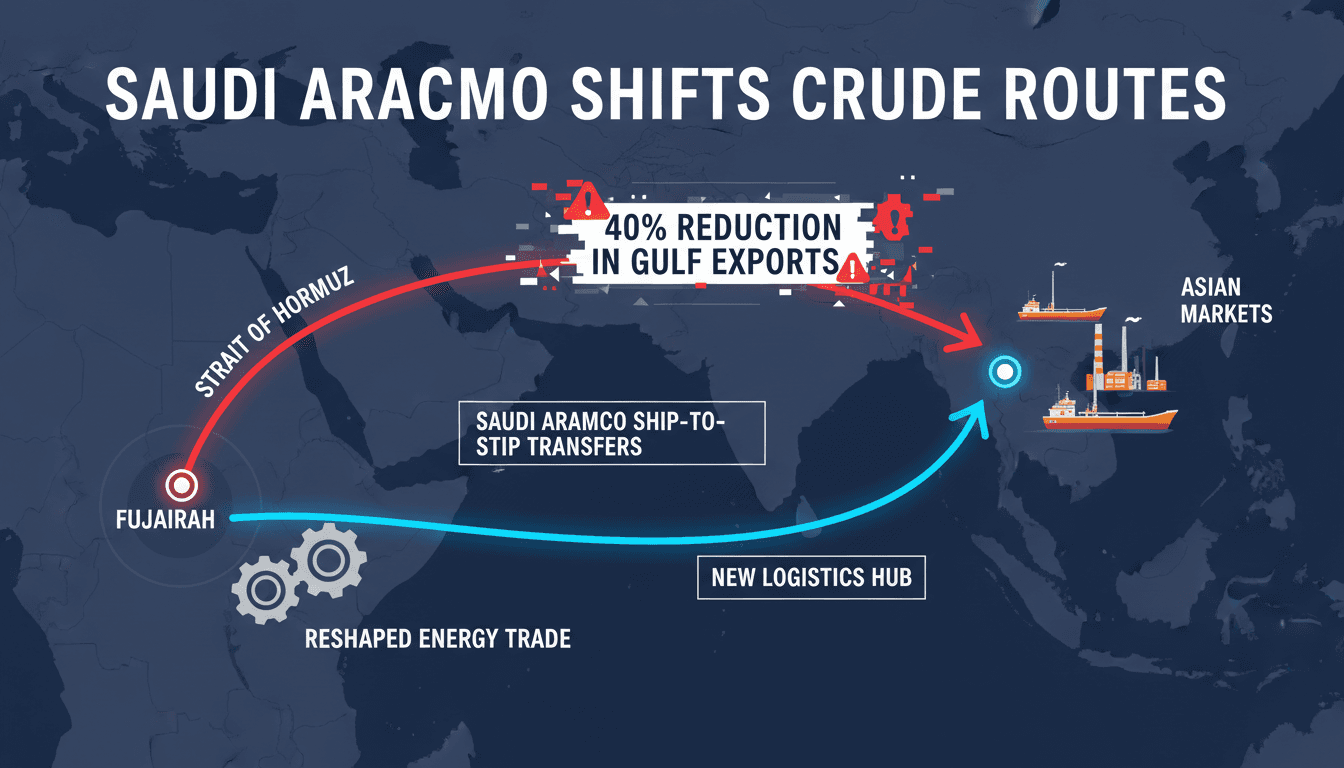
Here's what it means for you.
If you're in the energy sector, this shift could redefine supply chain strategies and pricing dynamics in Asia.
Why it matters
This move by Saudi Aramco reflects a significant adaptation to geopolitical risks that threaten global oil supply chains.
What happened (in 30 seconds)
- On August 17, 2026, Saudi Aramco initiated private negotiations to supply crude oil to Asian refiners via ship-to-ship transfers off Fujairah.
- This arrangement allows for crude delivery outside the Strait of Hormuz, addressing ongoing shipping disruptions that have cut Gulf crude exports by about 40%.
- Cargoes are targeted for September loading, marking a departure from Aramco's traditional terminal-based delivery system.
The context you actually need
- Prolonged disruptions in the Strait of Hormuz, linked to regional tensions, have severely impacted Gulf energy exports, with a 40% decline in combined exports from key producers.
- Fujairah's strategic position allows for alternative loading points, enhancing maritime logistics and potentially supporting local economies in the UAE.
- ADNOC's previous strategies of flexible delivery methods have set a precedent, indicating a broader trend among Gulf producers to adapt to changing market conditions.
What's really happening
Saudi Aramco's decision to engage in ship-to-ship crude transfers off Fujairah is a strategic response to significant disruptions in the Strait of Hormuz, a critical chokepoint for global oil shipments. The Strait has seen a marked decline in tanker traffic, with only six vessels reported on a recent day compared to an average of 11 over the previous ten days. This reduction is largely due to heightened geopolitical tensions, particularly involving Iran, which have raised security concerns for shipping routes in the region.
The implications of this shift are profound. By bypassing Hormuz, Aramco not only mitigates risks associated with potential disruptions but also aligns with ADNOC's flexible delivery strategies that have proven effective in maintaining sales to Asian markets. The UAE's Habshan-Fujairah pipeline, which has a bypass capacity of 3.5 to 5.5 million barrels per day, plays a crucial role in this new arrangement, allowing Aramco to maintain its supply commitments without relying on traditional Gulf export terminals.
This method of delivery is atypical for Aramco, which has historically relied on established terminal and contract systems. However, the current market dynamics necessitate flexibility. With combined crude exports from Saudi Arabia, the UAE, Iraq, Kuwait, and Iran plummeting to 10.7 million barrels per day in July—a 40% drop from pre-disruption levels—Aramco's pivot to ship-to-ship transfers is a calculated move to sustain its market share in Asia, the primary destination for Gulf crude.
The aftermath of this decision has already been felt in the oil markets, with Brent crude prices exceeding $91 per barrel and WTI above $85, driven by renewed supply concerns. Asian refiners are now in a stronger negotiating position, gaining leverage over loading locations and pricing. This shift not only impacts the immediate players involved but also signals a broader trend in the energy sector towards increased flexibility and adaptability in response to geopolitical risks.
Who feels it first (and how)
- Asian refiners: They gain negotiating power and flexibility in sourcing crude oil.
- Shipping companies: Increased demand for ship-to-ship transfer services may lead to new business opportunities.
- Local economies in Fujairah: Enhanced logistics activity could boost local port operations and related services.
- Energy traders: They will need to adjust strategies based on fluctuating supply dynamics and pricing pressures.
What to watch next
- Oil price fluctuations: Monitor how Brent and WTI prices respond to ongoing supply chain adjustments and geopolitical developments.
- Asian demand trends: Watch for shifts in Asian refiners' purchasing strategies as they adapt to new delivery methods.
- Geopolitical developments: Keep an eye on tensions in the Strait of Hormuz and Red Sea, as these will influence shipping routes and energy supply stability.
Saudi Aramco is negotiating ship-to-ship crude transfers to Asian refiners.
Oil prices will remain volatile as market participants react to supply chain changes.
The long-term impact on Gulf crude exports and regional geopolitical stability remains uncertain.
Frequently Asked Questions
- Why it matters?
- This move by Saudi Aramco reflects a significant adaptation to geopolitical risks that threaten global oil supply chains.
- What happened (in 30 seconds)?
- On August 17, 2026, Saudi Aramco initiated private negotiations to supply crude oil to Asian refiners via ship-to-ship transfers off Fujairah. This arrangement allows for crude delivery outside the Strait of Hormuz, addressing ongoing shipping disruptions that have cut Gulf crude exports by about 40%. Cargoes are targeted for September loading, marking a departure from Aramco's traditional terminal-based delivery system.
- What's really happening?
- Saudi Aramco's decision to engage in ship-to-ship crude transfers off Fujairah is a strategic response to significant disruptions in the Strait of Hormuz, a critical chokepoint for global oil shipments. The Strait has seen a marked decline in tanker traffic, with only six vessels reported on a recent day compared to an average of 11 over the previous ten days. This reduction is largely due to heightened geopolitical tensions, particularly involving Iran, which have raised security concerns for s
- Who feels it first (and how)?
- Asian refiners: They gain negotiating power and flexibility in sourcing crude oil. Shipping companies: Increased demand for ship-to-ship transfer services may lead to new business opportunities. Local economies in Fujairah: Enhanced logistics activity could boost local port operations and related services. Energy traders: They will need to adjust strategies based on fluctuating supply dynamics and pricing pressures.
- What to watch next?
- Oil price fluctuations: Monitor how Brent and WTI prices respond to ongoing supply chain adjustments and geopolitical developments. Asian demand trends: Watch for shifts in Asian refiners' purchasing strategies as they adapt to new delivery methods. Geopolitical developments: Keep an eye on tensions in the Strait of Hormuz and Red Sea, as these will influence shipping routes and energy supply stability.
English-language digital publication covering business, politics, technology, and current affairs.
"The Arabian Post mixes original and syndicated-style coverage with a broad regional and global business-news orientation."
— A47 Editor
Aramco offers Asian refiners crude via Fujairah
Saudi Aramco has begun offering crude oil to selected Asian refiners via Fujairah, bypassing the Strait of Hormuz, amid ongoing disruptions in the region. This new supply route is part of the company's strategy to adapt to the changing dynamics of Gu...
Arabic-language coverage of international news and geopolitics.
"RT Arabic is a Russian state-funded outlet often criticized for promoting Kremlin-aligned narratives."
— A47 Editor
مصادر: "أرامكو" تعرض النفط للبيع خارج مضيق هرمز
Sources indicate that Aramco has offered shipments of crude oil to several Asian refining companies, with delivery set to occur outside the strategically important Strait of Hormuz. This move highlights Aramco's efforts to diversify its export routes...
Global markets, investing, and macroeconomics from a premier financial newsroom.
"Bloomberg is respected for in-depth financial reporting and data-driven analysis."
— A47 Editor
Saudis Offer Oil From Near Oman in Possible Sign of Shuttling
Saudi Arabia has announced plans to sell oil from near the coast of Oman, indicating a potential shift towards shuttling more oil through the Strait of Hormuz, similar to recent actions taken by the United Arab Emirates. This move comes amid ongoing ...