
US Energy Official Reveals Half of Venezuela's Oil Exports Go to the US
Here's what it means for you.
If you’re in the energy sector, this shift could reshape supply chains and pricing dynamics.
Why it matters
This development signals a significant realignment in global oil trade, impacting prices and supply strategies.
What happened (in 30 seconds)
- US Energy Official Announcement: On August 19, 2026, Under Secretary Kyle Haustveit revealed that half of Venezuela's oil output is now exported to the US.
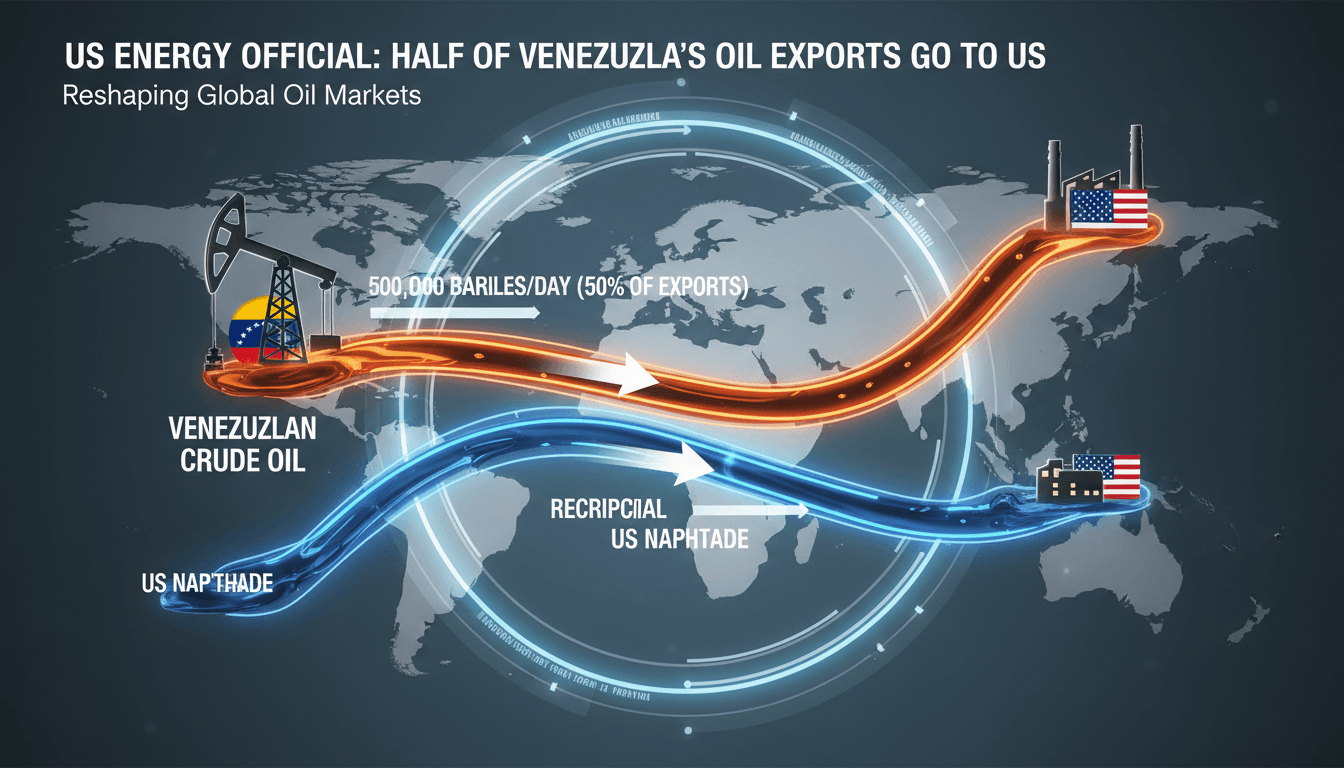
- Export Volume: Venezuela is sending over 500,000 barrels per day (bpd) to US refineries, which are configured for heavy crude.
- Reciprocal Trade: The US is also exporting more than 100,000 bpd of naphtha to Venezuela for blending purposes.
The context you actually need
- Venezuela's Oil Reserves: Venezuela holds the world's largest proven oil reserves but has struggled with production due to sanctions and infrastructure issues.
- US Refinery Demand: US refineries have a specific need for Venezuelan heavy crude, creating a mutual economic incentive for trade.
- Political Shifts: Recent changes in US policy and Venezuelan leadership have facilitated renewed energy cooperation, altering historical tensions.
What's really happening
The recent announcement by US Under Secretary of Energy Kyle Haustveit marks a pivotal moment in the energy landscape, particularly regarding Venezuela's oil exports. With Venezuela's oil production recovering to approximately 1.25 million bpd, the US is now importing about 500,000 bpd, which constitutes nearly half of Venezuela's total output. This shift is not merely a statistic; it reflects a pragmatic energy partnership that has evolved amid changing geopolitical dynamics.
Historically, Venezuela's oil industry has been hampered by sanctions, political instability, and infrastructure challenges. However, recent political shifts in both countries have opened the door for renewed cooperation. The US's demand for heavy crude, which is essential for certain refinery processes, aligns perfectly with Venezuela's production capabilities. This creates a symbiotic relationship where both nations benefit economically.
The reciprocal nature of this trade is also noteworthy. The US is exporting over 100,000 bpd of naphtha to Venezuela, which is crucial for diluting heavy crude to make it more transportable. This exchange not only stabilizes Venezuela's oil production but also ensures that US refineries can operate efficiently, maximizing their output and profitability.
Moreover, the announcement coincides with new production-sharing agreements between Venezuelan state oil company PDVSA and US firms like Hunt Oil and SLB. These agreements are expected to enhance production capabilities and optimize reservoir management, further solidifying the energy partnership. Venezuelan officials have emphasized the mutual benefits of this arrangement, framing it as a "beautiful partnership" that creates value for both sides.
As this bilateral trade continues to evolve, it could have broader implications for global oil markets. The increased Venezuelan exports may influence Brent crude prices and alter sourcing strategies for Asian markets, particularly as Dubai serves as a key trading hub. While the immediate effects on local markets in Dubai remain unverified, the interconnectedness of global oil trade means that shifts in one region can ripple through others.
Who feels it first (and how)
- Energy Sector Professionals: Increased demand for heavy crude may lead to job growth and investment opportunities in the sector.
- US Refiners: Companies reliant on Venezuelan crude will benefit from stable supply and potentially lower costs.
- Venezuelan Government: The government may see increased revenue from oil exports, aiding economic recovery efforts.
- Global Traders: Traders in oil markets will need to adjust strategies based on changing supply dynamics and pricing.
What to watch next
- Production Targets: Monitor Venezuela's ability to meet its production targets of 1.245 million bpd by the end of August, as this will influence export volumes.
- Market Reactions: Watch for fluctuations in Brent crude prices as Venezuelan exports increase, which could affect global oil pricing strategies.
- Geopolitical Developments: Keep an eye on any political changes in Venezuela or the US that could impact this energy partnership.
Venezuela is exporting approximately 500,000 bpd of oil to the US.
The energy partnership will continue to evolve, potentially leading to increased production and export volumes.
The long-term effects on global oil prices and market dynamics remain uncertain.
Frequently Asked Questions
- Why it matters?
- This development signals a significant realignment in global oil trade, impacting prices and supply strategies.
- What happened (in 30 seconds)?
- US Energy Official Announcement: On August 19, 2026, Under Secretary Kyle Haustveit revealed that half of Venezuela's oil output is now exported to the US. Export Volume: Venezuela is sending over 500,000 barrels per day (bpd) to US refineries, which are configured for heavy crude. Reciprocal Trade: The US is also exporting more than 100,000 bpd of naphtha to Venezuela for blending purposes.
- What's really happening?
- The recent announcement by US Under Secretary of Energy Kyle Haustveit marks a pivotal moment in the energy landscape, particularly regarding Venezuela's oil exports. With Venezuela's oil production recovering to approximately 1.25 million bpd, the US is now importing about 500,000 bpd, which constitutes nearly half of Venezuela's total output. This shift is not merely a statistic; it reflects a pragmatic energy partnership that has evolved amid changing geopolitical dynamics. Historically, Ven
- Who feels it first (and how)?
- Energy Sector Professionals: Increased demand for heavy crude may lead to job growth and investment opportunities in the sector. US Refiners: Companies reliant on Venezuelan crude will benefit from stable supply and potentially lower costs. Venezuelan Government: The government may see increased revenue from oil exports, aiding economic recovery efforts. Global Traders: Traders in oil markets will need to adjust strategies based on changing supply dynamics and pricing.
- What to watch next?
- Production Targets: Monitor Venezuela's ability to meet its production targets of 1.245 million bpd by the end of August, as this will influence export volumes. Market Reactions: Watch for fluctuations in Brent crude prices as Venezuelan exports increase, which could affect global oil pricing strategies. Geopolitical Developments: Keep an eye on any political changes in Venezuela or the US that could impact this energy partnership.
Pan-Arab news coverage spanning politics, business, sports, and regional affairs.
"Asharq Al-Awsat reflects a broad Arab editorial perspective with strong attention to regional geopolitics."
— A47 Editor
مسؤول أميركي: نصف إنتاج النفط الفنزويلي يُصدّر إلى الولايات المتحدة
Kyle Howstvet, the U.S. Deputy Secretary of Energy, announced that approximately half of Venezuela's oil production is currently being exported to the United States. This marks a significant development in the energy trade between the two countries, ...
Global news coverage with extensive reporting on Middle Eastern conflicts and geopolitics.
"Al Jazeera is a Qatar-based broadcaster known for wide regional coverage and alternative perspectives."
— A47 Editor
US refineries taking in half of Venezuela’s oil output, official says
A U.S. official has reported that Venezuela is currently supplying 500,000 barrels of oil per day to Gulf Coast refineries, which constitutes approximately 40% of its total output of 1.25 million barrels daily. This development highlights the ongoing...
Comprehensive coverage of Middle Eastern and global issues.
"Al Jazeera is a prominent voice from the Global South, especially the Middle East, with an emphasis on underreported stories."
— A47 Editor
US refineries taking in half of Venezuela’s oil output, official says
A U.S. official has reported that Venezuela is currently supplying 500,000 barrels of oil per day to Gulf Coast refineries, which constitutes approximately 40% of its total output of 1.25 million barrels daily. This development highlights the ongoing...
Macro commentary, policy analysis, growth/inflation themes, and global outlooks.
"Contextual macro coverage that complements day-to-day market headlines."
— A47 Editor
Venezuela sends half its oil production to US refineries, Haustveit says
Venezuela is currently sending half of its oil production to U.S. refineries, as reported by Haustveit, highlighting a significant shift in the country's oil export strategy amidst ongoing economic challenges.