
Sinopec Reports 19.3% Net Profit Increase Amid Middle East Supply Crisis
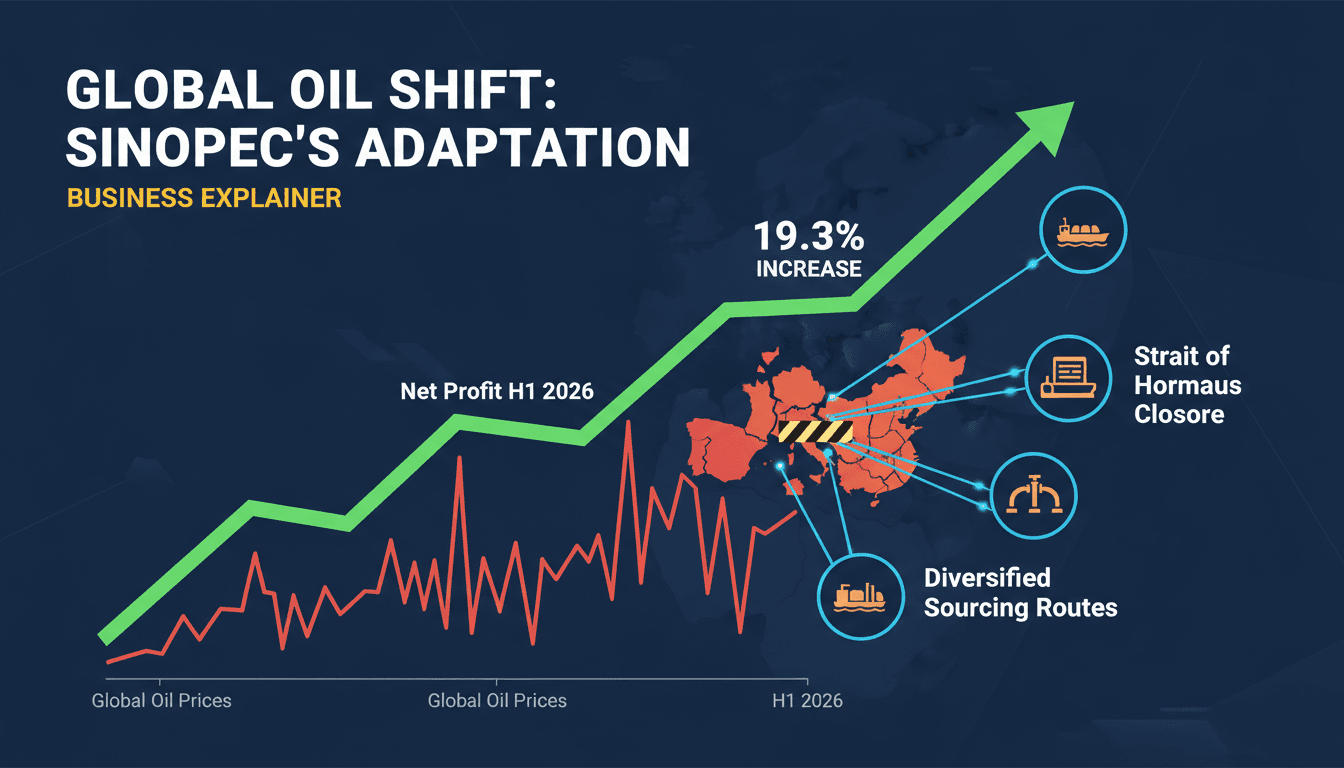
Here's what it means for you.
Rising global oil prices could impact your energy costs and transportation expenses.
Why it matters
Sinopec's profit growth highlights resilience in the oil sector despite geopolitical disruptions, affecting global energy markets.
What happened (in 30 seconds)
- Sinopec reported a 19.3% year-on-year net profit increase for H1 2026, totaling 25.63 billion yuan ($3.81 billion).
- The company faced challenges from the ongoing Middle East crisis, which has disrupted crude oil shipments since March 2026.
- Sinopec diversified its crude sourcing and optimized operations to counteract reduced processing volumes and domestic demand weakness.
The context you actually need
- The Middle East crisis has severely impacted crude oil shipments, with Sinopec sourcing about half of its crude from this region.
- Domestic fuel demand in China has declined, while government controls limit the ability to pass on higher costs to consumers.
- Sinopec's refining margins rose by 44.1% to 453 yuan per metric ton, indicating effective operational adjustments despite external pressures.
What's really happening
On August 23, 2026, Sinopec's financial results revealed a significant net profit increase of 19.3% for the first half of the year, driven by strategic operational adjustments amid a challenging market environment. The ongoing crisis in the Middle East, particularly the closure of the Strait of Hormuz since March, has created substantial disruptions in crude oil shipments, which directly affects Sinopec as it sources approximately half of its crude from this region.
Despite these challenges, Sinopec managed to achieve a net profit of 25.63 billion yuan ($3.81 billion), up from 21.48 billion yuan in the previous year. This growth can be attributed to a remarkable 44.1% rise in refining margins, which reached 453 yuan per metric ton, and a staggering 381.5% increase in operating profit from its refining segment. The company’s ability to broaden its crude sourcing beyond the Middle East, optimize the timing of purchases, and adjust its product mix played a crucial role in this financial success.
However, the company did face operational challenges, with crude processing volumes falling by 5.6% to 113.31 million metric tons (4.57 million barrels per day). Additionally, Sinopec recorded a 16 billion yuan asset impairment provision due to the volatility in oil and fuel prices, indicating that while profits rose, the company is still navigating a turbulent market landscape.
The implications of Sinopec's performance extend beyond its balance sheet. The company's ability to adapt to supply chain disruptions and price volatility reflects broader trends in the global oil market. As geopolitical tensions continue to influence energy prices, Sinopec's strategies may serve as a model for other companies facing similar challenges. The resilience demonstrated by Sinopec could signal to investors and stakeholders that there are opportunities for growth even in adverse conditions, provided that companies are willing to innovate and adapt.
Who feels it first (and how)
- Consumers in China: Higher energy costs may be passed down, affecting household budgets.
- Global oil markets: Increased prices could lead to volatility in energy costs worldwide.
- Transport sectors: Rising fuel prices may impact logistics and transportation costs, affecting pricing for goods.
What to watch next
- Global oil prices: Monitor Brent crude prices, currently around $93.93 per barrel, as they will influence Sinopec's profitability and operational decisions.
- Sinopec's operational adjustments: Watch for further announcements on how the company plans to diversify its crude sourcing and manage costs.
- Domestic demand trends in China: Keep an eye on fuel demand patterns, as any recovery or decline will directly impact Sinopec's performance.
Sinopec's net profit increased by 19.3% in H1 2026.
Continued volatility in global oil prices will affect energy costs.
The long-term impact of the Middle East crisis on Sinopec's sourcing strategies.
Frequently Asked Questions
- Why it matters?
- Sinopec's profit growth highlights resilience in the oil sector despite geopolitical disruptions, affecting global energy markets.
- What happened (in 30 seconds)?
- Sinopec reported a 19.3% year-on-year net profit increase for H1 2026, totaling 25.63 billion yuan ($3.81 billion). The company faced challenges from the ongoing Middle East crisis, which has disrupted crude oil shipments since March 2026. Sinopec diversified its crude sourcing and optimized operations to counteract reduced processing volumes and domestic demand weakness.
- What's really happening?
- On August 23, 2026, Sinopec's financial results revealed a significant net profit increase of 19.3% for the first half of the year, driven by strategic operational adjustments amid a challenging market environment. The ongoing crisis in the Middle East, particularly the closure of the Strait of Hormuz since March, has created substantial disruptions in crude oil shipments, which directly affects Sinopec as it sources approximately half of its crude from this region. Despite these challenges, S
- Who feels it first (and how)?
- Consumers in China: Higher energy costs may be passed down, affecting household budgets. Global oil markets: Increased prices could lead to volatility in energy costs worldwide. Transport sectors: Rising fuel prices may impact logistics and transportation costs, affecting pricing for goods.
- What to watch next?
- Global oil prices: Monitor Brent crude prices, currently around $93.93 per barrel, as they will influence Sinopec's profitability and operational decisions. Sinopec's operational adjustments: Watch for further announcements on how the company plans to diversify its crude sourcing and manage costs. Domestic demand trends in China: Keep an eye on fuel demand patterns, as any recovery or decline will directly impact Sinopec's performance.
Quarterly results: revenue/EPS beats or misses, guidance changes, and key line-item takeaways.
"Good snapshot feed for earnings season; pair with transcripts for context."
— A47 Editor
Sinopec reports 19% profit jump in H1 2026 despite Middle East crisis
Sinopec reported a 19% profit increase in the first half of 2026, achieving significant financial growth despite ongoing crises in the Middle East that have impacted global oil markets. This performance highlights the company's resilience amid geopol...
Regional and international reporting focused on Middle Eastern politics, diplomacy, and economics.
"Asharq Al-Awsat is a Saudi-owned international newspaper reflecting mainstream Gulf political perspectives."
— A47 Editor
Sinopec's Half-year Profit Grew 19.3% on Year Despite Iran War
Sinopec reported a 19.3% increase in its half-year profit compared to the previous year, despite ongoing geopolitical tensions stemming from the Iran War. This growth reflects the company's resilience in a challenging market environment.
Pan-Arab news coverage spanning politics, business, sports, and regional affairs.
"Asharq Al-Awsat reflects a broad Arab editorial perspective with strong attention to regional geopolitics."
— A47 Editor
زيادة أسعار الطاقة ترفع أرباح «سينوبك» الصينية 12 % في النصف الأول
Sinopec, China's largest oil refining company, reported a 12% increase in profits during the first half of the year, driven by rising global energy prices. This growth reflects the company's ability to capitalize on favorable market conditions amid f...