
Iraq Takes Control of Crude Oil Transit Through Hormuz Amid Regional Tensions
Why it matters
This strategic move by Iraq could reshape oil export logistics in the Gulf, influencing global crude prices and shipping rates.
What happened (in 30 seconds)
- Iraq's state-owned Iraqi Oil Tankers Company (IOTC) completed its first VLCC transit of 2 million barrels of crude beyond the Strait of Hormuz on October 4, 2026.
- This marks a significant shift in oil export strategy, with the Iraqi government taking control of oil movement rather than relying on buyers.
- The operation responds to heightened risks in the Strait of Hormuz amid ongoing US-Iran tensions, allowing Iraq to access more refiners and potentially secure better pricing.
The context you actually need
- The US-Iran conflict has disrupted oil flows in the Gulf, increasing shipping risks and costs for Middle Eastern producers.
- Iraq's oil exports previously relied on buyer-arranged liftings at Basra, with the country exporting around 3.3 million barrels per day.
- Regional competitors like Abu Dhabi National Oil Co. have expanded their shipping fleets to mitigate similar risks, indicating a broader trend in the region.
What's really happening
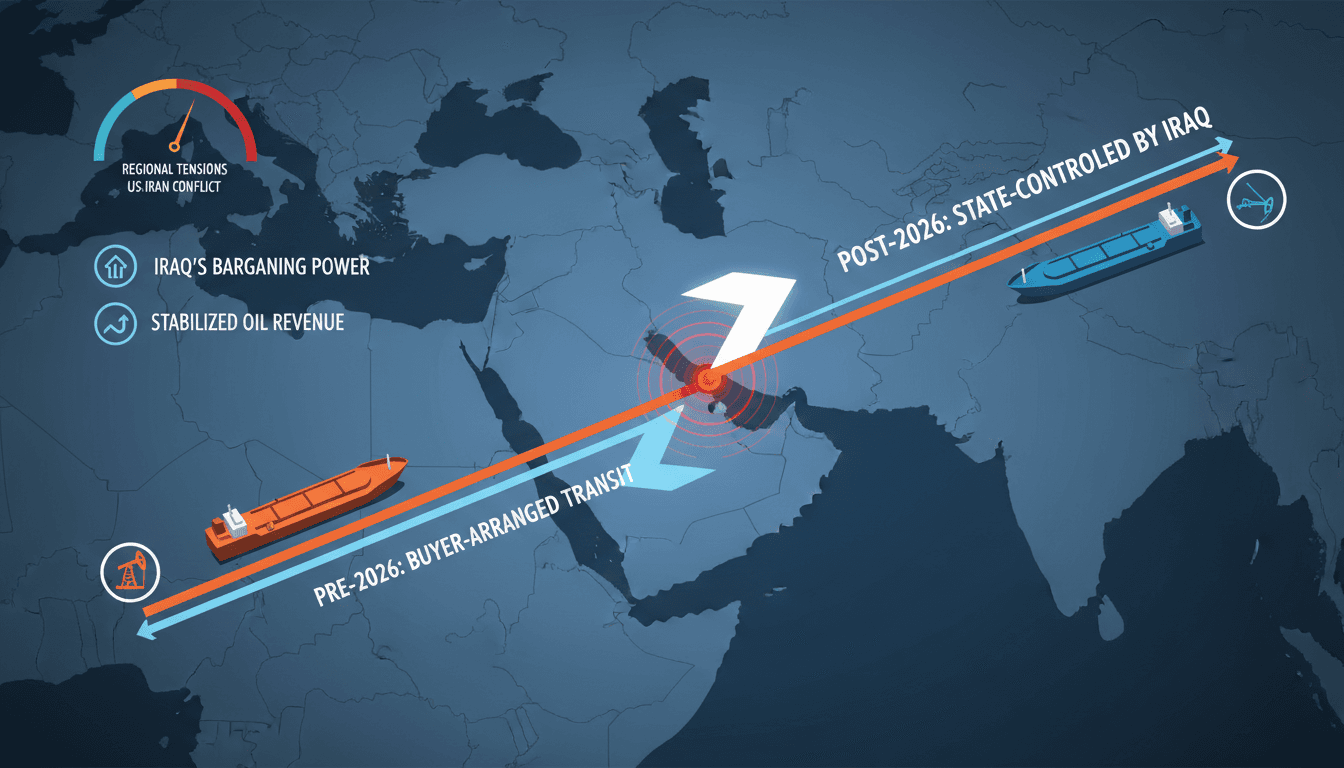
On October 4, 2026, Iraq's IOTC loaded a Very Large Crude Carrier (VLCC) with 2 million barrels of crude oil and successfully navigated it through the Strait of Hormuz. This operation is notable as it represents the first time in decades that the Iraqi government has taken direct control over oil transit through this critical chokepoint. Traditionally, oil buyers arranged for the collection of crude at Basra terminals, leaving Iraq vulnerable to external market fluctuations and geopolitical tensions.
The decision to shift to a state-controlled transit model comes amid escalating risks in the Strait of Hormuz, a vital passage for global oil shipments. The ongoing US-Iran conflict has heightened concerns over shipping safety, prompting Iraq to secure its own tanker capacity. By taking charge of the logistics, Iraq aims to reduce buyer exposure to transit hazards, potentially allowing it to negotiate better pricing with refiners who may be willing to pay a premium for more secure supply lines.
Iraq's Oil Minister Basim Mohammed Khudair has indicated that the government is actively seeking funding to purchase additional tankers outright, which would further enhance its control over oil exports. This move is not just about immediate logistics; it reflects a strategic pivot that could redefine Iraq's position in the global oil market. The initial success of the VLCC transit has led to plans for additional charters, including at least one more VLCC and a Suezmax tanker, indicating a commitment to expanding this new operational model.
As global crude tanker rates surge, with freight costs from the Middle East Gulf to China reaching new highs, Iraq's strategy could have ripple effects across the region. Elevated tanker rates and increased risk premiums may lead to higher delivered crude costs for refiners and traders in the UAE, while simultaneously benefiting Dubai's maritime and logistics sectors as they adapt to the changing landscape of Gulf oil exports.
Who feels it first (and how)
- Oil producers in Iraq will gain more control over their export logistics, potentially increasing revenue.
- Refiners and traders in the UAE may face higher costs due to increased shipping rates and risk premiums.
- Shipping companies could see increased demand for tanker capacity as Iraq expands its fleet and operational capabilities.
What to watch next
- Expansion of Iraq's tanker fleet: Monitoring the acquisition of additional tankers will indicate Iraq's commitment to this new strategy and its potential impact on global oil logistics.
- Changes in global crude prices: Fluctuations in oil prices following this strategic shift will reveal how the market is responding to Iraq's increased control over its exports.
- Regional geopolitical developments: Ongoing tensions in the US-Iran conflict could further influence shipping risks and costs, affecting Iraq's oil export strategy.
Iraq has successfully completed its first state-controlled oil transit through the Strait of Hormuz.
Iraq will continue to expand its tanker fleet and operational capabilities to enhance export control.
The long-term impact on global oil prices and shipping rates remains to be seen as the market adjusts to these changes.
Frequently Asked Questions
- Why it matters?
- This strategic move by Iraq could reshape oil export logistics in the Gulf, influencing global crude prices and shipping rates.
- What happened (in 30 seconds)?
- Iraq's state-owned Iraqi Oil Tankers Company (IOTC) completed its first VLCC transit of 2 million barrels of crude beyond the Strait of Hormuz on October 4, 2026. This marks a significant shift in oil export strategy, with the Iraqi government taking control of oil movement rather than relying on buyers. The operation responds to heightened risks in the Strait of Hormuz amid ongoing US-Iran tensions, allowing Iraq to access more refiners and potentially secure better pricing.
- What's really happening?
- On October 4, 2026, Iraq's IOTC loaded a Very Large Crude Carrier (VLCC) with 2 million barrels of crude oil and successfully navigated it through the Strait of Hormuz. This operation is notable as it represents the first time in decades that the Iraqi government has taken direct control over oil transit through this critical chokepoint. Traditionally, oil buyers arranged for the collection of crude at Basra terminals, leaving Iraq vulnerable to external market fluctuations and geopolitical tens
- Who feels it first (and how)?
- Oil producers in Iraq will gain more control over their export logistics, potentially increasing revenue. Refiners and traders in the UAE may face higher costs due to increased shipping rates and risk premiums. Shipping companies could see increased demand for tanker capacity as Iraq expands its fleet and operational capabilities.
- What to watch next?
- Expansion of Iraq's tanker fleet: Monitoring the acquisition of additional tankers will indicate Iraq's commitment to this new strategy and its potential impact on global oil logistics. Changes in global crude prices: Fluctuations in oil prices following this strategic shift will reveal how the market is responding to Iraq's increased control over its exports. Regional geopolitical developments: Ongoing tensions in the US-Iran conflict could further influence shipping risks and costs, affecting
Global markets, investing, and macroeconomics from a premier financial newsroom.
"Bloomberg is respected for in-depth financial reporting and data-driven analysis."
— A47 Editor
Iraq Shifts Oil Strategy by Arranging Tanker to Move Past Hormuz
Iraq's state tanker company has arranged a very large crude carrier to transport 2 million barrels of oil beyond the Strait of Hormuz, indicating a strategic shift in its oil export strategy aimed at reducing reliance on the Persian Gulf.
UAE-based English-language newspaper covering regional politics, economics, and global affairs.
"The National reflects Emirati policy perspectives while maintaining international editorial standards."
— A47 Editor
Iraq transports its oil through Strait of Hormuz as US-Iran war chokes exports
Iraq is currently transporting its oil through the Strait of Hormuz amidst ongoing tensions between the United States and Iran, which have severely impacted oil exports in the region. This situation has arisen as geopolitical conflicts escalate, affe...
Oil, metals, and agriculture: supply/demand headlines, OPEC chatter, inventories, and price action.
"Solid tape for energy and metals traders tracking macro and micro catalysts."
— A47 Editor
Iraq’s state tanker firm moves crude through Hormuz strait
Iraq's state tanker firm has commenced the transportation of crude oil through the strategically significant Strait of Hormuz, utilizing a very large crude carrier to move 2 million barrels. This operation marks a notable shift in Iraq's oil export s...