
Aramco CEO Warns of Critical Low Global Oil Inventories Amid Middle East Supply Disruptions
Why it matters
The depletion of global oil inventories signals potential instability in energy markets, affecting prices and availability.
What happened (in 30 seconds)
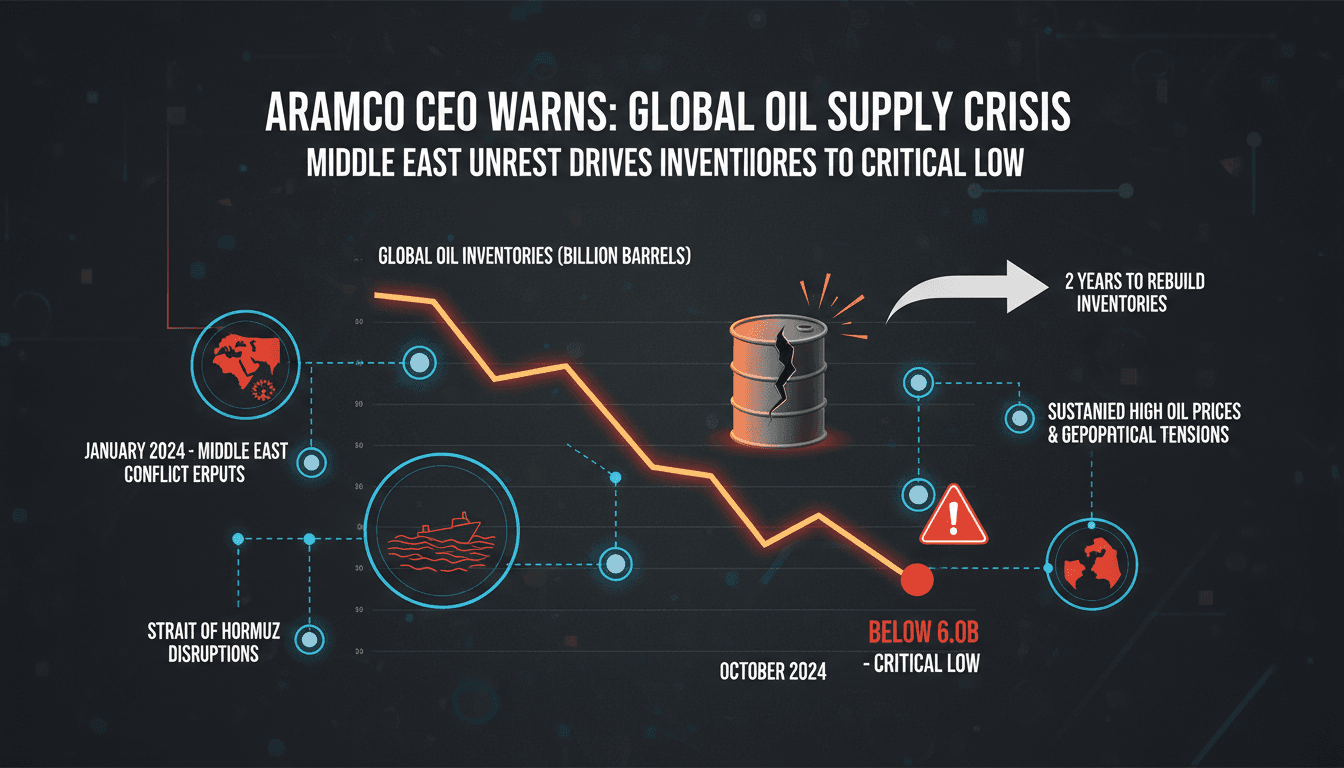
- Amin Nasser, CEO of Saudi Aramco, warned that global oil inventories have fallen below 6 billion barrels, a critical low.
- The warning follows a seven-month conflict involving the U.S., Israel, and Iran, which disrupted oil supplies through the Strait of Hormuz.
- Emergency releases from strategic reserves provide only temporary relief, as rebuilding inventories could take up to two years.
The context you actually need
- The Strait of Hormuz is a vital chokepoint for oil transport, with ongoing disruptions exacerbating supply shortages.
- Approximately 3 billion barrels of oil supplies have been lost due to the recent conflict, nearly half of what typically transits the Strait.
- Spot prices for North Sea crude have surged to levels not seen since April, reflecting heightened market pressures.
What's really happening
Amin Nasser's warning at the Energy Intelligence Forum in London on October 5, 2026, underscores a critical juncture for global oil markets. With inventories now below 6 billion barrels, the situation is precarious. Most of these remaining stocks are not readily available for immediate use due to operational constraints, meaning that the effective supply is even lower. The conflict in the Middle East has severely impacted oil flows, particularly through the Strait of Hormuz, a crucial artery for global oil transport.
The ongoing geopolitical tensions have led to increased scrutiny of energy infrastructure, with satellite imagery and shipping data being used to monitor and target key assets. Recent attacks on vessels in the Strait and Aramco facilities have heightened fears of further disruptions, leading to a spike in spot prices for crude oil. The market is reacting to these vulnerabilities, with analysts noting that refined fuel prices are rising even faster than crude prices, indicating a supply-demand imbalance that could persist.
Saudi Aramco is exploring alternative export routes and expanding overseas storage to mitigate these risks. However, the CEO's emphasis on the need for energy security highlights the long-term challenges facing the industry. The depletion of inventories and the reliance on emergency releases from strategic reserves are not sustainable solutions. As the market grapples with these realities, the potential for price volatility remains high.
The implications of this situation extend beyond immediate price increases. Businesses and consumers alike will feel the impact of rising fuel costs, which can ripple through the economy, affecting everything from transportation to manufacturing. The urgency of rebuilding inventories is compounded by the fact that even if the Strait of Hormuz were to reopen fully, it could take up to two years to restore supply levels to pre-conflict norms.
Who feels it first (and how)
- Consumers: Higher fuel prices will directly affect transportation and daily commuting costs.
- Businesses: Increased operational costs for logistics and supply chain management, particularly in energy-intensive sectors.
- Transport sector: Airlines and shipping companies will face rising fuel costs, potentially leading to higher ticket prices and freight charges.
- Investors: Those in energy markets may experience volatility in stock prices and investment returns.
What to watch next
- Global oil prices: Monitor fluctuations in crude and refined product prices as supply constraints continue.
- Geopolitical developments: Watch for any changes in the conflict dynamics in the Middle East that could further impact oil supply.
- Strategic reserve releases: Keep an eye on announcements from governments regarding additional releases from strategic reserves to gauge market responses.
Global oil inventories are critically low, below 6 billion barrels.
Fuel prices will rise as supply constraints persist.
The duration of the geopolitical conflict and its long-term impact on oil supply.
Frequently Asked Questions
- Why it matters?
- The depletion of global oil inventories signals potential instability in energy markets, affecting prices and availability.
- What happened (in 30 seconds)?
- Amin Nasser, CEO of Saudi Aramco, warned that global oil inventories have fallen below 6 billion barrels, a critical low. The warning follows a seven-month conflict involving the U.S., Israel, and Iran, which disrupted oil supplies through the Strait of Hormuz. Emergency releases from strategic reserves provide only temporary relief, as rebuilding inventories could take up to two years.
- What's really happening?
- Amin Nasser's warning at the Energy Intelligence Forum in London on October 5, 2026, underscores a critical juncture for global oil markets. With inventories now below 6 billion barrels, the situation is precarious. Most of these remaining stocks are not readily available for immediate use due to operational constraints, meaning that the effective supply is even lower. The conflict in the Middle East has severely impacted oil flows, particularly through the Strait of Hormuz, a crucial artery for
- Who feels it first (and how)?
- Consumers: Higher fuel prices will directly affect transportation and daily commuting costs. Businesses: Increased operational costs for logistics and supply chain management, particularly in energy-intensive sectors. Transport sector: Airlines and shipping companies will face rising fuel costs, potentially leading to higher ticket prices and freight charges. Investors: Those in energy markets may experience volatility in stock prices and investment returns.
- What to watch next?
- Global oil prices: Monitor fluctuations in crude and refined product prices as supply constraints continue. Geopolitical developments: Watch for any changes in the conflict dynamics in the Middle East that could further impact oil supply. Strategic reserve releases: Keep an eye on announcements from governments regarding additional releases from strategic reserves to gauge market responses.
English-language reporting on Saudi politics, policy, and society.
"Saudi Gazette reflects mainstream Saudi institutional perspectives."
— A47 Editor
Aramco chief sounds alarm as global oil stocks hit critical lows
Saudi Aramco CEO Amin Nasser has raised concerns over critically low global oil stockpiles, warning that energy markets remain vulnerable to supply disruptions unless the Strait of Hormuz is fully reopened. He noted that rebuilding reserves depleted ...
English-language reporting focused on Saudi Arabia and regional affairs.
"Saudi Gazette provides English-language coverage that often aligns with mainstream Saudi news priorities."
— A47 Editor
Aramco chief sounds alarm as global oil stocks hit critical lows
Saudi Aramco CEO Amin Nasser has raised concerns over critically low global oil stockpiles, warning that energy markets remain vulnerable to supply disruptions unless the Strait of Hormuz is fully reopened. He noted that rebuilding reserves depleted ...
U.S. business news, corporate developments, and economy.
"The Wall Street Journal is respected for deep financial and economic reporting with a center-right editorial perspective."
— A47 Editor
Aramco CEO Says Oil Inventories Could Take Two Years to Rebuild
Amin Nasser, CEO of Aramco, has indicated that global oil inventories are alarmingly low, with estimates suggesting less than 6 billion barrels of commercial inventories remain, most of which are not readily available. He stated that it could take up...
Sports reporting with a focus on Saudi and regional competitions.
"Okaz sports coverage is broad and audience-friendly, with strong attention to Saudi teams and leagues."
— A47 Editor
«أرامكو» تحذر: مخزونات النفط العالمية عند مستويات شحيحة ومقلقة
Amin Nasser, CEO of Saudi Aramco, warned that global oil inventories have reached concerningly low levels, exacerbated by the ongoing conflict in the Middle East. He noted that approximately 3 billion barrels of oil supplies have been lost due to the...