
Tanker Captains Receive Record Hazard Pay Amid Iranian Attacks in Strait of Hormuz
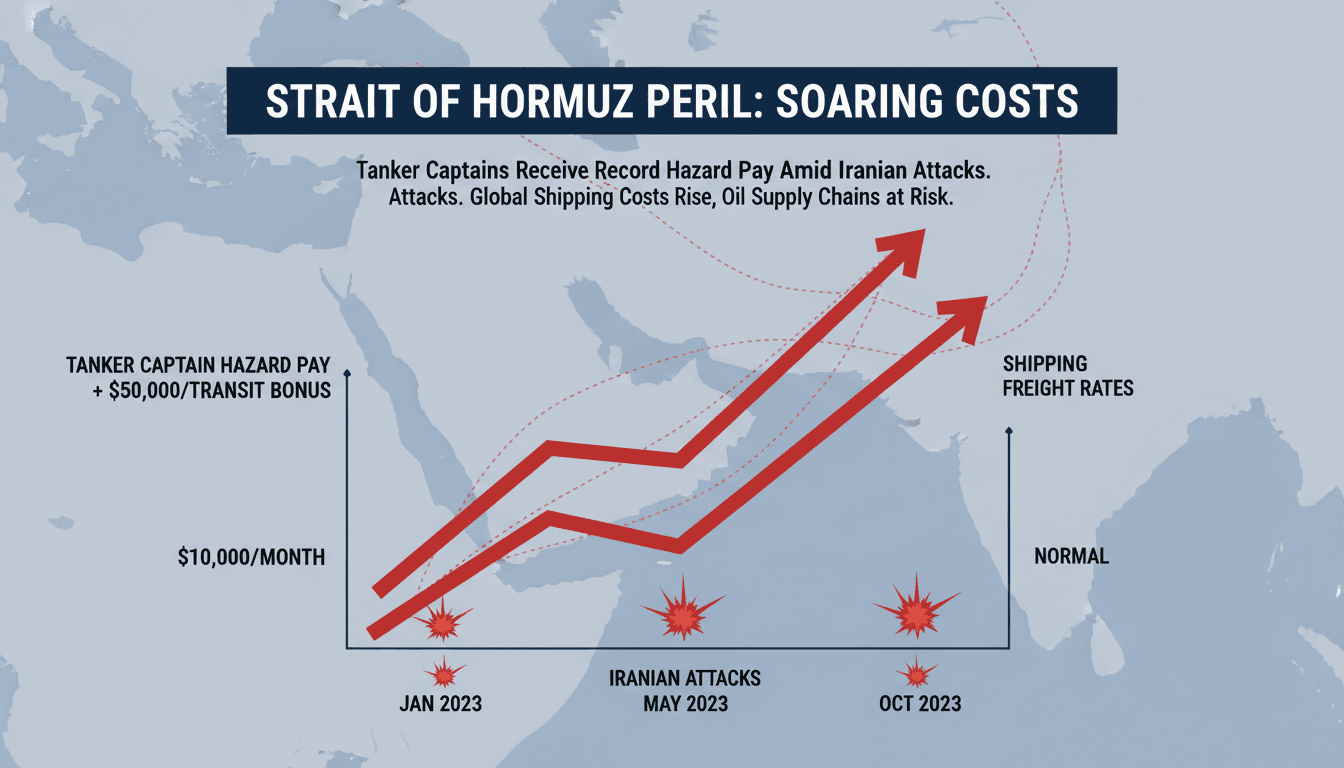
Why it matters
The Strait of Hormuz is a critical chokepoint for global energy exports, and heightened risks are driving up operational costs.
What happened (in 30 seconds)
- Tanker captains began receiving hazard pay packages of up to $100,000 monthly plus $50,000 per transit bonus in October 2026.
- Iranian attacks on commercial vessels intensified, prompting shipowners to increase compensation to secure crews.
- Freight rates surged to $1.3 million per day, significantly impacting oil and LNG shipment costs.
The context you actually need
- The Strait of Hormuz is vital for global energy exports, with approximately 20% of oil and LNG shipments passing through.
- Prior to October 2026, average salaries for tanker captains were around $15,000 monthly, with ordinary crew members earning about $1,500.
- Since February 2026, Iranian forces have escalated attacks on shipping, leading to a dramatic rise in hazard pay and freight rates.
What's really happening
In early October 2026, tanker captains began receiving unprecedented compensation packages due to escalating security risks in the Strait of Hormuz. The Iranian military has intensified attacks on commercial vessels, with at least 14 incidents reported since September 20, 2026. This surge in aggression has prompted shipowners to offer captains monthly salaries reaching $100,000, along with a $50,000 bonus for each crossing. Ordinary crew members are also benefiting, with their pay increasing four to six times the standard rates during these high-risk transits.
The implications of this pay escalation are significant. Freight rates have skyrocketed to $1.3 million per day, a stark increase from the previous range of $20,000 to $50,000. This dramatic rise is compounded by war-risk insurance premiums that can reach up to $20 million per Very Large Crude Carrier (VLCC) voyage. Additionally, bunker fuel prices have surged by 67% year-over-year, further straining shipping operations.
Despite these challenges, Gulf oil producers are continuing to route crude through the Strait of Hormuz, albeit at one-third below pre-conflict levels. This decision reflects a commitment to maintaining crude flows despite the elevated risks. However, the increased operational costs are likely to be passed on to consumers, affecting global oil prices and potentially leading to higher energy costs for end-users.
The ongoing situation highlights the precarious balance between securing energy supplies and managing the risks associated with maritime operations in conflict-prone regions. As shipowners and crews navigate these challenges, the broader implications for global energy markets and pricing structures are becoming increasingly pronounced.
Who feels it first (and how)
- Tanker captains and crews: Directly benefit from increased salaries and bonuses.
- Shipping companies: Face higher operational costs, impacting profit margins.
- Oil producers: Must navigate increased shipping costs while maintaining supply levels.
- Consumers: Will likely see rising energy prices as shipping costs escalate.
- Global markets: May experience volatility due to supply chain disruptions and increased freight rates.
What to watch next
- Freight rate trends: Monitor how shipping costs evolve in response to ongoing risks in the Strait of Hormuz.
- Insurance premiums: Watch for changes in war-risk insurance costs, which could further impact shipping operations.
- Oil price fluctuations: Keep an eye on global oil prices, as increased shipping costs may lead to higher consumer prices.
Tanker captains are receiving record hazard pay due to heightened risks.
Shipping costs will continue to rise, affecting global oil prices.
The long-term impact on Gulf oil production and shipping operations remains uncertain.
Frequently Asked Questions
- Why it matters?
- The Strait of Hormuz is a critical chokepoint for global energy exports, and heightened risks are driving up operational costs.
- What happened (in 30 seconds)?
- Tanker captains began receiving hazard pay packages of up to $100,000 monthly plus $50,000 per transit bonus in October 2026. Iranian attacks on commercial vessels intensified, prompting shipowners to increase compensation to secure crews. Freight rates surged to $1.3 million per day, significantly impacting oil and LNG shipment costs.
- What's really happening?
- In early October 2026, tanker captains began receiving unprecedented compensation packages due to escalating security risks in the Strait of Hormuz. The Iranian military has intensified attacks on commercial vessels, with at least 14 incidents reported since September 20, 2026. This surge in aggression has prompted shipowners to offer captains monthly salaries reaching $100,000, along with a $50,000 bonus for each crossing. Ordinary crew members are also benefiting, with their pay increasing fou
- Who feels it first (and how)?
- Tanker captains and crews: Directly benefit from increased salaries and bonuses. Shipping companies: Face higher operational costs, impacting profit margins. Oil producers: Must navigate increased shipping costs while maintaining supply levels. Consumers: Will likely see rising energy prices as shipping costs escalate. Global markets: May experience volatility due to supply chain disruptions and increased freight rates.
- What to watch next?
- Freight rate trends: Monitor how shipping costs evolve in response to ongoing risks in the Strait of Hormuz. Insurance premiums: Watch for changes in war-risk insurance costs, which could further impact shipping operations. Oil price fluctuations: Keep an eye on global oil prices, as increased shipping costs may lead to higher consumer prices.
Editor-curated FT homepage stories spanning markets, business, world, and opinion.
"The Financial Times is a globally respected business publication with a centrist/center-left tone and strong markets focus."
— A47 Editor
Ships’ captains paid $100,000 a month to transit Strait of Hormuz
Ships' captains are reportedly being paid $100,000 a month to navigate the perilous Strait of Hormuz, a vital waterway for global oil transport, amid escalating Iranian attacks that have heightened risks for maritime transit. This surge in compensati...
Global business headlines with AI angles.
"General business outlet that frequently covers AI."
— A47 Editor
Sailors Are Reportedly Being Offered $25,000 For Gulf Oil Runs as Hormuz Strait Continues to be a Battle Zone
Sailors are reportedly being offered $25,000 for oil runs through the Gulf as the Strait of Hormuz remains a dangerous area due to ongoing military tensions and missile threats. Despite a recovery in oil flows from wartime lows, crews face significan...
Global political, business, and cultural coverage from WSJ international desks.
"The Wall Street Journal offers extensive international reporting with a reputation for financial insight and a center-right editorial stance."
— A47 Editor
Shippers Are Offering Sailors Up to $25,000 a Trip to Sneak Oil Out of the Gulf
Shippers are reportedly offering sailors up to $25,000 per trip to transport oil out of the Gulf amid increasing risks associated with navigating the Strait of Hormuz, where Iranian threats have escalated. This risky shuttle operation has emerged as ...
U.S. business news, corporate developments, and economy.
"The Wall Street Journal is respected for deep financial and economic reporting with a center-right editorial perspective."
— A47 Editor
Shippers Are Offering Sailors Up to $25,000 a Trip to Sneak Oil Out of the Gulf
Shippers are reportedly offering sailors up to $25,000 per trip to transport oil out of the Gulf, amidst increasing risks associated with navigating the Strait of Hormuz due to Iranian threats. This development highlights a growing trend of risky shu...