
Chevron CEO Warns of Depleted Global Oil Inventories Amid Ongoing Iran Conflict
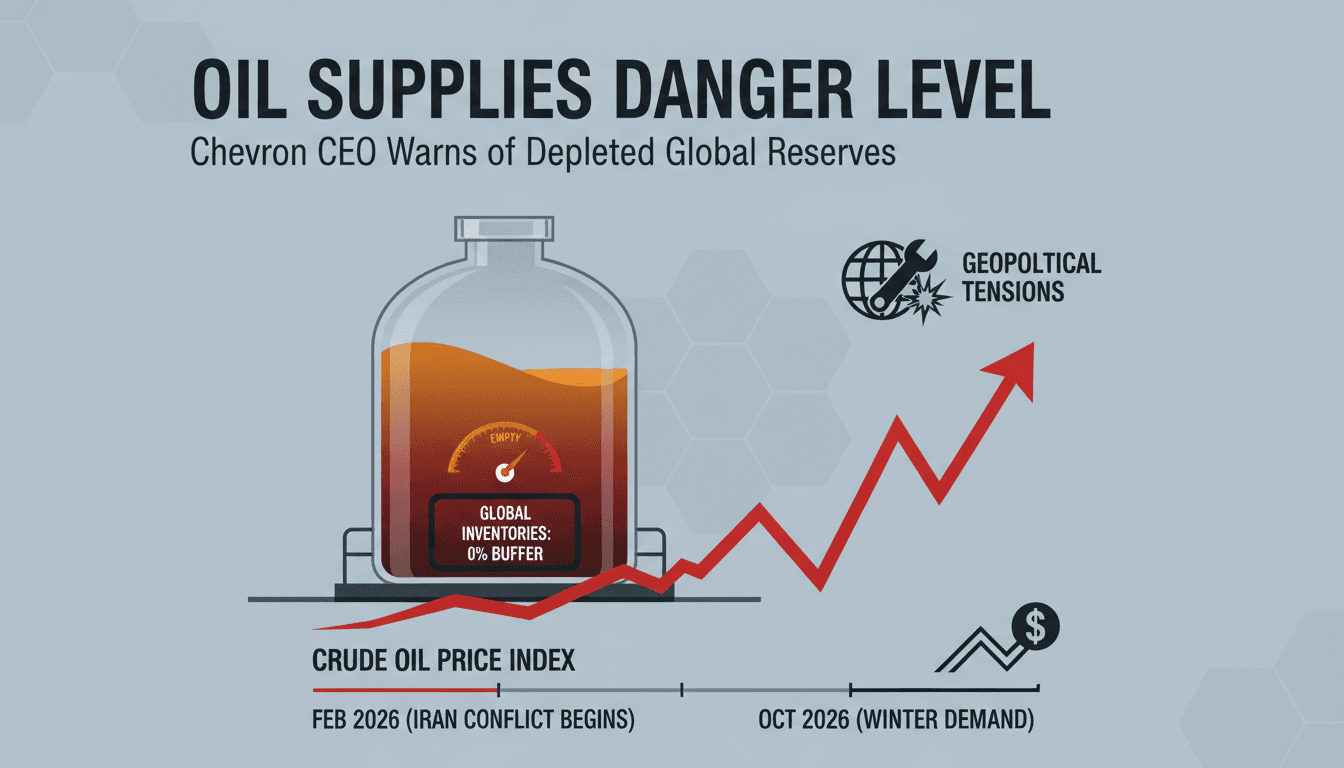
Rising oil prices could impact your fuel costs and overall economic stability.
Why it matters
The depletion of global oil inventories signals increased vulnerability in energy markets, potentially leading to higher prices and economic strain.
What happened (in 30 seconds)
- Chevron CEO Mike Wirth warned that global oil inventory buffers have been exhausted due to sustained draws since the Iran conflict began in February 2026.
- U.S. diesel prices have surpassed $6 per gallon, reflecting the tight supply situation and increased demand.
- Cumulative inventory draws have reached 507 million barrels, according to the International Energy Agency, indicating a significant reduction in available oil supplies.
The context you actually need
- The Iran war initiated in February 2026 led to coordinated releases from commercial and strategic reserves, which temporarily alleviated price pressures.
- Wirth's earlier warnings in September highlighted that these inventory releases had been "played out," increasing the risk of price spikes as winter demand approaches.
- Current market conditions show that the U.S. Strategic Petroleum Reserve is at its lowest level since the 1980s, further exacerbating supply vulnerabilities.
What's really happening
Chevron's CEO Mike Wirth's recent statements underscore a critical juncture in global oil markets, where the depletion of inventory buffers has left the energy system exposed to potential disruptions. Since the onset of the Iran conflict in February 2026, there has been a concerted effort to draw down commercial stocks, government strategic reserves, and previously sanctioned oil. This strategy was initially effective in mitigating price spikes, but as Wirth noted, these reserves have now been exhausted.
The International Energy Agency (IEA) reported cumulative inventory draws of 507 million barrels, with a staggering 95 million barrels drawn in August alone. This depletion has not only heightened the risk of price increases but has also created a precarious situation as winter demand looms. Wirth's comments reflect a growing consensus among industry leaders that the current supply chain is fragile, with little room for error.
The implications of this situation are multifaceted. Higher oil prices can lead to increased costs for consumers, particularly in transportation and heating. Additionally, businesses that rely on oil for production or logistics may face rising operational costs, which could be passed on to consumers. The current diesel prices in the U.S. exceeding $6 per gallon are a direct consequence of these supply constraints, impacting everything from freight costs to consumer goods prices.
Moreover, the geopolitical landscape adds another layer of complexity. As governments, including those in the G7, consider additional reserve releases to stabilize markets, the effectiveness of such measures remains uncertain. The interconnectedness of global oil markets means that any disruption in one region can have ripple effects worldwide, influencing prices and availability in places like Dubai and beyond.
In summary, the depletion of oil inventories is not just a technical issue; it is a signal of broader vulnerabilities in the energy market that could have significant economic repercussions.
Who feels it first (and how)
- Consumers: Higher fuel prices directly affect household budgets, especially for transportation and heating.
- Businesses: Companies reliant on diesel for logistics and production may face increased costs, impacting pricing strategies.
- Governments: Policymakers may need to intervene with strategic reserves or subsidies to mitigate economic fallout.
- Energy Sector Workers: Job stability may be threatened in sectors reliant on stable oil prices.
What to watch next
- Global oil prices: Monitor fluctuations in crude oil prices as they will directly impact consumer costs and economic stability.
- Strategic reserve releases: Watch for announcements from governments regarding reserve releases, which could influence market dynamics.
- Geopolitical developments: Keep an eye on the Iran conflict and other geopolitical tensions that could further disrupt supply chains.
Global oil inventories have been significantly depleted, leading to increased vulnerability in energy markets.
Prices for oil and diesel will continue to rise as winter demand increases and supply remains constrained.
The effectiveness of government interventions, such as strategic reserve releases, in stabilizing prices remains uncertain.
Frequently Asked Questions
- Why it matters?
- The depletion of global oil inventories signals increased vulnerability in energy markets, potentially leading to higher prices and economic strain.
- What happened (in 30 seconds)?
- Chevron CEO Mike Wirth warned that global oil inventory buffers have been exhausted due to sustained draws since the Iran conflict began in February 2026. U.S. diesel prices have surpassed $6 per gallon, reflecting the tight supply situation and increased demand. Cumulative inventory draws have reached 507 million barrels, according to the International Energy Agency, indicating a significant reduction in available oil supplies.
- What's really happening?
- Chevron's CEO Mike Wirth's recent statements underscore a critical juncture in global oil markets, where the depletion of inventory buffers has left the energy system exposed to potential disruptions. Since the onset of the Iran conflict in February 2026, there has been a concerted effort to draw down commercial stocks, government strategic reserves, and previously sanctioned oil. This strategy was initially effective in mitigating price spikes, but as Wirth noted, these reserves have now been e
- Who feels it first (and how)?
- Consumers: Higher fuel prices directly affect household budgets, especially for transportation and heating. Businesses: Companies reliant on diesel for logistics and production may face increased costs, impacting pricing strategies. Governments: Policymakers may need to intervene with strategic reserves or subsidies to mitigate economic fallout. Energy Sector Workers: Job stability may be threatened in sectors reliant on stable oil prices.
- What to watch next?
- Global oil prices: Monitor fluctuations in crude oil prices as they will directly impact consumer costs and economic stability. Strategic reserve releases: Watch for announcements from governments regarding reserve releases, which could influence market dynamics. Geopolitical developments: Keep an eye on the Iran conflict and other geopolitical tensions that could further disrupt supply chains.
Stock market news, investing ideas, and trading analysis.
"TheStreet provides market news and retail-investor-focused analysis."
— A47 Editor
Chevron CEO issues stark warning on depleting oil reserves
Chevron CEO Mike Wirth has issued a stark warning regarding the depletion of global oil reserves, stating that energy supply is increasingly vulnerable as winter approaches. He emphasized that the buffers that typically safeguard against supply disru...
Global business headlines with AI angles.
"General business outlet that frequently covers AI."
— A47 Editor
The Trump Administration Considered a Diesel Export Ban. Chevron's CEO Called The Notion 'Unwise.'
The Trump Administration is considering a ban on diesel fuel exports as diesel prices have reached record highs. Chevron's CEO, Mike Wirth, has criticized this potential move, labeling it as 'unwise' and highlighting the risks associated with removin...
Business, markets, economy, and corporate news with strong UAE and regional relevance.
"Emirates 24|7 business coverage tends to center UAE markets, property, regulation, and regional economic developments."
— A47 Editor
Middle East conflict exposes fragile energy markets, Chevron chief warns
The ongoing conflict in the Middle East has led to a more fragile global energy system, as highlighted by Chevron CEO Mike Wirth during the Energy Intelligence Forum in London. He noted that oil and gas market fundamentals are tightening, resulting i...