
Nvidia CEO Highlights AI Accelerators as Low-Risk Collateral in Berlin Remarks
Why it matters
Nvidia's assertion that its AI accelerators are low-risk collateral could redefine asset-backed financing in the tech sector.
What happened (in 30 seconds)
- Jensen Huang, Nvidia CEO, declared AI accelerators as the lowest-risk asset class during the GTC conference in Berlin on October 23, 2026.
- Huang emphasized the chips' durability and extended useful life, challenging the traditional four-year replacement cycle.
- Nvidia is pursuing a $500 billion funding pool with major financial institutions to support AI data center infrastructure.
The context you actually need
- Nvidia's partnerships with financial giants like BlackRock and Goldman Sachs aim to treat GPUs as durable, asset-backed instruments.
- Huang's comments align with a broader industry trend of viewing technology assets as long-term investments rather than quickly depreciating equipment.
- Wall Street's skepticism about the long-term viability of these assets highlights the tension between innovation and traditional financial metrics.
What's really happening
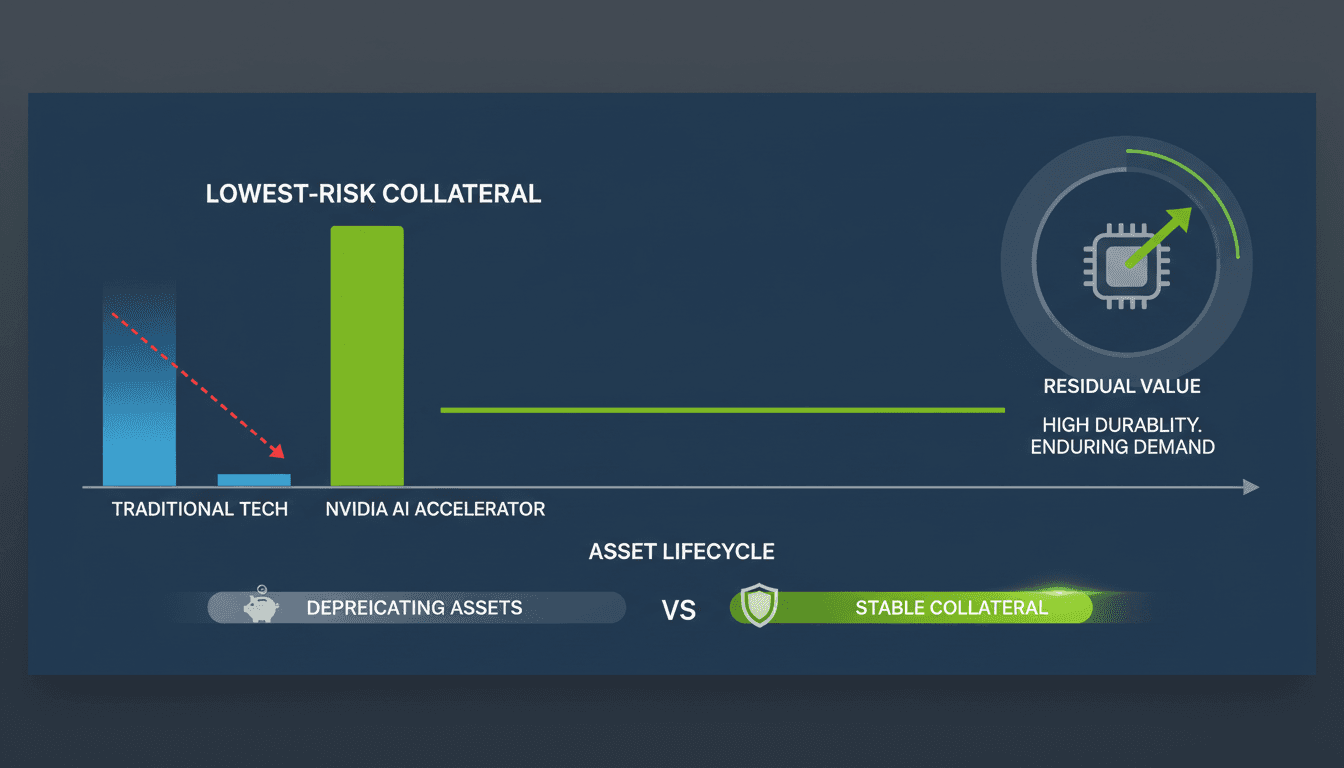
Jensen Huang's remarks at the GTC conference signal a pivotal shift in how technology assets, particularly Nvidia's AI accelerators, are perceived in the financial landscape. By labeling these chips as the "lowest-risk asset class," Huang is not just promoting Nvidia's products; he is advocating for a fundamental change in asset valuation. Traditionally, tech hardware depreciates rapidly, often requiring replacement every four years. However, Huang argues that Nvidia's AI accelerators can last eight years or longer, thanks to their programmability and versatility across various workloads.
This extended lifespan is crucial for lenders and investors who are increasingly looking for stable, long-term investments in a volatile market. The assertion that these chips maintain high residual value positions them as viable collateral for debt financing, which could attract significant capital into the AI sector. Nvidia's strategy is to create a $500 billion funding pool with major financial institutions, which would treat these GPUs as durable assets rather than liabilities. This approach aims to alleviate financing constraints faced by customers and encourage investment in AI infrastructure.
However, the market's reaction has been mixed. While Nvidia is pushing for this new paradigm, Wall Street has expressed caution. Analysts are concerned about the potential risks associated with hardware depreciation and the possibility of a flooded secondary market in the event of defaults. These concerns highlight the delicate balance between innovation and financial prudence. Nvidia maintains that independent assessments by financing partners will account for customer commitments and the residual values of these chips, but skepticism remains.
The ongoing negotiations for GPU-backed loans, including potential deals with companies like SpaceX, further illustrate the growing interest in this financing model. As the demand for AI compute power surges, the implications of Huang's statements could ripple through the tech and finance sectors, reshaping investment strategies and risk assessments.
Who feels it first (and how)
- Tech companies looking to finance AI infrastructure will benefit from new funding avenues.
- Financial institutions will need to adapt their risk assessment models to accommodate these new asset classes.
- Investors in AI and tech sectors may see shifts in valuation metrics and investment strategies.
What to watch next
- Market reactions to Nvidia's financing initiatives: Watch how Wall Street adjusts its views on AI accelerators as collateral.
- Regulatory responses: Keep an eye on how financial regulators respond to this new asset classification.
- Adoption rates of AI infrastructure: Increased investment in AI data centers could signal broader acceptance of Nvidia's model.
Nvidia is actively pursuing a $500 billion funding pool for AI infrastructure.
Financial institutions will begin to reassess the value of tech assets as collateral.
The long-term viability of AI accelerators as low-risk assets remains to be seen.
Frequently Asked Questions
- Why it matters?
- Nvidia's assertion that its AI accelerators are low-risk collateral could redefine asset-backed financing in the tech sector.
- What happened (in 30 seconds)?
- Jensen Huang, Nvidia CEO, declared AI accelerators as the lowest-risk asset class during the GTC conference in Berlin on October 23, 2026. Huang emphasized the chips' durability and extended useful life, challenging the traditional four-year replacement cycle. Nvidia is pursuing a $500 billion funding pool with major financial institutions to support AI data center infrastructure.
- What's really happening?
- Jensen Huang's remarks at the GTC conference signal a pivotal shift in how technology assets, particularly Nvidia's AI accelerators, are perceived in the financial landscape. By labeling these chips as the "lowest-risk asset class," Huang is not just promoting Nvidia's products; he is advocating for a fundamental change in asset valuation. Traditionally, tech hardware depreciates rapidly, often requiring replacement every four years. However, Huang argues that Nvidia's AI accelerators can last e
- Who feels it first (and how)?
- Tech companies looking to finance AI infrastructure will benefit from new funding avenues. Financial institutions will need to adapt their risk assessment models to accommodate these new asset classes. Investors in AI and tech sectors may see shifts in valuation metrics and investment strategies.
- What to watch next?
- Market reactions to Nvidia's financing initiatives: Watch how Wall Street adjusts its views on AI accelerators as collateral. Regulatory responses: Keep an eye on how financial regulators respond to this new asset classification. Adoption rates of AI infrastructure: Increased investment in AI data centers could signal broader acceptance of Nvidia's model.
Tech news, hardware, and AI tools coverage.
"PC/tech site increasingly covering AI hardware and apps."
— A47 Editor
Jensen Huang says Nvidia's AI chips carry "the lowest" risk of any asset and could serve as collateral for debt
At the GTC conference in Berlin, Nvidia CEO Jensen Huang emphasized that the company's AI chips represent the lowest risk of any asset and could potentially be used as collateral for debt. He described these chips as productive, fungible, and durable...
Stock market news, investing ideas, and trading analysis.
"TheStreet provides market news and retail-investor-focused analysis."
— A47 Editor
Nvidia CEO's new plan could dramatically reshape the AI race
Nvidia CEO Jensen Huang has unveiled a new deployment blueprint aimed at accelerating the company's data center buildout, a strategic move that could significantly reshape the competitive landscape of artificial intelligence (AI). This initiative hig...
Latest AI/ML research news and breakthroughs.
"Aggregated research highlights across institutions."
— A47 Editor
Nvidia boss criticizes 'cheap' AI doomsday warnings
Jensen Huang, CEO of Nvidia, criticized the sensationalized warnings about artificial intelligence potentially leading to human extinction, labeling them as 'cheap' attempts to attract attention. He emphasized that such claims are unfounded and do no...