
Oxford Street Becomes Permanently Traffic-Free Under Mayoral Pedestrianisation Scheme
Why it matters
The permanent removal of transit across one of Europe’s highest-grossing corridors tests whether stripping vehicle mobility can reverse multi-decade commercial footfall erosion without paralyzing surrounding metropolitan logistics networks.
What happened (in 30 seconds)
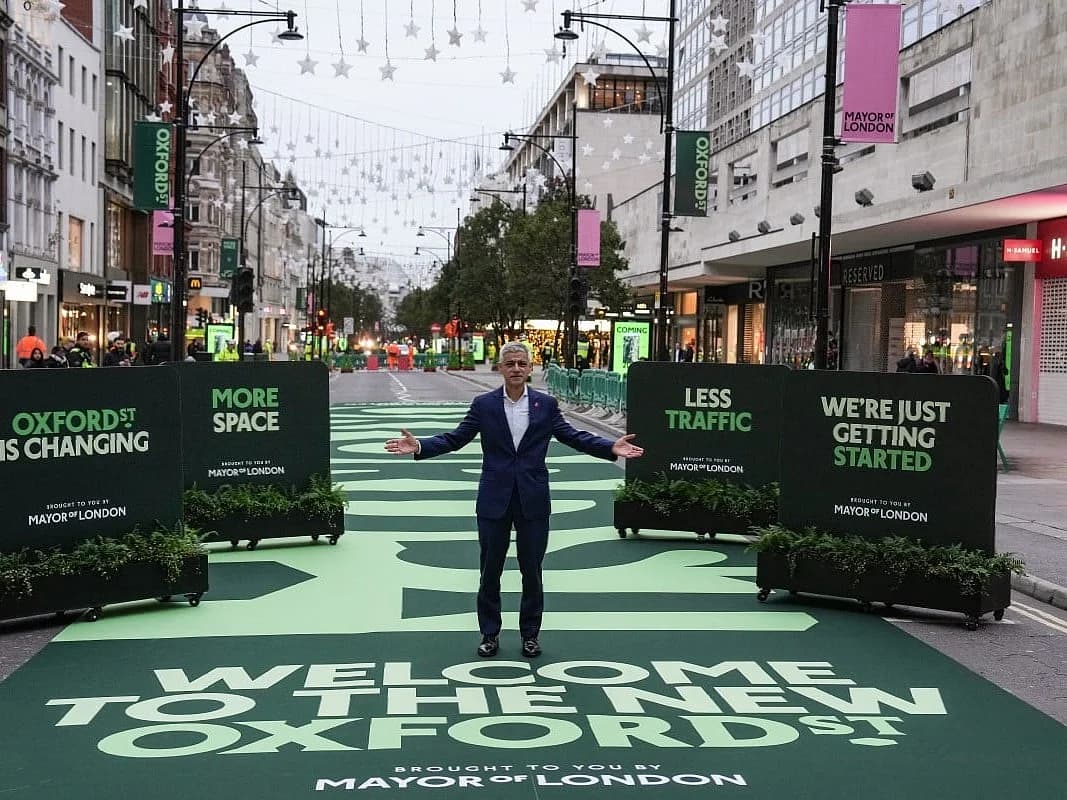
- A 1-kilometre core closed to all vehicles: On October 26, 2026, London permanently prohibited private vehicles, buses, taxis, bicycles, e-scooters, and pedicabs between Orchard Street and Great Portland Street.
- Logistics shifted entirely off-peak: Delivery operations along the corridor are strictly restricted to a midnight-to-7am window, while standard bus services have been permanently diverted to perimeter stops roughly 200 metres away.
- Transitional infrastructure took effect immediately: Transport for London (TfL) installed enforcement bollards and signage ahead of the holiday trading cycle, setting up phased public realm investments scheduled through spring 2027.
The context you actually need
- Decades of planning deadlocks were bypassed: While municipal proposals to pedestrianise the corridor date back decades—including a direct rejection by Westminster City Council in 2018—the formation of the mayoral-backed Oxford Street Development Corporation in 2024 unlocked unilateral executive authority to execute the scheme.
- The district anchors £3.1 billion in annual spend: With roughly 500,000 daily visitors, the corridor remains an economic engine facing structural headwinds from e-commerce growth, suburban shopping hubs, and long-term changes following the COVID-19 pandemic.
- Global retail benchmarks forced strategic parity: London municipal planners explicitly framed the permanent intervention as a defensive move to maintain competitive footing against high-density pedestrian corridors like New York's Times Square and Paris's Champs-Élysées.
What's really happening
The operational closure of central Oxford Street is less an environmental experiment than a balance-sheet intervention for physical retail. By removing combustion and multi-modal transit, London is fundamentally altering the mechanics of how commercial square footage captures consumer attention.
At the core of this policy is an economic reality: legacy high streets can no longer compete with digital platforms on mere inventory access or transactional utility. With 500,000 visitors traversing the street daily, the footfall volume exists, but conversion economics have steadily deteriorated over two decades. Department store flagships and international brands require extended dwell times to justify prime rental yields and offset business rate pressures. Mixing dense pedestrian crowds with double-decker buses, black cabs, delivery vans, and micro-mobility created spatial friction that reduced visitor comfort and safety. Removing vehicular throughput converts the corridor from a transit route into an open-air consumption concourse.
However, the operational model imposes clear spatial trade-offs. Banning transit vehicles entirely along nearly one kilometre displaces heavy logistics onto secondary residential and mixed-use networks. Westminster City Council’s operational concerns highlight this structural friction: vehicle flows, particulate emissions, and traffic congestion do not disappear; they redistribute around adjacent streets that lack the arterial capacity of Oxford Street.
Simultaneously, the supply-chain window has compressed into a seven-hour nocturnal schedule (midnight to 7am). Large-format flagships like Selfridges and John Lewis must recalibrate staffing patterns, freight scheduling, and fulfillment logistics to operate within strict overnight constraints.
By utilizing the statutory powers of the Oxford Street Development Corporation, mayoral leadership prioritized aggregate commercial value over local perimeter transit access. The phased deployment—introducing over 50 trees, more than 100 public seats, and two central civic squares by spring 2027—is designed to artificially lengthen consumer停留 times, shifting the corridor’s profile from a pure transit-and-shop route to an experiential leisure ecosystem engineered to safeguard £3.1 billion in annual consumer expenditure.
Who feels it first (and how)
- Flagship department stores and retail brands: Operators such as Selfridges and John Lewis gain unified pedestrian frontage and extended shopper dwell times, but must restructure inventory handling to match midnight-to-7am delivery windows.
- Metropolitan transit commuters: Bus passengers face rerouted journeys that shift alight points to peripheral stops roughly 200 metres from primary retail entrances, adding walking friction to daily travel times.
- Adjacent residential districts and localized councils: Streets bordering the Orchard Street–Great Portland Street segment absorb diverted arterial traffic, raising local congestion and emission management overheads for Westminster City Council.
- Freight operators and delivery vendors: Urban logistics fleets face rigid nighttime-only drop-offs, ending daytime just-in-time inventory replenishment across the pedestrianised segment.
What to watch next
- Spring 2027 capital expenditure delivery: Completion metrics for the planned public squares, seating, and urban greening will indicate whether permanent civic architecture successfully enhances street-level dwell times.
- Peripheral perimeter monitoring data: TfL’s scheduled performance reports on traffic displacement, ambient air quality, and side-street transit delays will reveal the actual logistical cost borne by neighboring networks.
- Comparative international footfall metrics: Holiday and annual turnover numbers will signal whether car-free redesigns help historic high streets compete against purpose-built international lifestyle districts.
The Orchard Street to Great Portland Street stretch is permanently closed to all daytime surface transit, with deliveries confined to midnight–7am and emergency vehicles permitted.
Peripheral streets in Marylebone and Mayfair will absorb measurable localized congestion increases during peak hours as rerouted buses and commercial traffic normalize alternative corridors.
Whether extended pedestrian dwell times will generate sufficient baseline sales lift to reverse structural margin pressures driven by e-commerce and high physical operating overheads.
Frequently Asked Questions
- Why it matters?
- The permanent removal of transit across one of Europe’s highest-grossing corridors tests whether stripping vehicle mobility can reverse multi-decade commercial footfall erosion without paralyzing surrounding metropolitan logistics networks.
- What happened (in 30 seconds)?
- A 1-kilometre core closed to all vehicles: On October 26, 2026, London permanently prohibited private vehicles, buses, taxis, bicycles, e-scooters, and pedicabs between Orchard Street and Great Portland Street. Logistics shifted entirely off-peak: Delivery operations along the corridor are strictly restricted to a midnight-to-7am window, while standard bus services have been permanently diverted to perimeter stops roughly 200 metres away. Transitional infrastructure took effect immediately: Tran
- What's really happening?
- The operational closure of central Oxford Street is less an environmental experiment than a balance-sheet intervention for physical retail. By removing combustion and multi-modal transit, London is fundamentally altering the mechanics of how commercial square footage captures consumer attention. At the core of this policy is an economic reality: legacy high streets can no longer compete with digital platforms on mere inventory access or transactional utility. With 500,000 visitors traversing th
- Who feels it first (and how)?
- Flagship department stores and retail brands: Operators such as Selfridges and John Lewis gain unified pedestrian frontage and extended shopper dwell times, but must restructure inventory handling to match midnight-to-7am delivery windows. Metropolitan transit commuters: Bus passengers face rerouted journeys that shift alight points to peripheral stops roughly 200 metres from primary retail entrances, adding walking friction to daily travel times. Adjacent residential districts and localized cou
- What to watch next?
- Spring 2027 capital expenditure delivery: Completion metrics for the planned public squares, seating, and urban greening will indicate whether permanent civic architecture successfully enhances street-level dwell times. Peripheral perimeter monitoring data: TfL’s scheduled performance reports on traffic displacement, ambient air quality, and side-street transit delays will reveal the actual logistical cost borne by neighboring networks. Comparative international footfall metrics: Holiday and ann
United Kingdom-focused news including local politics, business, and social issues.
"BBC News is widely regarded as a reputable international news organization, known for its impartial tone and public service mandate."
— A47 Editor
What is walking down the newly pedestrianised Oxford Street like?
Oxford Street in London, described as the nation's high street, has become traffic-free in the first phase of a pedestrianisation overhaul, with Mayor Sadiq Khan hailing the move as a truly momentous occasion for the capital. The first phase is expec...
UAE-based newspaper covering Gulf politics, society, and international developments.
"Gulf News is one of the UAE’s most prominent English-language publications."
— A47 Editor
London’s Oxford Street goes traffic-free in historic move
London's Oxford Street has gone traffic-free in a historic move, as reported by Gulf News. The base article covers the pedestrianisation of one of the UK capital's best-known shopping thoroughfares. Details beyond the headline are limited in the supp...
A curated Gulf News feed featuring major stories across news, business, opinion, and lifestyle.
"Gulf News is a major UAE newspaper whose featured stories feed reflects a broad editorial mix shaped for a Gulf audience."
— A47 Editor
London’s Oxford Street goes traffic-free in historic move
London's Oxford Street has gone traffic-free in a historic move, as reported by Gulf News. The base article covers the pedestrianisation of one of the UK capital's best-known shopping thoroughfares. Details beyond the headline are limited in the supp...
Top international stories selected by The Guardian editors.
"The Guardian is known for its progressive editorial stance and in-depth analysis."
— A47 Editor
How will pedestrianisation of UK’s most famous shopping street work in practice?
Much of Oxford Street, one of Britain's best-known shopping thoroughfares, is set to be closed to traffic from Monday as the long-awaited pedestrianisation of the London street begins. About half of the 1.2-mile street will initially be vehicle-free ...
UK and international business news, economics, and corporate coverage.
"The Guardian’s business section covers finance and markets with a progressive editorial tone."
— A47 Editor
How will pedestrianisation of UK’s most famous shopping street work in practice?
Much of Oxford Street, one of Britain's best-known shopping thoroughfares, is set to be closed to traffic from Monday as the long-awaited pedestrianisation of the London street begins. About half of the 1.2-mile street will initially be vehicle-free ...
Editor-curated FT homepage stories spanning markets, business, world, and opinion.
"The Financial Times is a globally respected business publication with a centrist/center-left tone and strong markets focus."
— A47 Editor
Oxford Street’s pedestrian revolution is finally here
London's Oxford Street, described as the busiest shopping street in Europe, is undergoing a major pedestrianisation scheme, with much of the 1.2-mile thoroughfare set to close to traffic from October 26, 2026, under a plan announced by London Mayor S...
Editor-curated FT homepage stories spanning markets, business, world, and opinion.
"The Financial Times is a globally respected business publication with a centrist/center-left tone and strong markets focus."
— A47 Editor
London’s most famous shopping street bans cars in bid to revive its fortunes
London's best-known shopping street, Oxford Street, is banning cars in an effort to revive its fortunes, as the busiest shopping street in Europe moves toward pedestrianisation under a plan announced by London Mayor Sadiq Khan, with closure to traffi...