
Global Tech Stocks Rebound After Midterm-Driven AI Sell-Off Erases $2.8 Trillion from S&P 500
Why it matters
The sudden wipeout of $2.8 trillion in equity value signals that capital markets are shifting focus from theoretical compute demand to the regulatory and physical realities of building regional data centers.
What happened (in 30 seconds)
- A multi-trillion-dollar drawdown struck equities on November 5, 2026, when the S&P 500 fell 4.4% and the Nasdaq 100 dropped 6.3% following unexpected Democratic midterm victories.
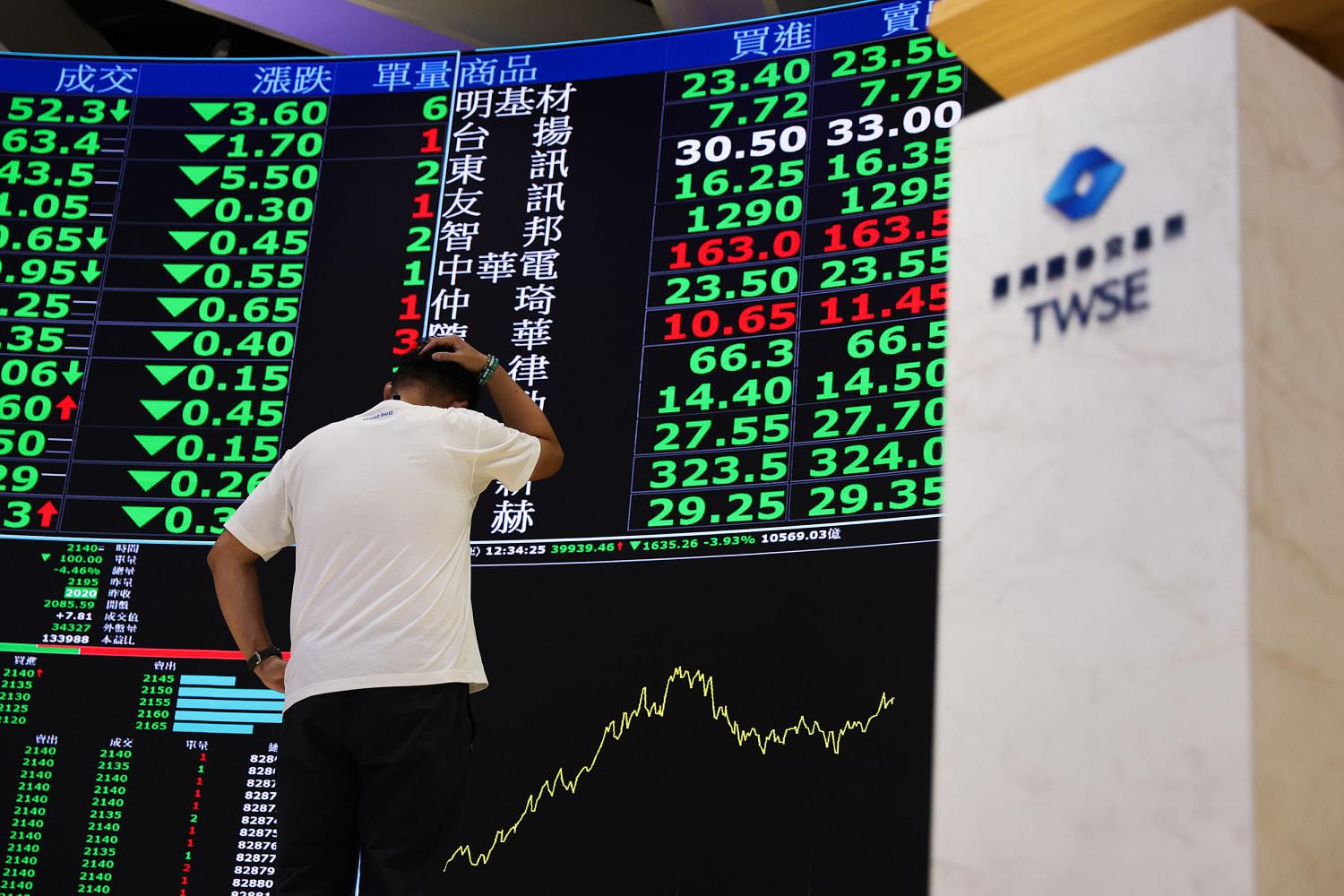
- Asian and European markets absorbed heavy spillover, with regional indices recording sharp drops including the TAIEX sliding 9%, South Korea’s Kospi declining more than 8%, and Japan’s Nikkei shedding up to 6%.
- A partial recovery emerged within 24 hours, lifting the Nasdaq 100 by 1.9% and the S&P 500 by nearly 1% at midday on November 6 as institutional buyers treated the retreat as a corrective repricing.
The context you actually need
- Capital expenditure on data infrastructure drove prior benchmark performance, concentrating global market gains within a handful of semiconductor firms and cloud platforms.
- Midterm races targeted physical infrastructure hubs, elevating candidates like Texas Governor-elect Gina Hinojosa who expressed skepticism toward grid consumption and the rapid pace of regional data center approvals.
- Global hardware suppliers remain tethered to domestic project delivery, meaning any disruption to state-level permits or federal oversight immediately hits order backlogs for international semiconductor suppliers like TSMC and Samsung.
What's really happening
The mechanics behind the November 5 rout reveal a structural tension between speculative software valuations and physical grid constraints. Over previous cycles, the valuation premium attached to leading tech names assumed frictionless scaling: hyperscalers place chip orders, local utilities allocate gigawatts, and construction firms build facilities without regional friction.
The outcome of the 2026 U.S. midterms interrupted that incentive loop. Investors woke up to unexpected Democratic victories in strategic jurisdictions, most notably Texas, where data center growth has historically benefited from accelerated permitting and receptive municipal policies. The election of candidates who campaigned with explicit skepticism toward rapid computing infrastructure deployment altered the baseline financial models of the tech ecosystem.
When political leadership questions the resource allocation of power grids and water supplies, the timeline for data center completion stretches. A six-month delay in construction does not merely defer real estate projects; it causes upstream capital expenditures to stall. Hyperscale operators reduce or pause hardware procurement, leading to inventory accumulation down the supply chain.
Because market concentration had reached extreme levels, this sudden change in policy outlook triggered rapid deleveraging. On November 5 alone, the S&P 500 shed $2.8 trillion in paper value. The selling crossed borders rapidly during the Asian trading session. TSMC, Samsung, and Japanese component manufacturers experienced intraday declines between 6% and 9% as algorithmic models recalibrated projected export volumes for high-performance silicon.
Market analysts, including Charu Chanana and Ed Yardeni, characterized the sell-off as froth removal rather than a collapse in aggregate computing demand. By November 6, bargain hunting lifted the Nasdaq 100 by 1.9% midday. Yet the core dynamic has shifted. Valuations can no longer rely purely on future compute demand models. Institutional investors must now factor in state-level legislative risks, zoning resistance, and localized grid capacity into the cost of capital for artificial intelligence infrastructure.
Who feels it first (and how)
- Semiconductor and Hardware Manufacturers: Foundries and component suppliers like Nvidia, TSMC, and Samsung face valuation volatility tied directly to projected order rates for enterprise infrastructure.
- Data Center Developers and Utilities: Regional operators in states such as Texas face potential scrutiny over grid access, local tax incentives, and regulatory approvals.
- Global Portfolio Allocators and Family Offices: International asset managers holding cross-border growth equities absorb systemic portfolio drawdowns when index-heavy tech benchmarks sell off.
- Institutional Trading Desks in Asia: Regional exchanges in Tokyo, Seoul, and Taipei absorb immediate shockwaves from Wall Street equity revisions before domestic trading sessions open.
What to watch next
- State-Level Legislative Agendas: Monitor policy statements from incoming officials like Texas Governor-elect Gina Hinojosa to assess whether moratoriums or utility reviews are formally introduced.
- Hyperscaler Capital Guidance: Watch upcoming quarterly reports for revisions to infrastructure budgets or references to project completion delays.
- Asian Hardware Export Volumes: Track ongoing inventory levels and export metrics from South Korea and Taiwan to evaluate whether the market dip alters real procurement demand.
A political shift in the 2026 U.S. midterms triggered an immediate $2.8 trillion paper sell-off across global equity markets on November 5, followed by a partial rebound on November 6.
The market will price a higher structural risk premium into regional data center buildouts, shifting investment toward jurisdictions with minimal permitting resistance.
Whether incoming state and federal officials will enact concrete legislative barriers that materially restrict physical data center construction and enterprise computing deployments.
Frequently Asked Questions
- Why it matters?
- The sudden wipeout of $2.8 trillion in equity value signals that capital markets are shifting focus from theoretical compute demand to the regulatory and physical realities of building regional data centers.
- What happened (in 30 seconds)?
- A multi-trillion-dollar drawdown struck equities on November 5, 2026, when the S&P 500 fell 4.4% and the Nasdaq 100 dropped 6.3% following unexpected Democratic midterm victories. Asian and European markets absorbed heavy spillover, with regional indices recording sharp drops including the TAIEX sliding 9%, South Korea’s Kospi declining more than 8%, and Japan’s Nikkei shedding up to 6%. A partial recovery emerged within 24 hours, lifting the Nasdaq 100 by 1.9% and the S&P 500 by nearly 1% at mi
- What's really happening?
- The mechanics behind the November 5 rout reveal a structural tension between speculative software valuations and physical grid constraints. Over previous cycles, the valuation premium attached to leading tech names assumed frictionless scaling: hyperscalers place chip orders, local utilities allocate gigawatts, and construction firms build facilities without regional friction. The outcome of the 2026 U.S. midterms interrupted that incentive loop. Investors woke up to unexpected Democratic victo
- Who feels it first (and how)?
- Semiconductor and Hardware Manufacturers: Foundries and component suppliers like Nvidia, TSMC, and Samsung face valuation volatility tied directly to projected order rates for enterprise infrastructure. Data Center Developers and Utilities: Regional operators in states such as Texas face potential scrutiny over grid access, local tax incentives, and regulatory approvals. Global Portfolio Allocators and Family Offices: International asset managers holding cross-border growth equities absorb syste
- What to watch next?
- State-Level Legislative Agendas: Monitor policy statements from incoming officials like Texas Governor-elect Gina Hinojosa to assess whether moratoriums or utility reviews are formally introduced. Hyperscaler Capital Guidance: Watch upcoming quarterly reports for revisions to infrastructure budgets or references to project completion delays. Asian Hardware Export Volumes: Track ongoing inventory levels and export metrics from South Korea and Taiwan to evaluate whether the market dip alters real
Macro commentary, policy analysis, growth/inflation themes, and global outlooks.
"Contextual macro coverage that complements day-to-day market headlines."
— A47 Editor
Wall Street stocks rally after heavy AI-related selloff
Wall Street stocks rallied after a heavy selloff in AI-related shares, with the base report describing a positive market move following a sharp decline in technology names tied to the artificial intelligence trade.
Markets, economy, and company analysis from NYT’s business desk.
"The New York Times is a globally recognized newspaper offering authoritative reporting with a center-left editorial stance."
— A47 Editor
Global Stocks Follow U.S. Sell-Off as A.I. Spending Fears Spread
Global stock markets fell in step with a U.S. sell-off as investor anxiety over the enormous spending that technology giants are committing to artificial intelligence infrastructure spread across markets, according to The New York Times. Market watch...
Canadian-focused personal finance and money coverage with some global context.
"Global News is a mainstream Canadian outlet with a centrist editorial stance and emphasis on factual reporting."
— A47 Editor
Investors dive into bonds as global AI tech selloff continues
Investors moved into bonds on Friday as stocks extended their slide in both Europe and Asia, with concerns surrounding artificial intelligence wiping trillions of dollars off global stock markets, according to Global News.
International coverage of politics, security, and social issues.
"Global News is a mainstream Canadian outlet with a centrist editorial stance, focusing on factual reporting."
— A47 Editor
Investors dive into bonds as global AI tech selloff continues
Investors moved into bonds on Friday as stocks extended their slide in both Europe and Asia, with concerns surrounding artificial intelligence wiping trillions of dollars off global stock markets, according to Global News.
Markets desk coverage, trading insights, and investor updates.
"WSJ’s markets reporting provides in-depth analysis and context for investors."
— A47 Editor
Asian Equities Tumble as AI Selloff Deepens
Asian equities slumped Friday as the rout in stocks tied to the artificial-intelligence boom continued, pushing tech-heavy indexes toward bear-market territory, according to The Wall Street Journal. The decline follows a sharp selloff in U.S. technol...
Comprehensive coverage of Middle Eastern and global issues.
"Al Jazeera is a prominent voice from the Global South, especially the Middle East, with an emphasis on underreported stories."
— A47 Editor
Tech stock rout, driven by US AI fears, continues in Asian trading
Asian technology stocks extended a sharp sell-off on Friday, with markets tracking a Wall Street rout in US tech shares triggered by fears of tighter artificial intelligence regulation and concerns over US data centre expansion following Democrats' v...
Global news coverage with extensive reporting on Middle Eastern conflicts and geopolitics.
"Al Jazeera is a Qatar-based broadcaster known for wide regional coverage and alternative perspectives."
— A47 Editor
Tech stock rout, driven by US AI fears, continues in Asian trading
Asian technology stocks extended a sharp sell-off on Friday, with markets tracking a Wall Street rout in US tech shares triggered by fears of tighter artificial intelligence regulation and concerns over US data centre expansion following Democrats' v...
National headlines across the United States including breaking stories and societal issues.
"NBC News is a mainstream media outlet known for comprehensive national and international news coverage with a centrist to slightly left-leaning editorial tone."
— A47 Editor
Global tech stocks tumble as blue wave is felt in Asia and Europe
Global tech stocks fell sharply after a rout in U.S. technology shares, with the Nasdaq composite slumping 5.5% on Thursday, its worst day in 18 months, and the sell-off spreading to Asian markets on Friday and then to Europe, following the blue wave...
Comprehensive coverage of global events, politics, and international issues.
"NBC News is a mainstream outlet known for comprehensive national and international coverage with a centrist to slightly left-leaning editorial tone."
— A47 Editor
Investors try to regain their footing after tech stocks tank
U.S. tech stocks steadied on Friday after one of their worst routs in years, as investors weighed the prospect of an slowdown in AI investment following Democrats' gains in the U.S. midterm elections, which fueled expectations of tighter AI rules.
Comprehensive coverage of Middle Eastern and global issues.
"Al Jazeera is a prominent voice from the Global South, especially the Middle East, with an emphasis on underreported stories."
— A47 Editor
Global tech stocks plunge over fears of AI curbs in US
Asian markets fell sharply on Friday, tracking a sell-off in Western stocks after the US midterm elections, as global tech stocks plunged over fears of possible artificial intelligence curbs in the United States. The decline followed a Wednesday sess...
Global news coverage with extensive reporting on Middle Eastern conflicts and geopolitics.
"Al Jazeera is a Qatar-based broadcaster known for wide regional coverage and alternative perspectives."
— A47 Editor
Global tech stocks plunge over fears of AI curbs in US
Asian markets fell sharply on Friday, tracking a sell-off in Western stocks after the US midterm elections, as global tech stocks plunged over fears of possible artificial intelligence curbs in the United States. The decline followed a Wednesday sess...
Curated tech headlines including AI stories.
"Influential aggregator surfacing the day’s top tech/AI links."
— A47 Editor
Asian tech stocks plunge amid fears US Democrats may delay data centers; Taiwan's Taiex sees a record intraday point drop, Kospi falls 8.7%, and Nikkei 6.7% (Jada Nagumo/Nikkei Asia)
Asian tech stocks plunged on Friday after a sharp selloff tied to the AI boom, with Taiwan's Taiex posting a record intraday point drop, South Korea's Kospi falling 8.7% and Japan's Nikkei down 6.7%, as fears grew that US Democrats may delay data cen...
Technology business and AI-related headlines.
"Data-driven tech newsroom with global scope."
— A47 Editor
China’s AI-Propelled Growth May Take a Blue Wave Hit, BE Says
China could face "severe economic headwinds" if the Democratic Party's sweeping midterm victory slows the United States' artificial intelligence buildout, Bloomberg Economics says, as tech stocks across Asia slump amid mounting worries about the sect...
Technology business news, market impacts, and innovation trends.
"Bloomberg is a premier financial and tech news provider, respected for its in-depth reporting and analytical rigor."
— A47 Editor
China’s AI-Propelled Growth May Take a Blue Wave Hit, BE Says
China could face "severe economic headwinds" if the Democratic Party's sweeping midterm victory slows the United States' artificial intelligence buildout, Bloomberg Economics says, as tech stocks across Asia slump amid mounting worries about the sect...
Global markets, investing, and macroeconomics from a premier financial newsroom.
"Bloomberg is respected for in-depth financial reporting and data-driven analysis."
— A47 Editor
Live Updates: Asian Stocks Brace for AI Selloff After Worst US Market Rout
Asian stocks were bracing for an AI-driven selloff after the worst US market rout, as technology shares, particularly chipmakers, slumped on Wall Street following the November 3 US midterm elections in which Democrats won control of both chambers of ...
Right-of-center views on political news.
"The Washington Times is a conservative-leaning newspaper known for its political coverage and advocacy of right-of-center viewpoints."
— A47 Editor
Stocks plummet as investors move away from tech, fearing data center slowdown
U.S. stocks plummeted on Thursday, erasing the massive rally seen on Wednesday after clear-cut midterm election results, as investors moved away from technology shares amid fears of a slowdown in data center spending, according to The Washington Time...
Editor-curated FT homepage stories spanning markets, business, world, and opinion.
"The Financial Times is a globally respected business publication with a centrist/center-left tone and strong markets focus."
— A47 Editor
Nasdaq drops the most since pandemic as Democratic ‘blue wave’ upends AI bets
The Nasdaq suffered its steepest drop since the pandemic as investors reacted to a Democratic 'blue wave' in the US midterm elections, with fears that newly elected politicians could slow data centre development and disrupt bets on artificial intelli...
Global business headlines with AI angles.
"General business outlet that frequently covers AI."
— A47 Editor
Stocks Reverse Post-Midterm Gains as Jitters Return and the AI Trade Unravels. Nasdaq Plunges into Correction Territory.
Stocks reversed their post-midterm gains as investor jitters returned and the AI trade unraveled, pushing the Nasdaq into correction territory, according to International Business Times. Tech-heavy indexes came under pressure as heavy spending on art...
Markets, economy, and company analysis from NYT’s business desk.
"The New York Times is a globally recognized newspaper offering authoritative reporting with a center-left editorial stance."
— A47 Editor
Stocks Rise as Democrats Flip Control of Congress
Global stock markets rose after Democrats secured control of Congress in the November 3 US midterm elections, with investors viewing the prospect of a divided Washington, which typically means gridlock, as a bullish signal for equities.
Curated tech headlines including AI stories.
"Influential aggregator surfacing the day’s top tech/AI links."
— A47 Editor
A Democratic sweep of US Congress pulls down Asian tech stocks, as investors rethink trades built around Trump's policy agenda for AI infrastructure and crypto (Bloomberg)
A Democratic sweep of the US Congress triggered a selloff in Asian tech stocks, as investors reassessed trades built around President Donald Trump's policy agenda for AI infrastructure and crypto, according to a Bloomberg report carried by Techmeme. ...
UAE-based English-language newspaper covering regional politics, economics, and global affairs.
"The National reflects Emirati policy perspectives while maintaining international editorial standards."
— A47 Editor
Asian equities and US stock futures slump amid blue sweep in US polls
Asian equities and US stock futures slumped after early results in the US midterm elections pointed toward a "blue sweep" by Democrats, according to The National. Markets reacted cautiously as investors weighed the implications of the November 3, 202...