
Dubai Islamic Bank and Emirates Islamic Bank Hold Preliminary Merger Talks to Form Larger Sharia-Compliant Lender
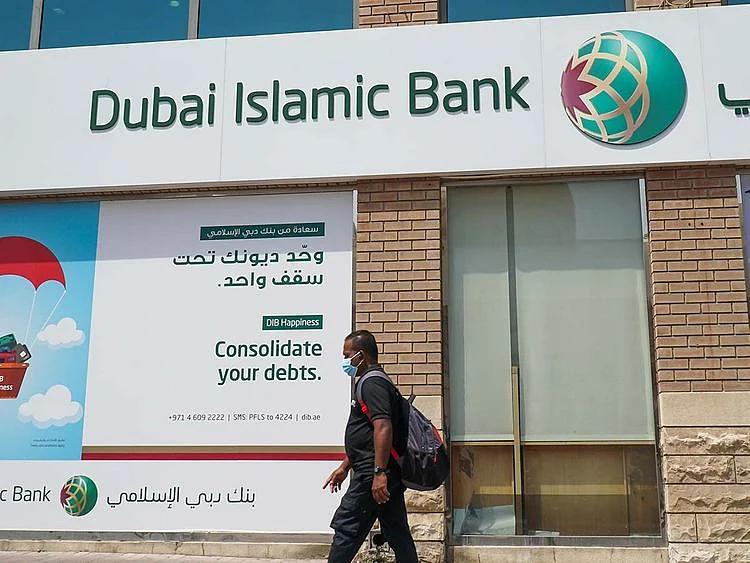
A tie-up between Dubai Islamic Bank and Emirates Islamic would aggregate roughly $159 billion in assets, reshaping institutional liquidity, loan pricing, and treasury operations across the region.
Why it matters
Consolidating two major Sharia-compliant lenders shifts domestic capital pools into a concentrated powerhouse built to absorb large cross-border corporate facilities and compete globally.
What happened (in 30 seconds)
- Preliminary discussions surfaced: Reports on November 23, 2026, revealed that Dubai officials are evaluating a potential merger or strategic acquisition combining Dubai Islamic Bank (DIB) and Emirates Islamic Bank.
- Board reviews were set: DIB confirmed its board will convene on November 25 to assess a strategic acquisition, while parent group Emirates NBD scheduled a parallel meeting to weigh potential transaction paths.
- Markets responded immediately: DIB shares posted an intraday surge of up to 14.8%—their strongest single-day climb since December 2014—while Emirates NBD experienced modest selling after an advance of more than 25% year-to-date.
The context you actually need
- Precedent runs deep: Dubai has a documented history of structured bank combinations, including Emirates Islamic absorbing Dubai Bank in 2012 and DIB's 2019 purchase of Noor Bank, which drove DIB's balance sheet past Dh275 billion.
- Ownership lines converge: Investment Corporation of Dubai (ICD) maintains an anchor footprint across both institutions, holding an estimated 28% stake in DIB and approximately 41% in Emirates NBD.
- Structural barriers were cleared: Emirates NBD completed the acquisition of minority holdings in Emirates Islamic, formally delisting the subsidiary in June 2025 and removing public float complexities ahead of strategic asset transfers.
What's really happening
The operational logic of combining Dubai Islamic Bank and Emirates Islamic centers on balance-sheet mass and systemic capacity. In wholesale and corporate lending, balance-sheet scale directly dictates underwriting authority. A standalone lender with Dh427 billion in assets (DIB) and an affiliated subsidiary managing Dh158 billion (Emirates Islamic) operate with parallel operational overhead, separate compliance infrastructure, and fragmented liquidity reserves. Merging these pools creates a combined institution overseeing approximately $159 billion (Dh585 billion) in assets.
For the principal shared shareholder, the Investment Corporation of Dubai (ICD), this alignment optimizes capital efficiency. Holding roughly 28% of DIB and 41% of Emirates NBD gives ICD the strategic leverage to orchestrate consolidation without contested proxy battles. Operating separate Islamic franchises under related state-backed umbrellas creates internal competition for top-tier corporate mandates, sukuk issuances, and public-sector liquidity facilities.
Citigroup’s market assessment points toward an outright purchase of Emirates Islamic by DIB as the cleaner execution mechanism. The relative asset distribution—DIB holding nearly three times the assets of Emirates Islamic—makes an acquisition simpler than an unweighted merger of equals. Because Emirates Islamic was taken private by Emirates NBD in June 2025, any deal can be settled cleanly between the boards through equity swaps, direct cash, or combined paper without managing disparate minority retail equity bases.
The move also recalibrates regional competitiveness. Over the past decade, financial hubs in Abu Dhabi and across the Gulf have completed multi-bank combinations to support regional infrastructure projects and sovereign development funds. By scaling its primary Sharia-compliant entity, Dubai preserves its strategic standing as an international capital clearinghouse for Islamic financial assets. A lender controlling $159 billion can underwrite single-ticket project finance obligations that previously required multi-institution syndications, retaining fee revenue, treasury float, and structuring commissions within the local financial ecosystem.
Who feels it first (and how)
- Corporate treasurers and CFOs: Mid-market and institutional firms negotiating Sharia-compliant facility lines will encounter a combined lender with larger single-obligor limits, but reduced inter-bank pricing competition.
- Institutional sukuk issuers: Originators handling regional debt capital markets will face a concentrated domestic buyer capable of absorbing sizable tranches onto its treasury book.
- Retail and SME depositors in Dubai: Current account holders and small business operators will see operational network integration, unified digital banking platforms, and restructured product margins as overlapping branch footprints merge.
- Emirates NBD equity holders: Investors in the parent group trade an existing, wholly owned Islamic banking division for either an equity stake in an expanded standalone Islamic giant or direct capital realization.
What to watch next
- November 25 board disclosures: Concrete announcements regarding whether negotiations reflect an asset sale, a share exchange, or a complete operational merger will establish the financial framework.
- Transaction mechanics and valuation terms: How DIB structures compensation for Emirates Islamic—via capital increase, debt, or cash reserves—will indicate the capital impact on Emirates NBD.
- Regulatory timelines from the Central Bank: Official milestones detailing antitrust clearance, asset transfer schedules, and systemic risk assessments will determine the operational completion date.
DIB and Emirates NBD scheduled parallel board meetings for November 25, 2026, to review strategic opportunities; DIB oversees Dh427 billion in assets, Emirates Islamic holds over Dh158 billion, and ICD retains substantial shareholdings in both parent entities.
DIB will serve as the acquiring vehicle for Emirates Islamic given relative asset sizes, following the analytical path outlined by institutional brokerages including Citigroup.
The exact deal consideration—whether structured through equity dilution, a cash dividend event for Emirates NBD, or mixed instruments—remains unconfirmed by both boards.
Frequently Asked Questions
- Why it matters?
- Consolidating two major Sharia-compliant lenders shifts domestic capital pools into a concentrated powerhouse built to absorb large cross-border corporate facilities and compete globally.
- What happened (in 30 seconds)?
- Preliminary discussions surfaced: Reports on November 23, 2026, revealed that Dubai officials are evaluating a potential merger or strategic acquisition combining Dubai Islamic Bank (DIB) and Emirates Islamic Bank. Board reviews were set: DIB confirmed its board will convene on November 25 to assess a strategic acquisition, while parent group Emirates NBD scheduled a parallel meeting to weigh potential transaction paths. Markets responded immediately: DIB shares posted an intraday surge of up to
- What's really happening?
- The operational logic of combining Dubai Islamic Bank and Emirates Islamic centers on balance-sheet mass and systemic capacity. In wholesale and corporate lending, balance-sheet scale directly dictates underwriting authority. A standalone lender with Dh427 billion in assets (DIB) and an affiliated subsidiary managing Dh158 billion (Emirates Islamic) operate with parallel operational overhead, separate compliance infrastructure, and fragmented liquidity reserves. Merging these pools creates a com
- Who feels it first (and how)?
- Corporate treasurers and CFOs: Mid-market and institutional firms negotiating Sharia-compliant facility lines will encounter a combined lender with larger single-obligor limits, but reduced inter-bank pricing competition. Institutional sukuk issuers: Originators handling regional debt capital markets will face a concentrated domestic buyer capable of absorbing sizable tranches onto its treasury book. Retail and SME depositors in Dubai: Current account holders and small business operators will se
- What to watch next?
- November 25 board disclosures: Concrete announcements regarding whether negotiations reflect an asset sale, a share exchange, or a complete operational merger will establish the financial framework. Transaction mechanics and valuation terms: How DIB structures compensation for Emirates Islamic—via capital increase, debt, or cash reserves—will indicate the capital impact on Emirates NBD. Regulatory timelines from the Central Bank: Official milestones detailing antitrust clearance, asset transfer
UAE-based newspaper covering Gulf politics, society, and international developments.
"Gulf News is one of the UAE’s most prominent English-language publications."
— A47 Editor
DIB, Emirates Islamic in talks for a merger?
Dubai Islamic Bank (DIB) and Emirates Islamic are reportedly in talks about a possible merger, according to Gulf News. The base report is neutral in tone and frames the discussions as preliminary, with no confirmed agreement described in the availabl...
Arabic-language economic and business reporting with strong UAE market relevance.
"Emarat Al Youm business coverage often centers UAE property, banking, consumer issues, and economic policy."
— A47 Editor
«بلومبيرغ»: مناقشات لدمج بنك دبي الإسلامي مع مصرف الإمارات الإسلامي «بلومبيرغ»: مناقشات لدمج بنك دبي الإسلامي مع مصرف الإمارات الإسلامي
Bloomberg, citing sources, reported that officials are studying a possible merger between Dubai Islamic Bank and Emirates Islamic Bank, according to a report carried by Emarat Al Youm.
Arabic-language coverage of international news and geopolitics.
"RT Arabic is a Russian state-funded outlet often criticized for promoting Kremlin-aligned narratives."
— A47 Editor
صفقة كبرى في الأفق.. دبي نحو تكوين عملاق مصرفي إسلامي
Sources familiar with the matter said Dubai officials have held preliminary talks about a possible merger of Dubai Islamic Bank with Emirates Islamic Bank, aimed at creating a bank with greater global competitiveness.