
Ford rehires 350 engineers after AI quality control failures
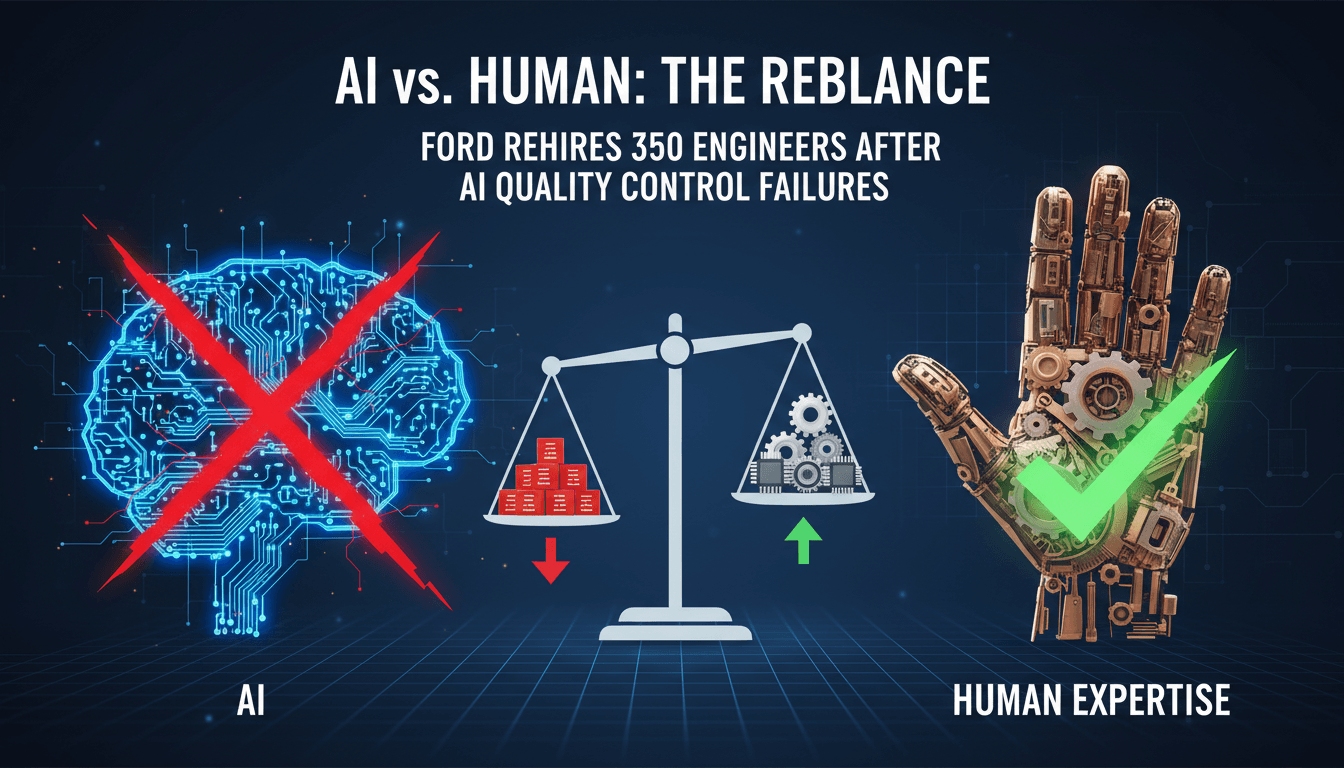
Here's what it means for you.
Ford's decision to rehire 350 engineers highlights a critical reassessment of AI's role in quality control within the automotive industry. This move signals to other manufacturers the importance of maintaining human expertise alongside technological advancements. As companies increasingly rely on AI, the balance between automation and human oversight will be crucial for ensuring product quality and consumer trust. The implications extend beyond Ford, potentially prompting a broader industry reflection on the effectiveness of AI in complex engineering tasks. Stakeholders will need to consider how to integrate human skills with AI capabilities to enhance overall performance.
What happened
Ford has re-hired 350 engineers following failures in its AI-driven quality assurance systems. The automaker's initial strategy to replace experienced personnel with AI did not meet expectations, resulting in significant quality issues. This prompted the company to reassess its approach to quality control and bring back veteran engineers to ensure product standards are met.
The decision to rehire these engineers reflects Ford's commitment to improving its quality assurance processes. The company has faced numerous recall issues in the past, and this move is part of a broader strategy to enhance product reliability and consumer confidence.
The Context
Ford's reliance on AI for quality assurance has revealed limitations in its ability to handle complex engineering tasks. Initially, the company believed that AI could effectively replace human expertise, but the resulting quality issues have led to a major award for improvement after rehiring experienced staff. This situation underscores the critical role that human oversight plays in engineering processes.
As Ford integrates its veteran engineers back into the workflow, the automotive industry will be watching closely. The outcome of this strategy may influence how other manufacturers approach AI applications in their own quality control measures, particularly in light of the challenges Ford has faced.
Takeaway
Looking ahead, Ford's experience serves as a cautionary tale about the limitations of AI in quality assurance. The company aims to improve its quality control processes while restoring consumer confidence in its vehicles. Observers should monitor Ford's ongoing strategies for quality improvement and any developments in AI applications within the automotive sector.
As the industry evolves, the balance between AI and human expertise will be a key focus for manufacturers seeking to enhance product quality and reliability. The outcomes of Ford's recent changes may set a precedent for future practices across the automotive landscape.
Opinionated AI coverage for general audiences.
"TNW’s AI vertical covering tools, ethics, and trends."
— A47 Editor
Ford had to rehire 350 engineers after its AI got vehicle quality wrong
Ford has recently rehired 350 engineers after its artificial intelligence systems failed to meet the expected vehicle quality standards. This decision was confirmed by Charles Poon, Ford’s VP of vehicle hardware engineering, who noted that the compan...
Business and tech news excluding paywalled content.
"High-volume business/tech outlet with frequent AI coverage."
— A47 Editor
Ford says AI alone couldn't fix its quality problems. It needed to rehire veteran engineers to help.
Ford has recently achieved a significant turnaround in its quality ratings, winning a major award after years plagued by recalls. The company attributes this improvement to the rehiring of veteran engineers and a reevaluation of its reliance on artif...
Tech startup news, programming trends, and discussions shared by the developer community.
"Hacker News is a community-driven source highlighting influential tech discussions, startup launches, and programming insights."
— A47 Editor
Ford rehires 350 engineers after AI fails to preserve expertise or train juniors
Ford has rehired 350 engineers after its artificial intelligence systems failed to maintain critical expertise and adequately train junior staff. This decision highlights the company's struggle with the reliability of its automated systems, which wer...