
Wealthy Investors Prefer Human Advisers Over AI for Final Investment Decisions
Here's what it means for you.
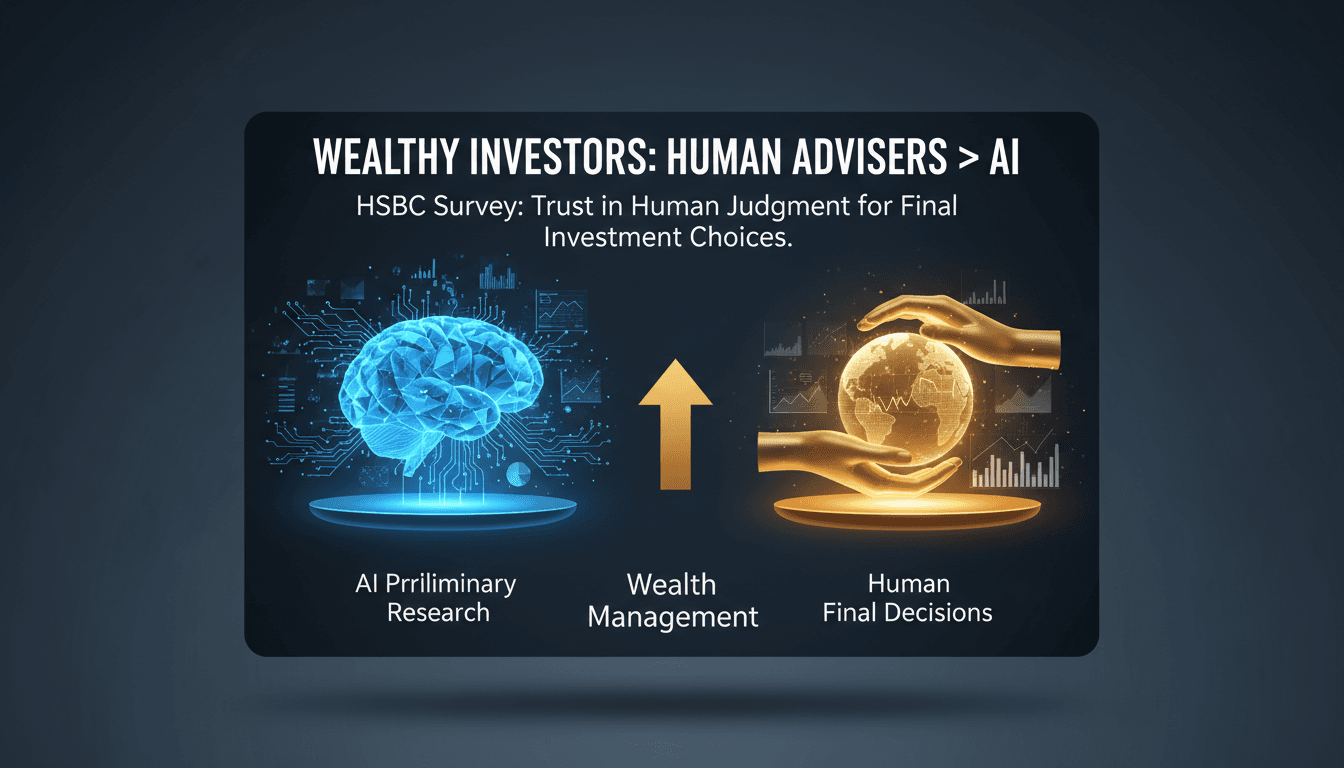
The recent HSBC survey highlights a significant trend among affluent investors who prioritize human financial advisers for final investment decisions. While AI tools are increasingly utilized for research and idea generation, the ultimate decision-making still relies on human expertise. This indicates that wealth management firms must adapt their strategies to effectively integrate AI while preserving the essential human touch in advisory roles. As AI technology continues to evolve, the balance between human judgment and machine capabilities will be crucial for maintaining client trust and satisfaction in wealth management.
What happened
A recent survey conducted by HSBC reveals that wealthy investors prefer human financial advisers over artificial intelligence when making final investment decisions. Although affluent individuals are increasingly using AI for preliminary research, the ultimate choice still hinges on human expertise. This trend underscores the ongoing importance of personal interaction in the wealth management sector.
The survey included nearly 10,000 affluent and high-net-worth individuals across ten markets, providing a broad perspective on investor preferences. The findings indicate a significant gap between the capabilities of AI and the nuanced judgment that human advisers offer in wealth management.
The Context
The HSBC survey, published on June 24, 2026, sheds light on the evolving landscape of wealth management. As investors integrate AI into their investment processes, the reliance on human advisers for final decisions remains strong. This dual approach highlights the necessity for wealth management firms to adapt their strategies to incorporate AI while retaining the invaluable human element in advisory roles.
The research reflects a critical insight into how affluent investors perceive the balance between technology and personal expertise. As the financial services industry continues to evolve, understanding these preferences will be essential for firms aiming to meet the needs of their clients.
Takeaway
Looking ahead, the future of wealth management will likely see a continued coexistence of AI and human advisers. Wealth management firms will need to find effective ways to leverage both to meet the evolving needs of affluent clients. Monitoring advancements in AI technology in financial services will be crucial, as will observing how firms adjust their strategies to incorporate AI while retaining human advisers.
The implications of this survey suggest that as AI technology evolves, the role of human advisers may need to adapt to maintain relevance in the industry.
Global business headlines with AI angles.
"General business outlet that frequently covers AI."
— A47 Editor
Investors Still Want To Interact With Humans Even As AI Gains Ground In The Financial World, HSBC Finds
HSBC's recent research reveals that while affluent investors are increasingly using artificial intelligence (AI) for investment research, they still prefer human financial advisers for final decision-making. This finding underscores the ongoing relia...
Opinionated AI coverage for general audiences.
"TNW’s AI vertical covering tools, ethics, and trends."
— A47 Editor
AI loses out to human wealth managers when the money actually moves, HSBC finds
HSBC's recent research indicates that wealthy investors are increasingly utilizing artificial intelligence (AI) for idea generation but ultimately prefer human wealth managers for decision-making. This survey, which included nearly 10,000 affluent in...
Technology business news, market impacts, and innovation trends.
"Bloomberg is a premier financial and tech news provider, respected for its in-depth reporting and analytical rigor."
— A47 Editor
HSBC Wealth Survey Shows AI Losing Out to Humans in Key Areas
A recent HSBC Wealth Survey indicates that wealthy clients prefer human advisers over artificial intelligence for managing their financial needs, highlighting the limitations of AI in personalized wealth management.