
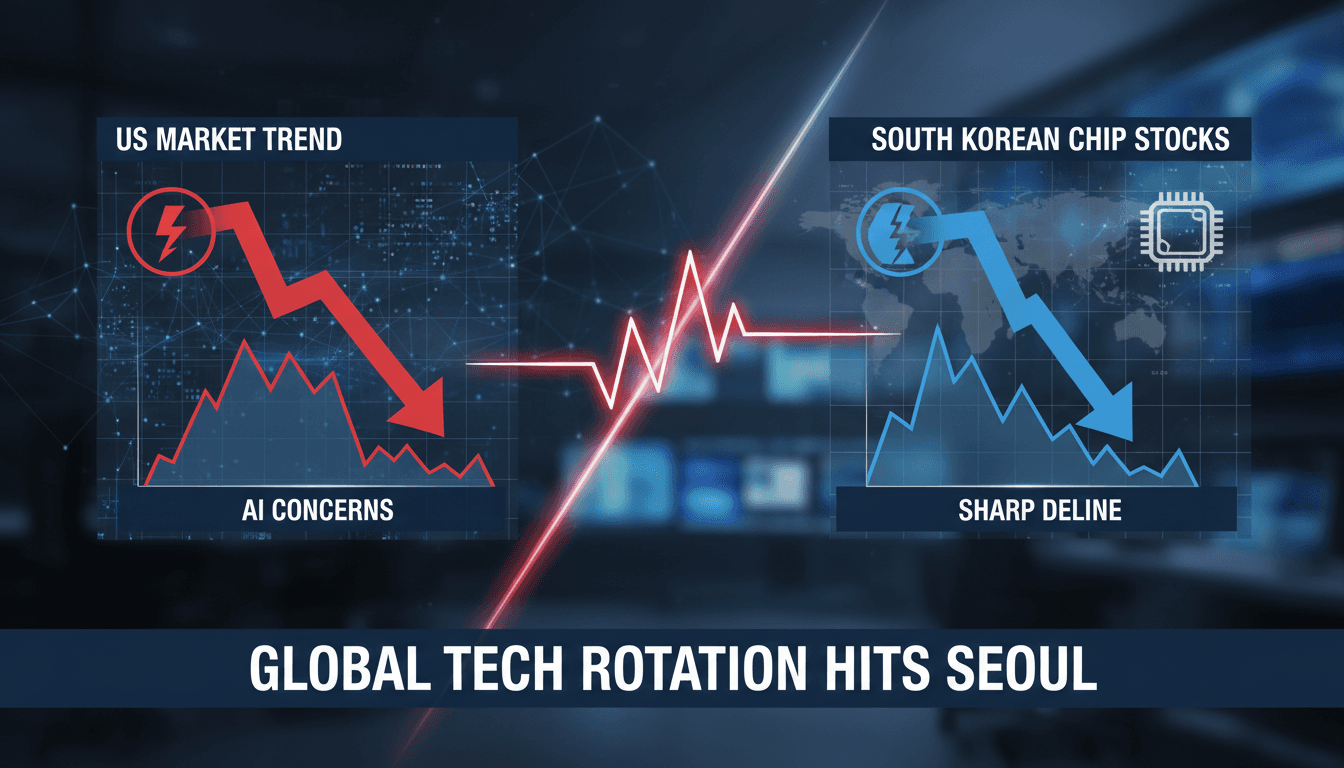
South Korean chip stocks decline sharply amid US market selloff driven by AI concerns
Here's what it means for you.
The recent downturn in South Korean chip stocks signals a shift in investor sentiment, influenced by a broader selloff in the US market. As concerns over the sustainability of the AI boom grow, investors are increasingly seeking cheaper technology alternatives. This trend may lead to prolonged volatility in South Korean markets, particularly affecting the chip sector. The implications for stakeholders are significant, as the ongoing shift in investment strategies could reshape the landscape for technology investments in Asia. Investors will need to remain vigilant as they navigate these changes.
What happened
South Korean chip stocks have experienced a sharp decline as investors react to a selloff in the US market, primarily driven by concerns surrounding the AI boom. This selloff has prompted a notable shift in focus from chipmakers to more affordable technology alternatives. As a result, South Korea is leading Asian markets lower, indicating a broader trend affecting the region.
The decline in chip stocks is significant, as South Korean equities are nearing bear territory, defined by a drop of 20% or more from recent highs. This downturn reflects a growing unease among investors regarding the sustainability of the AI-driven market rally.
The Context
The current situation is rooted in the AI rotation trade, which has led investors to withdraw from high-flying chipmakers in search of cheaper technology investments. This shift comes at a time when South Korea's stock market is facing increasing pressure, contributing to a broader decline across Asian markets.
The selloff in the US market has had a ripple effect, influencing global investor sentiment and prompting a reevaluation of investment strategies. As the AI boom faces scrutiny, the implications for the South Korean chip sector are becoming increasingly pronounced.
Takeaway
As the AI rotation trade continues to evolve, South Korean markets may face ongoing volatility, particularly within the chip sector. Investors will be closely monitoring the performance of alternative technology investments in Asia for potential recovery signals.
The current landscape suggests that the shift in investment strategies may persist, impacting South Korean chip stocks in the near future. Stakeholders should remain alert to developments that could signal stabilization or further declines in this critical sector.
Global markets, investing, and macroeconomics from a premier financial newsroom.
"Bloomberg is respected for in-depth financial reporting and data-driven analysis."
— A47 Editor
AI Rotation Trade Sends Korean Stocks Tumbling, China Surging
The AI rotation trade is accelerating in Asia, leading to a significant decline in Korean stocks as investors withdraw funds from chipmakers that previously fueled market gains, seeking more affordable opportunities in the technology sector.
Macro commentary, policy analysis, growth/inflation themes, and global outlooks.
"Contextual macro coverage that complements day-to-day market headlines."
— A47 Editor
South Korean chip stocks slide after overnight US selloff on AI boom concerns
South Korean chip stocks have experienced a significant decline following a selloff in U.S. technology shares, raising concerns about the sustainability of the AI boom. This downturn reflects broader investor anxiety regarding the performance of semi...
Markets desk coverage, trading insights, and investor updates.
"WSJ’s markets reporting provides in-depth analysis and context for investors."
— A47 Editor
Korean Stocks Flirt With Bear Territory, Leading Asian Markets Lower
South Korean stocks have dipped significantly, leading Asian markets lower as the recent rally driven by chip makers and artificial intelligence takes a pause. The main index in South Korea has shown volatility, reflecting broader investor concerns.