
SpaceX secures $20 billion bridge loan to reduce debt and prepare for IPO
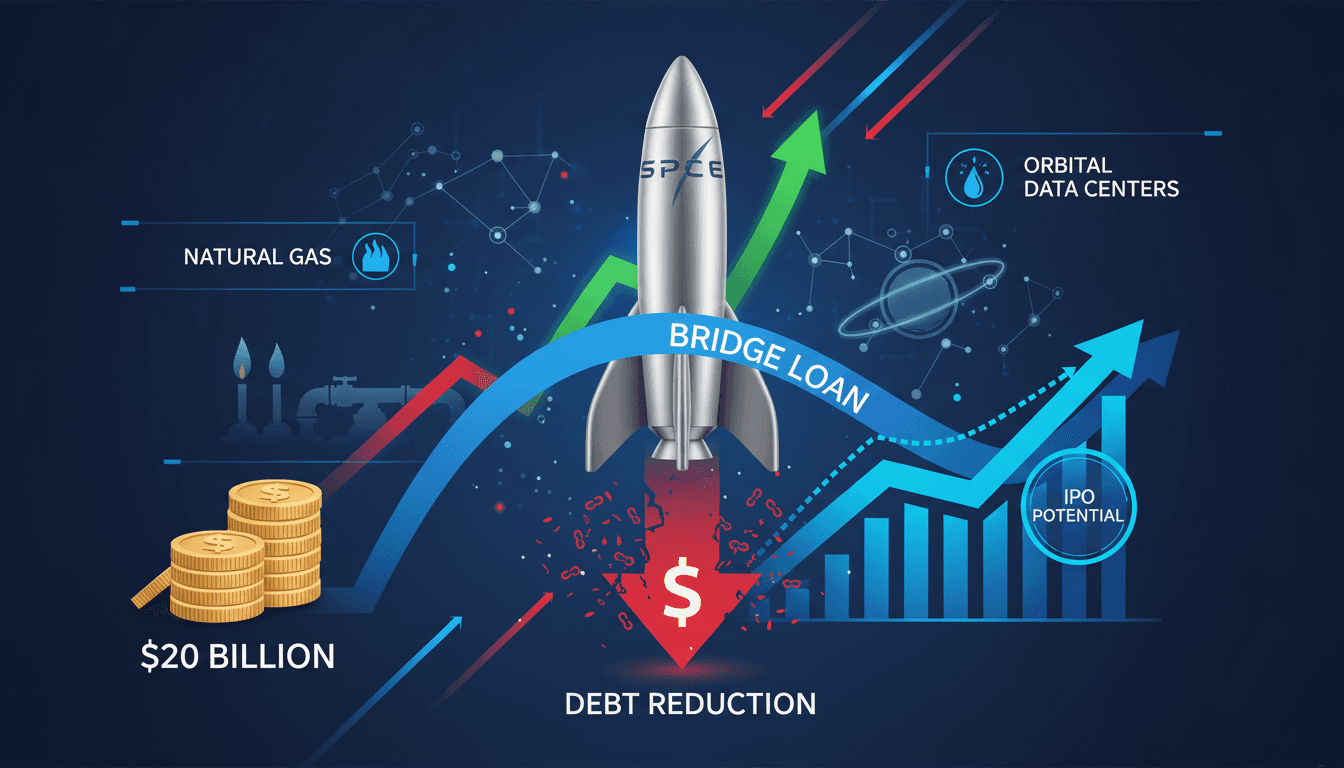
Here's what it means for you.
Elon Musk's recent financial maneuvers signal a significant shift in the landscape of his business empire. The $20 billion bridge loan not only alleviates high-interest debt but also positions SpaceX for a potential IPO, which could attract new investors and reshape market dynamics. This consolidation of Musk's companies may lead to a more streamlined operational focus, particularly in the energy and technology sectors. As Musk pivots from solar power to natural gas and orbital data centers, stakeholders should monitor how these changes impact investment strategies and market perceptions. The implications of this financial strategy extend beyond SpaceX, potentially influencing the broader industry landscape.
What happened
SpaceX has successfully secured a $20 billion bridge loan aimed at significantly reducing Elon Musk's debt costs. This financial strategy allows the company to retire $17.5 billion of high-interest loans, effectively cutting Musk's debt obligations in half. The move is part of a broader consolidation effort involving Musk's various companies, including xAI.
This bridge loan is expected to yield nearly $1 billion in annual interest savings, enhancing the financial health of Musk's ventures. The timing of this loan coincides with Musk's strategic shift in focus, moving away from solar power towards natural gas and orbital data centers.
The Context
Elon Musk's consolidation of his companies into a single conglomerate marks a pivotal moment in his business strategy. The recent bridge loan was secured from a consortium of major banks, reflecting confidence in Musk's vision and the potential profitability of his ventures. This restructuring is not merely a financial maneuver; it represents a significant shift in Musk's operational focus and long-term goals.
As Musk transitions his companies, the implications for the energy and technology sectors are profound. The retirement of high-interest debt positions SpaceX favorably for future growth and investment opportunities, particularly as the company prepares for a potential IPO.
Takeaway
Looking ahead, the potential IPO of SpaceX is a key development to watch, as it could redefine the company's role in the market. Investors and industry analysts should keep an eye on Musk's evolving energy strategies, particularly his pivot towards natural gas and data centers. The financial implications of this bridge loan and the resulting debt reduction may influence future investments across Musk's portfolio.
As Musk continues to streamline operations, the strategic shifts within his companies could lead to new opportunities and challenges in the energy and technology sectors. The unfolding narrative will be crucial for stakeholders seeking to understand the future landscape of Musk's enterprises.
Opinionated AI coverage for general audiences.
"TNW’s AI vertical covering tools, ethics, and trends."
— A47 Editor
SpaceX used a $20 billion bridge loan to slash Musk’s debt costs in half, IPO filing reveals
SpaceX has secured a $20 billion bridge loan from major banks, which will be used to retire $17.5 billion of high-interest debt from Elon Musk's companies, X and xAI, as revealed in its IPO filing. This financial maneuver is part of a broader strateg...
Technology business and AI-related headlines.
"Data-driven tech newsroom with global scope."
— A47 Editor
Musk Taps SpaceX’s Financial Power to Cut Interest Costs in Half
Elon Musk has restructured SpaceX, xAI, and X into a cohesive conglomerate, resulting in nearly $1 billion in annual interest savings. This financial maneuver is part of a broader strategy to enhance the operational efficiency and financial health of...
Technology business news, market impacts, and innovation trends.
"Bloomberg is a premier financial and tech news provider, respected for its in-depth reporting and analytical rigor."
— A47 Editor
Musk Taps SpaceX’s Financial Power to Cut Interest Costs in Half
Elon Musk has restructured SpaceX, xAI, and X into a cohesive conglomerate, resulting in nearly $1 billion in annual interest savings. This financial maneuver is part of a broader strategy to enhance the operational efficiency and financial health of...