
JPMorgan Chase announces significant job cuts due to AI implementation
Here's what it means for you.
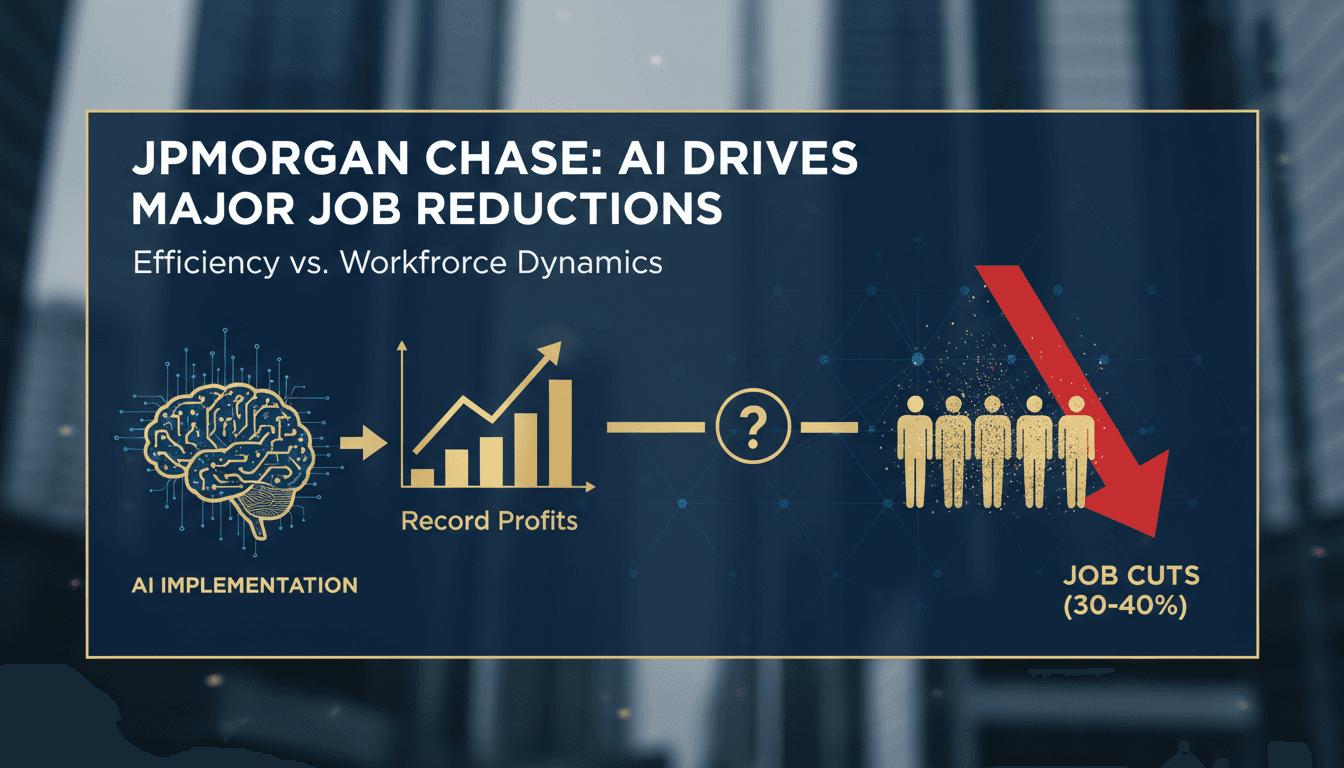
The integration of artificial intelligence at JPMorgan Chase is reshaping the workforce landscape, with job cuts of 30 to 40 percent in certain divisions. This shift highlights a growing trend in the banking sector where technology adoption is prioritized for operational efficiency. However, the anticipated reductions in operating costs have not materialized, raising questions about the long-term implications for profitability and workforce dynamics. As banks increasingly rely on AI, stakeholders must consider the balance between technological advancement and its impact on employment. Investors may need to adjust their expectations regarding profit margins in light of these developments.
What happened
JPMorgan Chase has announced job reductions of 30 to 40 percent in specific divisions due to the implementation of artificial intelligence. CEO Jamie Dimon confirmed that while AI is enhancing operational efficiency, it has not significantly lowered the bank's operating costs. This revelation comes despite the bank reporting record profits in the second quarter of 2026.
The job cuts are concentrated in discrete areas of the bank, reflecting a targeted approach to integrating AI technologies. Dimon’s comments during the second-quarter earnings call underscore the complexities of balancing efficiency gains with financial performance.
The Context
The announcement follows a period of record profitability for JPMorgan Chase, indicating a paradox where technological advancements do not necessarily translate to lower operational expenses. Stakeholders, including investors and employees, are closely monitoring these changes as they could signal broader trends in the banking industry.
As AI continues to evolve, the implications for workforce dynamics and regulatory responses will be critical. The timing of these job cuts raises questions about the future of employment in banking and the potential for similar actions across the sector.
Takeaway
Looking ahead, the integration of AI in banking will likely continue to reshape workforce dynamics without guaranteeing lower operational costs. Observers should monitor further developments in AI applications within the sector, as well as any potential regulatory responses to the job reductions caused by these technologies.
The relationship between technology adoption and financial performance remains complex, suggesting that banks may need to reassess their strategies moving forward.
Opinionated AI coverage for general audiences.
"TNW’s AI vertical covering tools, ethics, and trends."
— A47 Editor
Dimon says AI already eliminated 30 to 40 percent of jobs in some JPMorgan divisions
JPMorgan Chase has reported that artificial intelligence (AI) has led to job reductions of 30 to 40 percent in certain divisions, as stated by CEO Jamie Dimon during the second-quarter earnings call. This significant shift highlights the increasing r...
Business and tech news excluding paywalled content.
"High-volume business/tech outlet with frequent AI coverage."
— A47 Editor
Jamie Dimon says AI already reduced jobs in some areas by 40% — but it's not making JPM dramatically cheaper to run
Jamie Dimon, CEO of JPMorgan Chase, revealed that artificial intelligence (AI) has already led to a 40% reduction in jobs in certain areas, although he noted that this has not significantly lowered the bank's operating costs. He emphasized the effici...
Global business headlines with AI angles.
"General business outlet that frequently covers AI."
— A47 Editor
JPMorgan's Revenue Climbed Across All Business Units. The Bank Reported Record Profits In The Second Quarter
JPMorgan reported record profits in the second quarter, with revenue growth across all business units, as CEO Jamie Dimon acknowledged job reductions of 30% to 40% in specific areas due to increased use of artificial intelligence (AI).