
IOC Bans Transgender Athletes from Female Olympic Events Starting 2028
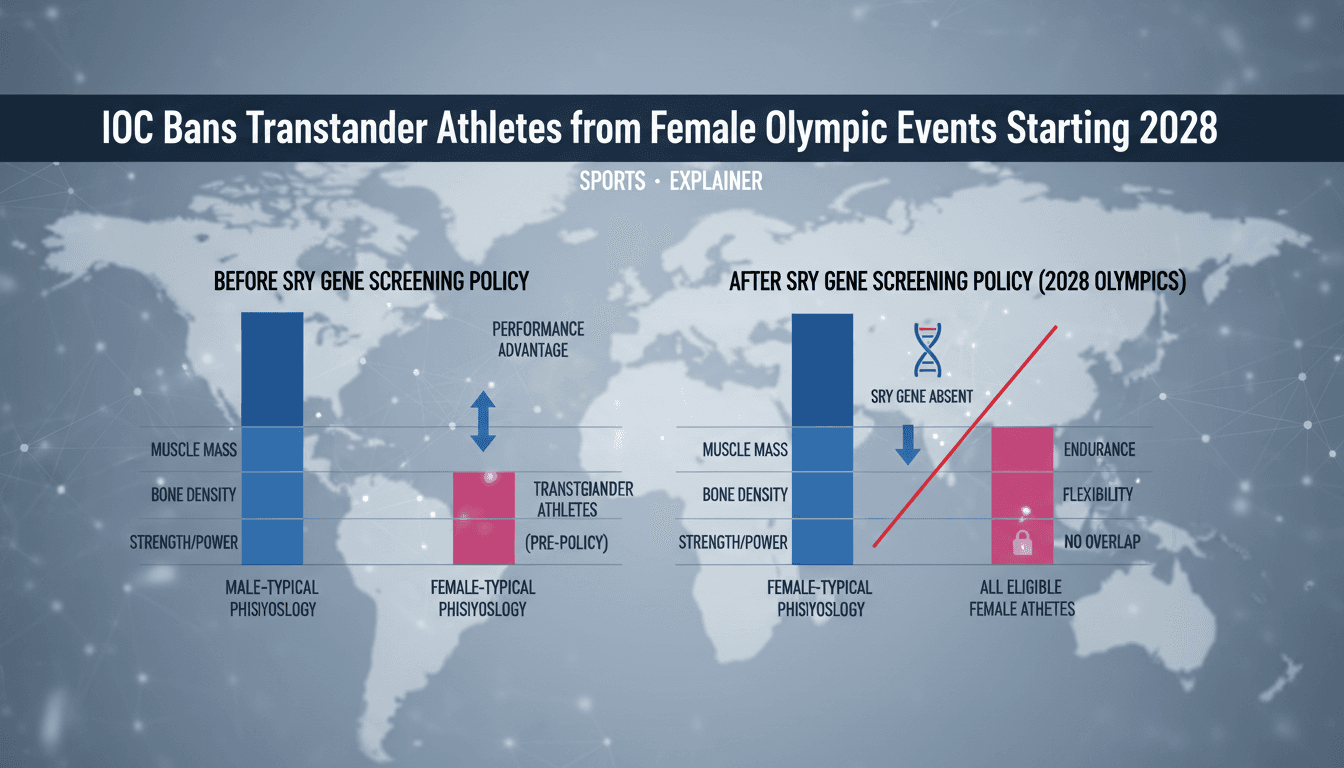
Here's what it means for you.
If you’re an athlete or a sports enthusiast, this policy could redefine competitive landscapes and participation norms in Olympic sports.
Why it matters
This policy marks a significant shift in the ongoing debate over gender identity and fairness in sports, impacting athletes' eligibility and competitive dynamics globally.
What happened (in 30 seconds)
- The IOC announced a new eligibility policy on March 26, 2026, barring transgender athletes from female categories at the Olympics.
- Effective from the 2028 Los Angeles Olympics, the policy requires a one-time SRY gene screening to verify biological sex.
- The decision follows extensive consultations and aims to address concerns over male performance advantages in strength and endurance sports.
The context you actually need
- The policy arises from previous controversies surrounding transgender athletes, notably during the Tokyo 2021 and Paris 2024 Olympics, which raised questions about fairness in competition.
- Prior to this, the IOC allowed individual federations to set their own transgender policies, leading to a patchwork of rules that varied significantly across sports.
- The SRY gene screening is intended to create a uniform standard for female eligibility, reflecting a growing consensus among sports leaders on the need for fairness.
What's really happening
The International Olympic Committee (IOC) has taken a decisive step in addressing the complex issue of transgender athletes in competitive sports. The new policy, effective from the 2028 Los Angeles Olympics, mandates that only biological females, verified through a one-time SRY gene screening, can compete in female categories. This decision is rooted in a growing body of scientific evidence suggesting that male puberty confers significant performance advantages, estimated to be between 10-12% in events like running and swimming.
This policy emerges from a backdrop of escalating debates and controversies surrounding gender identity in sports. The IOC's 2021 Framework on Fairness, Inclusion, and Non-Discrimination allowed individual international federations (IFs) to establish their own eligibility criteria for transgender athletes. However, this decentralized approach led to inconsistencies and heightened tensions, particularly highlighted by incidents involving athletes like Laurel Hubbard at the Tokyo 2021 Olympics and DSD boxers at the Paris 2024 Games.
In response to these controversies, IOC President Kirsty Coventry initiated a comprehensive review in June 2025, which included expert consultations and feedback from over 1,100 athletes. The consensus reached in February 2026 on implementing SRY-based testing reflects a significant shift towards a more standardized approach to eligibility. The policy aims to balance the integrity of female sports with the rights of transgender athletes, although it has sparked considerable debate regarding its ethical implications.
The decision is non-retroactive, meaning it will not affect athletes who have already competed under previous regulations. However, it does create a clear delineation between male and female categories, with transgender women and most XY DSD athletes barred from female events but allowed to compete in male or open categories. This shift is expected to reshape the competitive landscape in various sports, influencing not only participation rates but also the dynamics of sponsorship and media coverage.
As the policy rolls out, it will likely face legal challenges, particularly from human rights organizations and advocates for transgender rights, who argue that it stigmatizes and discriminates against transgender athletes. The Court of Arbitration for Sport may become a battleground for these disputes, as stakeholders seek to navigate the complex interplay of fairness, inclusion, and competitive integrity.
Who feels it first (and how)
- Transgender athletes: Directly impacted by eligibility restrictions, altering their competitive opportunities.
- Sports federations: Required to adapt their policies and potentially face backlash from various advocacy groups.
- Sponsors and advertisers: May need to reassess partnerships based on the evolving landscape of athlete representation and public sentiment.
- Athletic organizations: Must navigate the implications of this policy on their events and athlete participation.
- Legal entities: Likely to engage in disputes related to the policy, influencing future regulations and athlete rights.
What to watch next
- Legal challenges: Monitor potential lawsuits from human rights organizations and their implications for the IOC's policy.
- Athlete responses: Pay attention to how athletes, particularly transgender individuals, respond to the policy and its impact on their careers.
- Sponsorship dynamics: Watch for shifts in sponsorship deals as brands react to the changing landscape of athlete representation and public opinion.
The IOC's policy is now binding and will take effect at the 2028 Olympics.
Legal challenges will arise, potentially delaying or altering the implementation of the policy.
The long-term effects on athlete participation rates and the competitive balance in female sports remain to be seen.
Frequently Asked Questions
- Why it matters?
- This policy marks a significant shift in the ongoing debate over gender identity and fairness in sports, impacting athletes' eligibility and competitive dynamics globally.
- What happened (in 30 seconds)?
- The IOC announced a new eligibility policy on March 26, 2026, barring transgender athletes from female categories at the Olympics. Effective from the 2028 Los Angeles Olympics, the policy requires a one-time SRY gene screening to verify biological sex. The decision follows extensive consultations and aims to address concerns over male performance advantages in strength and endurance sports.
- What's really happening?
- The International Olympic Committee (IOC) has taken a decisive step in addressing the complex issue of transgender athletes in competitive sports. The new policy, effective from the 2028 Los Angeles Olympics, mandates that only biological females, verified through a one-time SRY gene screening, can compete in female categories. This decision is rooted in a growing body of scientific evidence suggesting that male puberty confers significant performance advantages, estimated to be between 10-12% i
- Who feels it first (and how)?
- Transgender athletes: Directly impacted by eligibility restrictions, altering their competitive opportunities. Sports federations: Required to adapt their policies and potentially face backlash from various advocacy groups. Sponsors and advertisers: May need to reassess partnerships based on the evolving landscape of athlete representation and public sentiment. Athletic organizations: Must navigate the implications of this policy on their events and athlete participation. Legal entities:
- What to watch next?
- Legal challenges: Monitor potential lawsuits from human rights organizations and their implications for the IOC's policy. Athlete responses: Pay attention to how athletes, particularly transgender individuals, respond to the policy and its impact on their careers. Sponsorship dynamics: Watch for shifts in sponsorship deals as brands react to the changing landscape of athlete representation and public opinion.
International sporting events, tournament updates, and athlete profiles.
"France 24 is viewed as a globally focused outlet with balanced coverage, offering a European perspective on international sports."
— A47 Editor
Transgender athletes barred from female category events at Olympics
The International Olympic Committee (IOC) has announced a new policy that will bar transgender women from competing in the female category at the Olympics, starting with the 2028 Los Angeles Games. This decision reintroduces gender testing to determi...
24/7 international news from a French perspective in multiple languages.
"France 24 is viewed as a globally focused outlet with balanced coverage and a European perspective."
— A47 Editor
Transgender athletes barred from female category events at Olympics
The International Olympic Committee (IOC) has announced a new policy that will bar transgender women from competing in the female category at the Olympics, starting with the 2028 Los Angeles Games. This decision reintroduces gender testing to determi...
Public radio coverage of American news and issues.
"NPR is an American public media organization known for thoughtful reporting and a slightly left-leaning editorial tone."
— A47 Editor
The Olympic committee bans trans athletes from women's events, raising many questions
The International Olympic Committee has announced a new policy requiring genetic testing for all athletes wishing to compete in women's events, set to take effect for the 2028 Summer Games in Los Angeles. This decision has sparked significant controv...
International stories from NPR’s global desk.
"NPR is an American public media organization known for thoughtful reporting and a slightly left-leaning editorial tone."
— A47 Editor
The Olympic committee bans trans athletes from women's events, raising many questions
The International Olympic Committee has announced a new policy requiring genetic testing for all athletes wishing to compete in women's events, set to take effect for the 2028 Summer Games in Los Angeles. This decision has sparked significant controv...
Coverage of professional and college sports, with a West Coast perspective.
"The Los Angeles Times is a major West Coast newspaper offering in-depth reporting with a liberal editorial tone and strong regional focus."
— A47 Editor
New IOC policy bans transgender women from competition, starting with 2028 L.A. Olympics
The International Olympic Committee (IOC) has announced a new policy that bans transgender women from competing in women's events, starting with the 2028 Los Angeles Olympics. Eligibility will now be determined through a one-time genetics test, which...
U.S. national news with a West Coast perspective.
"The Los Angeles Times is a major West Coast newspaper offering in-depth reporting with a liberal editorial tone and strong regional focus."
— A47 Editor
New IOC policy bans transgender women from competition, starting with 2028 L.A. Olympics
The International Olympic Committee (IOC) has announced a new policy that bans transgender women from competing in women's events, starting with the 2028 Los Angeles Olympics. Eligibility will now be determined through a one-time genetics test, which...
International news with cultural insight.
"The Los Angeles Times is a major West Coast newspaper offering in-depth reporting with a liberal editorial tone and strong regional focus."
— A47 Editor
New IOC policy bans transgender women from competition, starting with 2028 L.A. Olympics
The International Olympic Committee (IOC) has announced a new policy that bans transgender women from competing in women's events, starting with the 2028 Los Angeles Olympics. Eligibility will now be determined through a one-time genetics test, which...
International sporting events, tournament updates, and athlete profiles.
"France 24 is viewed as a globally focused outlet with balanced coverage, offering a European perspective on international sports."
— A47 Editor
Transgender women banned from competing in Olympic games
The International Olympic Committee (IOC) has announced a ban on transgender women from competing in women's events at the Olympic Games, starting with the 2028 Los Angeles Games. This policy reintroduces gender testing to determine eligibility, whic...