
Inaugural Flights of Makkah Route Initiative Arrive in Madinah for Hajj 1447 AH
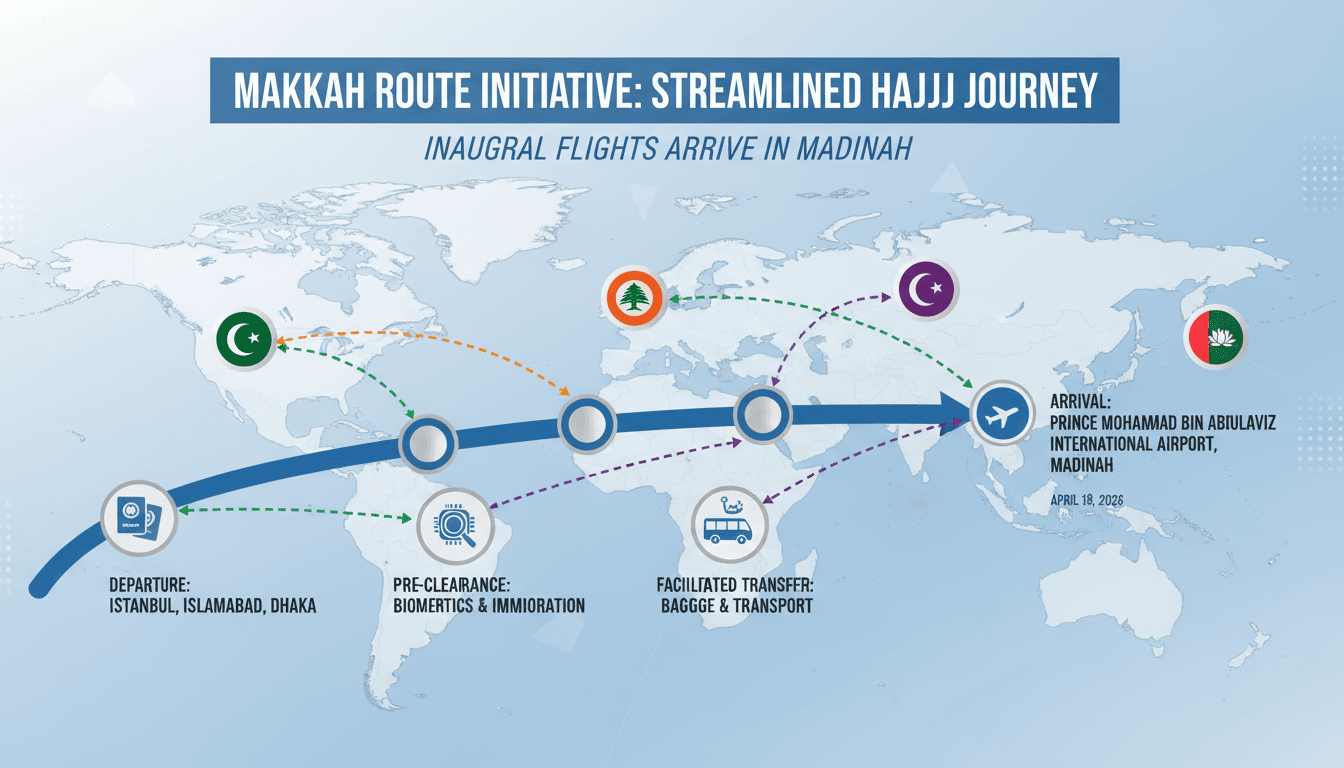
Here's what it means for you.
If you're planning to perform Hajj, this initiative simplifies your travel experience significantly.
Why it matters
The Makkah Route Initiative enhances the efficiency of Hajj travel, impacting millions of pilgrims and the global travel industry.
What happened (in 30 seconds)
- First flights carrying beneficiaries of the Makkah Route Initiative arrived in Madinah on April 19, 2026.
- Pilgrims from Türkiye, Pakistan, and Bangladesh completed immigration and health checks in their home countries before departure.
- Luggage handling and transportation to accommodations were managed by partner entities, streamlining the arrival process.
The context you actually need
- Launched in 2017, the Makkah Route Initiative aims to enhance the pilgrim experience as part of Saudi Arabia's Vision 2030.
- Expanded operations now cover 17 entry points across 10 countries, facilitating smoother travel for over 1.25 million pilgrims since inception.
- Technological integration includes biometric data collection and electronic visa issuance, improving efficiency and reducing wait times.
What's really happening
The Makkah Route Initiative represents a significant evolution in how Hajj is organized and experienced. Initially launched in 2017, it began as a pilot program for Malaysian pilgrims and has since expanded to include a broader range of countries, reflecting Saudi Arabia's commitment to enhancing the pilgrimage experience. The initiative's core objective is to streamline the travel process for pilgrims, which is crucial given the logistical challenges associated with Hajj.
By allowing pilgrims to complete immigration, health checks, and visa processing in their home countries, the initiative reduces congestion at Saudi airports and enhances the overall experience. Upon arrival, pilgrims are directly transported to their accommodations, bypassing traditional immigration lines. This is made possible through partnerships with various entities, including the Saudi Ministry of Interior and digital partners like stc Group, which facilitate the integration of technology into the travel process.
The implications of this initiative extend beyond just convenience for pilgrims. It reflects a broader strategy under Saudi Vision 2030 to modernize the country’s infrastructure and improve service delivery in the tourism sector. The successful execution of the Makkah Route Initiative could serve as a model for other large-scale events, showcasing how technology and logistics can be harmonized to enhance user experience.
Moreover, the initiative is expected to have a ripple effect on the travel and hospitality sectors, as increased efficiency may lead to higher numbers of pilgrims choosing to undertake the Hajj. This could stimulate economic activity in regions that cater to these travelers, from airlines to hotels and local businesses in Makkah and Madinah.
As the initiative continues to expand, it is likely to attract more countries into the fold, further increasing the number of pilgrims served. The ongoing commitment to improving the Hajj experience aligns with global trends toward digitization and customer-centric service models, positioning Saudi Arabia as a leader in pilgrimage management.
Who feels it first (and how)
- Pilgrims from Türkiye, Pakistan, and Bangladesh will experience a smoother travel process.
- Airlines operating flights to Saudi Arabia may see increased demand as travel becomes more efficient.
- Local businesses in Makkah and Madinah could benefit from higher foot traffic and spending by pilgrims.
- Government agencies involved in immigration and health checks will need to adapt to increased volumes and expectations for service quality.
What to watch next
- Expansion of entry points: Monitoring how many more countries and entry points are added will indicate the initiative's growth and reach.
- Technological advancements: Watch for updates on the integration of AI and logistics, which could further enhance the pilgrim experience.
- Pilgrim feedback: Gathering insights from pilgrims about their experiences will be crucial for ongoing improvements and adjustments to the initiative.
The Makkah Route Initiative has successfully completed its first flights, indicating operational readiness.
Increased numbers of pilgrims will choose to undertake Hajj due to the streamlined process.
The long-term economic impact on local businesses in Makkah and Madinah remains to be fully assessed.
Frequently Asked Questions
- Why it matters?
- The Makkah Route Initiative enhances the efficiency of Hajj travel, impacting millions of pilgrims and the global travel industry.
- What happened (in 30 seconds)?
- First flights carrying beneficiaries of the Makkah Route Initiative arrived in Madinah on April 19, 2026. Pilgrims from Türkiye, Pakistan, and Bangladesh completed immigration and health checks in their home countries before departure. Luggage handling and transportation to accommodations were managed by partner entities, streamlining the arrival process.
- What's really happening?
- The Makkah Route Initiative represents a significant evolution in how Hajj is organized and experienced. Initially launched in 2017, it began as a pilot program for Malaysian pilgrims and has since expanded to include a broader range of countries, reflecting Saudi Arabia's commitment to enhancing the pilgrimage experience. The initiative's core objective is to streamline the travel process for pilgrims, which is crucial given the logistical challenges associated with Hajj. By allowing pilgrims
- Who feels it first (and how)?
- Pilgrims from Türkiye, Pakistan, and Bangladesh will experience a smoother travel process. Airlines operating flights to Saudi Arabia may see increased demand as travel becomes more efficient. Local businesses in Makkah and Madinah could benefit from higher foot traffic and spending by pilgrims. Government agencies involved in immigration and health checks will need to adapt to increased volumes and expectations for service quality.
- What to watch next?
- Expansion of entry points: Monitoring how many more countries and entry points are added will indicate the initiative's growth and reach. Technological advancements: Watch for updates on the integration of AI and logistics, which could further enhance the pilgrim experience. Pilgrim feedback: Gathering insights from pilgrims about their experiences will be crucial for ongoing improvements and adjustments to the initiative.
Regional and international reporting focused on Middle Eastern politics, diplomacy, and economics.
"Asharq Al-Awsat is a Saudi-owned international newspaper reflecting mainstream Gulf political perspectives."
— A47 Editor
First Flights of Makkah Route Initiative Beneficiaries Arrive in Madinah
The first flights of beneficiaries from the Makkah Route Initiative have successfully arrived in Madinah, marking a significant milestone in the initiative aimed at facilitating the travel of Hajj pilgrims. This development occurred as international ...
Arabic-language coverage of Saudi, regional, and international affairs.
"Al Bilad offers mainstream Saudi newspaper coverage across domestic and broader Arab topics."
— A47 Editor
وصول أولى رحلات مستفيدي مبادرة “طريق مكة” من مطار إسطنبول الدولي بالجمهورية التركية إلى المدينة المنورة
The first flights of beneficiaries from the 'Makkah Route' initiative arrived today at Prince Mohammed bin Abdulaziz International Airport in Madinah, coming from Istanbul Airport in Turkey. This initiative aims to provide high-quality services to pi...
Arabic-language coverage of Saudi, regional, and international affairs.
"Al Bilad offers mainstream Saudi newspaper coverage across domestic and broader Arab topics."
— A47 Editor
مغادرة أولى رحلات المستفيدين من مبادرة “طريق مكة” من ماليزيا وباكستان وبنجلاديش
The first flights of beneficiaries from the 'Makkah Route' initiative departed today from Malaysia to the Kingdom, utilizing the initiative's lounge at Kuala Lumpur International Airport, heading to Prince Mohammed bin Abdulaziz International Airport...