
Circle Shares Drop 20% Amid Misinterpretation of CLARITY Act Yield Restrictions
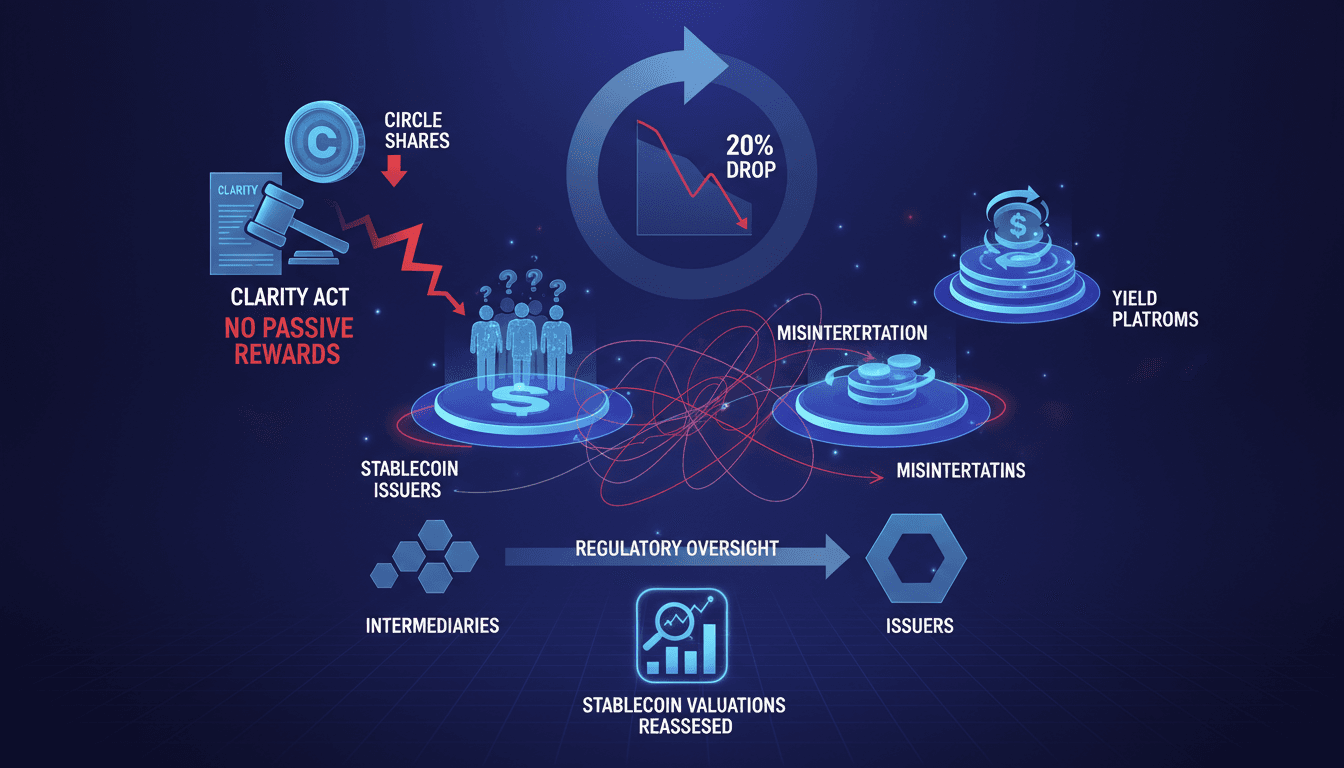
Here's what it means for you.
If you’re involved in digital assets, understanding the implications of the CLARITY Act could influence your investment strategies and risk assessments.
Why it matters
The CLARITY Act could reshape the landscape for stablecoin issuers and yield-generating platforms, impacting market dynamics and investor sentiment.
What happened (in 30 seconds)
- Circle shares dropped nearly 20% on March 24, 2026, following the advancement of the CLARITY Act draft prohibiting passive rewards on stablecoin balances.
- Bernstein analysts warned that traders are misinterpreting the Act, conflating stablecoin issuers with yield-distributing platforms.
- The Digital Asset Market Clarity Act aims to clarify regulatory oversight between the CFTC and SEC for digital assets amid ongoing negotiations.
The context you actually need
- The CLARITY Act was introduced on May 29, 2025, to provide clarity in the regulatory framework for digital commodities, passing the House in September 2025.
- In 2025, stablecoin activity surged to $33 trillion in on-chain settlements, a 72% increase year-over-year, highlighting the growing importance of stablecoins in the crypto ecosystem.
- The recent draft of the Act restricts yield on stablecoin holdings, allowing only activity-based incentives, which could impact how stablecoins are utilized and perceived in the market.
What's really happening
The recent turmoil surrounding Circle's stock price is a direct response to the evolving regulatory landscape defined by the CLARITY Act. This legislation, which seeks to delineate the roles of the Commodity Futures Trading Commission (CFTC) and the Securities and Exchange Commission (SEC) in overseeing digital assets, is a critical step towards establishing a more structured market environment for cryptocurrencies.
The draft language prohibiting passive rewards on stablecoin balances has created confusion among traders, who are mistakenly equating Circle's USDC with platforms like Coinbase that distribute yields. Bernstein analysts, including Gautam Chhugani, emphasize that the Act targets intermediaries and yield marketers, not the issuers themselves. This distinction is vital for investors to understand, as it suggests that issuers like Circle may still have opportunities for growth despite the restrictions.
The backdrop of this legislation is marked by a significant increase in stablecoin transactions, with $33 trillion in on-chain settlements recorded in 2025. This surge underscores the critical role stablecoins play in the broader digital asset economy. The CLARITY Act aims to address regulatory ambiguities that have persisted since the FTX collapse, which left many in the industry uncertain about compliance and operational frameworks.
As the Senate continues to review the draft, closed-door negotiations are ongoing, indicating that the final form of the legislation may still evolve. The current draft's focus on yield restrictions reflects a compromise between crypto platforms and traditional banking interests, which have long been wary of interest-like programs in the crypto space.
Investors are reacting to these developments with caution, as evidenced by the sharp decline in Circle's stock price. However, the market may be overlooking potential rebound opportunities for issuers like Circle, who could benefit from a clearer regulatory framework in the long run. The crypto industry is watching closely, as the passage of the CLARITY Act could pave the way for more stable growth and innovation in the digital asset sector.
Who feels it first (and how)
- Investors in Circle and similar stablecoin issuers may experience volatility in stock prices as market interpretations of the CLARITY Act evolve.
- Crypto trading platforms that rely on yield distribution models could face operational challenges and shifts in user engagement.
- Regulatory bodies and financial institutions will need to adapt to the new framework, influencing their strategies and compliance measures.
What to watch next
- Senate negotiations: The outcome of ongoing discussions will determine the final provisions of the CLARITY Act, impacting market sentiment and investment strategies.
- Market recovery indicators: Watch for signs of recovery in Circle's stock and other stablecoin issuers, which could signal investor confidence in the long-term viability of these assets.
- Regulatory responses from other countries: As the U.S. moves forward with its framework, other jurisdictions may adjust their regulations, affecting global crypto market dynamics.
The CLARITY Act aims to clarify regulatory oversight for digital assets and restrict passive rewards on stablecoin balances.
The market will continue to react to the evolving legislative landscape, with potential volatility in stablecoin issuer stocks.
The long-term implications of the CLARITY Act on the broader crypto market and investor behavior remain to be seen.
Frequently Asked Questions
- Why it matters?
- The CLARITY Act could reshape the landscape for stablecoin issuers and yield-generating platforms, impacting market dynamics and investor sentiment.
- What happened (in 30 seconds)?
- Circle shares dropped nearly 20% on March 24, 2026, following the advancement of the CLARITY Act draft prohibiting passive rewards on stablecoin balances. Bernstein analysts warned that traders are misinterpreting the Act, conflating stablecoin issuers with yield-distributing platforms. The Digital Asset Market Clarity Act aims to clarify regulatory oversight between the CFTC and SEC for digital assets amid ongoing negotiations.
- What's really happening?
- The recent turmoil surrounding Circle's stock price is a direct response to the evolving regulatory landscape defined by the CLARITY Act. This legislation, which seeks to delineate the roles of the Commodity Futures Trading Commission (CFTC) and the Securities and Exchange Commission (SEC) in overseeing digital assets, is a critical step towards establishing a more structured market environment for cryptocurrencies. The draft language prohibiting passive rewards on stablecoin balances has crea
- Who feels it first (and how)?
- Investors in Circle and similar stablecoin issuers may experience volatility in stock prices as market interpretations of the CLARITY Act evolve. Crypto trading platforms that rely on yield distribution models could face operational challenges and shifts in user engagement. Regulatory bodies and financial institutions will need to adapt to the new framework, influencing their strategies and compliance measures.
- What to watch next?
- Senate negotiations: The outcome of ongoing discussions will determine the final provisions of the CLARITY Act, impacting market sentiment and investment strategies. Market recovery indicators: Watch for signs of recovery in Circle's stock and other stablecoin issuers, which could signal investor confidence in the long-term viability of these assets. Regulatory responses from other countries: As the U.S. moves forward with its framework, other jurisdictions may adjust their regulations, affectin
Bitcoin news, technical analysis, and forecasts across crypto markets.
"NewsBTC covers Bitcoin news, technical analysis, and forecasts across crypto markets and major blockchain projects."
— A47 Editor
Crypto Analysts Warn: Traders Misreading The Clarity Act Could Miss The Real Opportunity
Circle's shares plummeted nearly 20% following the advancement of the Clarity Act by U.S. lawmakers, which proposes to restrict interest on stablecoin holdings. Analysts have indicated that the market is misinterpreting the legislation, conflating yi...
Covers blockchain, cryptocurrency news, project analysis, and market insights.
"Cointelegraph is a leading crypto-focused media outlet known for timely news, analysis, and educational content related to blockchain and digital assets."
— A47 Editor
Circle plunged on CLARITY Act fears, but fundamentals unchanged — Bernstein
Circle's stock has plunged significantly due to fears surrounding the new draft of the CLARITY Act, which proposes restrictions on stablecoin rewards, impacting the outlook for its USDC stablecoin. Analysts have noted that despite this decline, the f...
Covers blockchain, cryptocurrency news, project analysis, and market insights.
"CoinDesk is a well-established cryptocurrency and blockchain news provider, offering comprehensive insights, market data, and industry research."
— A47 Editor
Circle selloff may be overdone as crypto bill weakens Coinbase edge, say analysts
The recent draft of the CLARITY Act has led to a significant selloff in Circle's stock, which dropped by nearly 20%, as it introduces restrictions on stablecoin rewards, impacting the outlook for its USDC stablecoin. Analysts suggest that while this ...