
Japanese Prime Minister condemns Iranian missile attacks during call with UAE President
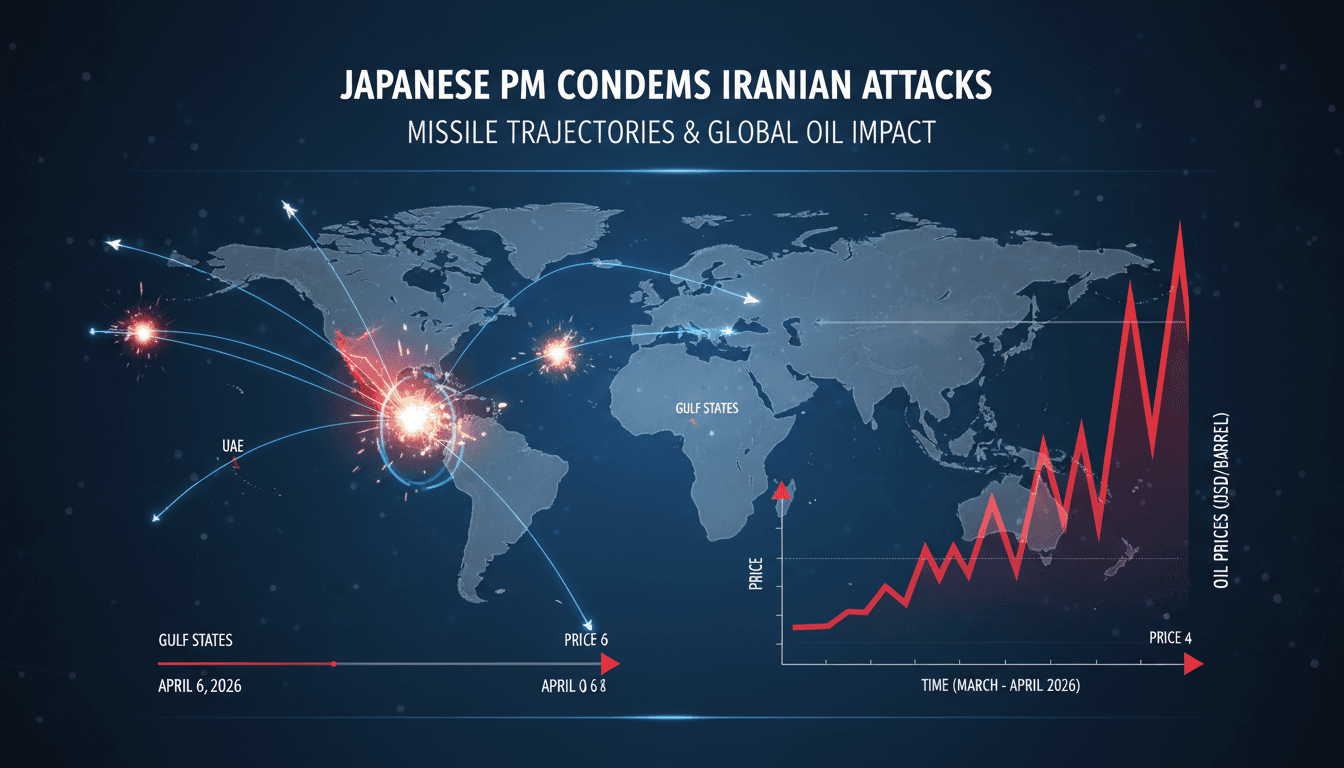
Here's what it means for you.
If you’re in the UAE or have business interests in the Gulf, the ongoing conflict could disrupt your operations and travel plans.
Why it matters
The escalating tensions in the Gulf are likely to impact global oil prices and supply chains, affecting economies worldwide.
What happened (in 30 seconds)
- On April 6, 2026, Japanese Prime Minister Sanae Takaichi condemned Iranian missile and drone attacks during a call with UAE President Sheikh Mohammed bin Zayed Al Nahyan.
- UAE air defenses intercepted 520 projectiles from Iran, showcasing the escalating military conflict in the region.
- Oil prices surged over 3% to exceed $107 per barrel amid fears of supply disruptions due to the conflict.
The context you actually need
- The 2026 Iran war was triggered by US-Israel strikes on Iranian targets, leading to Iran's retaliatory actions against Gulf states.
- UAE air defenses, bolstered by THAAD systems, have been actively intercepting Iranian attacks, with hundreds of projectiles neutralized since March.
- Dubai residents are experiencing severe disruptions, including flight cancellations and heightened security measures, affecting tourism and local economies.
What's really happening
The recent telephone conversation between Japanese Prime Minister Sanae Takaichi and UAE President Sheikh Mohammed bin Zayed Al Nahyan highlights the growing international concern over Iran's military aggression. The backdrop of this dialogue is the ongoing 2026 Iran war, which erupted following US-Israel strikes on Iranian military targets in early March. In retaliation, Iran has launched a series of missile and drone attacks targeting Gulf states, particularly the UAE, which has been a focal point due to its strategic importance and proximity to the Strait of Hormuz—one of the world's busiest maritime oil routes.
As of April 7, 2026, UAE air defenses have intercepted a staggering 520 ballistic missiles, cruise missiles, and drones. This extensive military engagement underscores the UAE's vulnerability and the effectiveness of its air defense systems, which have been crucial in preventing significant damage to critical infrastructure like energy facilities, ports, and airports. However, the ongoing conflict has led to significant disruptions in air travel, with Dubai experiencing over 3,000 daily flight cancellations—80% of its scheduled flights—resulting in a more than 60% drop in tourism.
The economic implications are profound. Oil prices have surged, exceeding $107 per barrel, driven by fears of supply disruptions amid the ongoing conflict. This price increase not only affects consumers but also has broader implications for global markets, particularly those reliant on oil imports. The UAE has responded by imposing restrictions on Iranian transits and visitors, further isolating Iran economically and diplomatically.
Japan's condemnation of Iran's actions reflects a broader international response, with multiple nations joining in denouncing the aggressions. Japan's decision to release state oil stockpiles to stabilize markets indicates the seriousness of the situation and the potential for further economic fallout. The UAE's proactive measures to bolster its defenses and restrict Iranian access are aimed at maintaining regional stability, but they also risk escalating tensions further.
As the situation develops, the interconnectedness of global economies means that the ramifications of this conflict will be felt far beyond the Gulf region, impacting everything from energy prices to international trade routes.
Who feels it first (and how)
- Travelers: Increased flight cancellations and heightened security measures in Dubai affect travel plans and logistics.
- Businesses: Companies with operations in the UAE face disruptions and potential economic losses due to the conflict.
- Investors: Fluctuating oil prices and regional instability may lead to volatility in global markets, impacting investment strategies.
What to watch next
- Air defense effectiveness: Monitoring the success rate of UAE air defenses against Iranian attacks will indicate the level of threat to regional stability.
- Oil price fluctuations: Keep an eye on oil prices as they respond to ongoing military actions and geopolitical developments, which could affect global markets.
- International diplomatic responses: Watch for further international condemnations or sanctions against Iran, which could escalate or de-escalate tensions in the region.
Iran's missile and drone attacks on the UAE are ongoing, with significant interceptions reported.
Oil prices will remain volatile as the conflict continues, impacting global supply chains.
The long-term implications of international diplomatic efforts to stabilize the region and their effectiveness remain uncertain.
Frequently Asked Questions
- Why it matters?
- The escalating tensions in the Gulf are likely to impact global oil prices and supply chains, affecting economies worldwide.
- What happened (in 30 seconds)?
- On April 6, 2026, Japanese Prime Minister Sanae Takaichi condemned Iranian missile and drone attacks during a call with UAE President Sheikh Mohammed bin Zayed Al Nahyan. UAE air defenses intercepted 520 projectiles from Iran, showcasing the escalating military conflict in the region. Oil prices surged over 3% to exceed $107 per barrel amid fears of supply disruptions due to the conflict.
- What's really happening?
- The recent telephone conversation between Japanese Prime Minister Sanae Takaichi and UAE President Sheikh Mohammed bin Zayed Al Nahyan highlights the growing international concern over Iran's military aggression. The backdrop of this dialogue is the ongoing 2026 Iran war, which erupted following US-Israel strikes on Iranian military targets in early March. In retaliation, Iran has launched a series of missile and drone attacks targeting Gulf states, particularly the UAE, which has been a focal p
- Who feels it first (and how)?
- Travelers: Increased flight cancellations and heightened security measures in Dubai affect travel plans and logistics. Businesses: Companies with operations in the UAE face disruptions and potential economic losses due to the conflict. Investors: Fluctuating oil prices and regional instability may lead to volatility in global markets, impacting investment strategies.
- What to watch next?
- Air defense effectiveness: Monitoring the success rate of UAE air defenses against Iranian attacks will indicate the level of threat to regional stability. Oil price fluctuations: Keep an eye on oil prices as they respond to ongoing military actions and geopolitical developments, which could affect global markets. International diplomatic responses: Watch for further international condemnations or sanctions against Iran, which could escalate or de-escalate tensions in the region.
Arabic-language digital news outlet covering UAE, regional, and international developments with broad general-news coverage.
"Al Ain News coverage typically blends UAE-focused reporting with wider Arab regional and international news."
— A47 Editor
خلال اتصال مع محمد بن زايد.. رئيسة وزراء اليابان تدين اعتداءات إيران
Sheikh Mohammed bin Zayed Al Nahyan, President of the United Arab Emirates, received a phone call on Tuesday from Japan's Prime Minister Sanae Takichi, during which she condemned Iran's recent aggressions. This communication highlights the ongoing te...
Arabic-language UAE newspaper coverage focused on domestic affairs, public institutions, business, society, and regional developments.
"Al Khaleej coverage generally reflects a mainstream UAE editorial lens with strong attention to public affairs, institutions, and regional developments."
— A47 Editor
محمد بن زايد ورئيسة وزراء اليابان يبحثان هاتفياً الاعتداءات الإيرانية الإرهابية
Sheikh Mohammed bin Zayed Al Nahyan, the President of the UAE, received a phone call from Japan's Prime Minister Sanae Takaichi today, during which they discussed the Iranian terrorist attacks. This conversation highlights ongoing concerns regarding ...