
Adam Back Challenges BIP-361 Proposal at Paris Blockchain Week
Here's what it means for you.
As a Bitcoin holder, understanding the implications of quantum computing on your assets is crucial for future-proofing your investments.
Why it matters
The ongoing debate over Bitcoin's quantum resistance could redefine security protocols and impact the value of your holdings.
What happened (in 30 seconds)
- Adam Back opposed the BIP-361 proposal at Paris Blockchain Week, advocating for optional upgrades instead of enforced coin freezes.
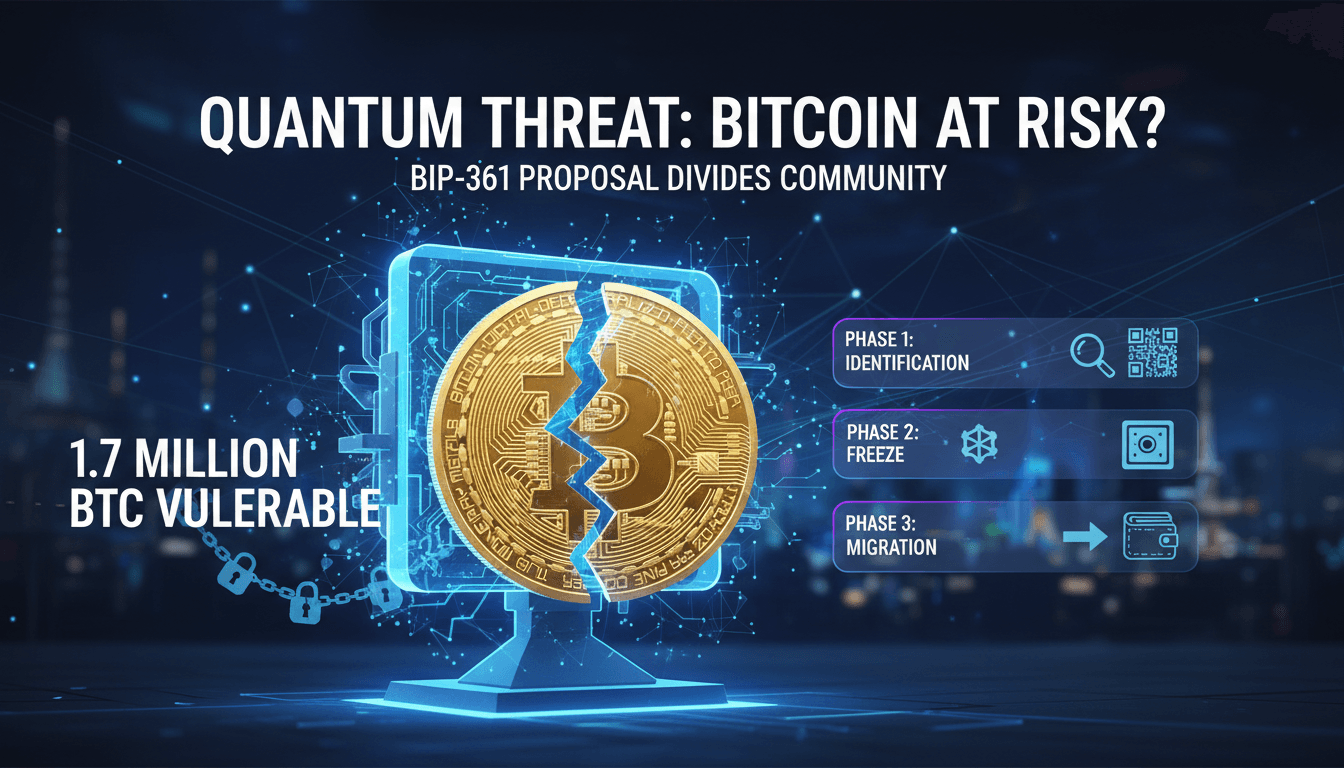
- BIP-361, drafted by Jameson Lopp and co-authors, suggests a phased approach to freeze unmigrated coins to protect against quantum threats.
- 1.7 million BTC in legacy addresses, including Satoshi Nakamoto's holdings, are at risk of theft due to vulnerabilities in current cryptographic methods.
The context you actually need
- Quantum computing poses a significant threat to Bitcoin's elliptic curve cryptography, potentially allowing hackers to derive private keys from public keys.
- 1.7 million BTC, valued at approximately $70-80 billion, are in legacy formats vulnerable to quantum attacks, raising concerns about their security.
- Historical precedents in Bitcoin's development, like the voluntary soft fork for Taproot, emphasize user choice and consensus over coercive measures.
What's really happening
The debate surrounding Bitcoin's quantum resistance has intensified with the introduction of BIP-361, a proposal that aims to address the potential vulnerabilities posed by quantum computing. This proposal, published on April 15, 2026, outlines a three-phase soft fork strategy. The first phase, set to activate three years post-approval, would prohibit new payments to legacy addresses. The second phase, five years later, would invalidate old signatures, effectively freezing unmigrated coins to prevent what proponents term "intergenerational theft." This approach has sparked significant controversy within the Bitcoin community.
Adam Back, CEO of Blockstream, has emerged as a prominent critic of BIP-361. At the same event where the proposal was introduced, he advocated for optional quantum-resistant upgrades rather than enforced measures. Back argues that the focus should be on education and incentivizing users to migrate to more secure systems voluntarily. He points to the rapid resolution of past bugs in Bitcoin's code as evidence that the community can adapt without resorting to coercive tactics. Back's stance is rooted in a belief that the current quantum threat is still largely theoretical, with quantum computing capabilities remaining in the experimental stage.
The implications of this debate extend beyond technical specifications; they touch on fundamental principles of Bitcoin's decentralized ethos. Supporters of BIP-361 argue that the integrity of Bitcoin's fixed supply must be protected against potential quantum adversaries. In contrast, critics like Back view the proposal as a form of expropriation that undermines the very decentralization that Bitcoin was designed to uphold. This schism within the community has led to polarized opinions, with media coverage amplifying the divide.
As the debate continues, the Bitcoin community remains engaged in discussions across various platforms, including social media and forums. Despite the controversy, there has been no significant volatility in Bitcoin's price or governmental interventions, indicating that the market is currently absorbing the implications of these proposals without immediate panic.
Who feels it first (and how)
- Bitcoin holders: Those with assets in legacy addresses are directly impacted by the potential for theft and the implications of the BIP-361 proposal.
- Developers and miners: Changes in protocol could affect their operations and the overall security of the network.
- Investors and institutions: Entities holding significant Bitcoin investments must consider the long-term viability of their assets in light of quantum threats.
What to watch next
- Community consensus: Monitor discussions within the Bitcoin community regarding BIP-361 and alternative proposals, as this will shape future protocol decisions.
- Quantum computing advancements: Keep an eye on developments in quantum technology, as breakthroughs could accelerate the urgency of implementing quantum-resistant measures.
- Market reactions: Watch for any shifts in Bitcoin's price or trading volume in response to ongoing debates and proposals, which could indicate investor sentiment.
Quantum computing poses a theoretical threat to Bitcoin's current cryptographic security.
The debate over BIP-361 will continue to polarize the Bitcoin community, influencing future protocol decisions.
The timeline for widespread quantum computing capabilities and their impact on Bitcoin security remains uncertain.
Frequently Asked Questions
- Why it matters?
- The ongoing debate over Bitcoin's quantum resistance could redefine security protocols and impact the value of your holdings.
- What happened (in 30 seconds)?
- Adam Back opposed the BIP-361 proposal at Paris Blockchain Week, advocating for optional upgrades instead of enforced coin freezes. BIP-361, drafted by Jameson Lopp and co-authors, suggests a phased approach to freeze unmigrated coins to protect against quantum threats. 1.7 million BTC in legacy addresses, including Satoshi Nakamoto's holdings, are at risk of theft due to vulnerabilities in current cryptographic methods.
- What's really happening?
- The debate surrounding Bitcoin's quantum resistance has intensified with the introduction of BIP-361, a proposal that aims to address the potential vulnerabilities posed by quantum computing. This proposal, published on April 15, 2026, outlines a three-phase soft fork strategy. The first phase, set to activate three years post-approval, would prohibit new payments to legacy addresses. The second phase, five years later, would invalidate old signatures, effectively freezing unmigrated coins to pr
- Who feels it first (and how)?
- Bitcoin holders: Those with assets in legacy addresses are directly impacted by the potential for theft and the implications of the BIP-361 proposal. Developers and miners: Changes in protocol could affect their operations and the overall security of the network. Investors and institutions: Entities holding significant Bitcoin investments must consider the long-term viability of their assets in light of quantum threats.
- What to watch next?
- Community consensus: Monitor discussions within the Bitcoin community regarding BIP-361 and alternative proposals, as this will shape future protocol decisions. Quantum computing advancements: Keep an eye on developments in quantum technology, as breakthroughs could accelerate the urgency of implementing quantum-resistant measures. Market reactions: Watch for any shifts in Bitcoin's price or trading volume in response to ongoing debates and proposals, which could indicate investor sentiment.
Real-time updates, analysis, and reports on the blockchain and cryptocurrency sectors.
"Crypto News delivers real-time updates, analysis, and reports on the blockchain and cryptocurrency sectors."
— A47 Editor
Bitcoin’s quantum fight pits Adam Back against coin-freeze proposal
At Paris Blockchain Week, Adam Back, CEO of Blockstream, argued against a proposal to freeze older Bitcoin wallets in response to quantum computing threats, advocating instead for optional upgrades to enhance security. This debate highlights the ongo...
Covers blockchain, cryptocurrency news, project analysis, and market insights.
"Cointelegraph is a leading crypto-focused media outlet known for timely news, analysis, and educational content related to blockchain and digital assets."
— A47 Editor
Adam Back says Bitcoin’s post-quantum shift may reveal true Satoshi stash
Adam Back, speaking at Paris Blockchain Week, suggested that Bitcoin's transition to post-quantum cryptography could potentially uncover the true extent of Satoshi Nakamoto's Bitcoin holdings, estimated to be between 500,000 and 1 million BTC. This s...
Covers blockchain, cryptocurrency news, project analysis, and market insights.
"CoinDesk is a well-established cryptocurrency and blockchain news provider, offering comprehensive insights, market data, and industry research."
— A47 Editor
Bitcoin's quantum debate splits as Adam Back pushes optional upgrades over forced freeze
At Paris Blockchain Week, Adam Back, CEO of Blockstream, advocated for the development of optional quantum-resistant upgrades for Bitcoin, countering Jameson Lopp's proposal to freeze coins deemed vulnerable to quantum computing threats. This discuss...
Covers blockchain, cryptocurrency news, project analysis, and market insights.
"Cointelegraph is a leading crypto-focused media outlet known for timely news, analysis, and educational content related to blockchain and digital assets."
— A47 Editor
Bitcoin should prepare now, even if quantum is a 'lab experiment’: Adam Back
Adam Back, a prominent figure in the cryptocurrency space, emphasized the importance of preparing Bitcoin for potential quantum computing threats, suggesting that optional upgrades should be developed to facilitate a transition to quantum-resistant c...
Covers blockchain, cryptocurrency news, project analysis, and market insights.
"CoinDesk is a well-established cryptocurrency and blockchain news provider, offering comprehensive insights, market data, and industry research."
— A47 Editor
The Protocol: Bitcoin proposal that could freeze quantum-related coins
Bitcoin developers have proposed a new protocol aimed at freezing coins that are vulnerable to quantum computing threats, highlighting the urgency of addressing potential risks to the cryptocurrency. This proposal is part of ongoing efforts to enhanc...
News, analysis, and thought leadership focusing exclusively on Bitcoin.
"Bitcoin Magazine is one of the original publications devoted to Bitcoin, offering in-depth news, analysis, and commentary."
— A47 Editor
Bitcoin Developers Propose Bitcoin Quantum Migration Plan That Would Freeze Legacy Coins
Bitcoin developers have proposed a migration plan under BIP-361 to transition the cryptocurrency from legacy cryptographic signatures to quantum-resistant alternatives, potentially freezing unmigrated coins permanently. This initiative reflects the u...
Covers blockchain, cryptocurrency news, project analysis, and market insights.
"CoinDesk is a well-established cryptocurrency and blockchain news provider, offering comprehensive insights, market data, and industry research."
— A47 Editor
Bitcoin developers are trying to build quantum defenses. Your coins could pay the price.
Bitcoin developers have updated a proposal on the official repository to freeze coins vulnerable to quantum computing threats, highlighting the urgency of addressing potential risks to the cryptocurrency.