
2026 Cannes Film Festival Highlights Global Auteurs with Minimal US Presence
Here's what it means for you.
If you're in the film industry or a cinema enthusiast, this shift could reshape your understanding of global film trends and opportunities.
Why it matters
The Cannes Film Festival's focus on international auteurs signals a potential decline in Hollywood's influence on global cinema.
What happened (in 30 seconds)
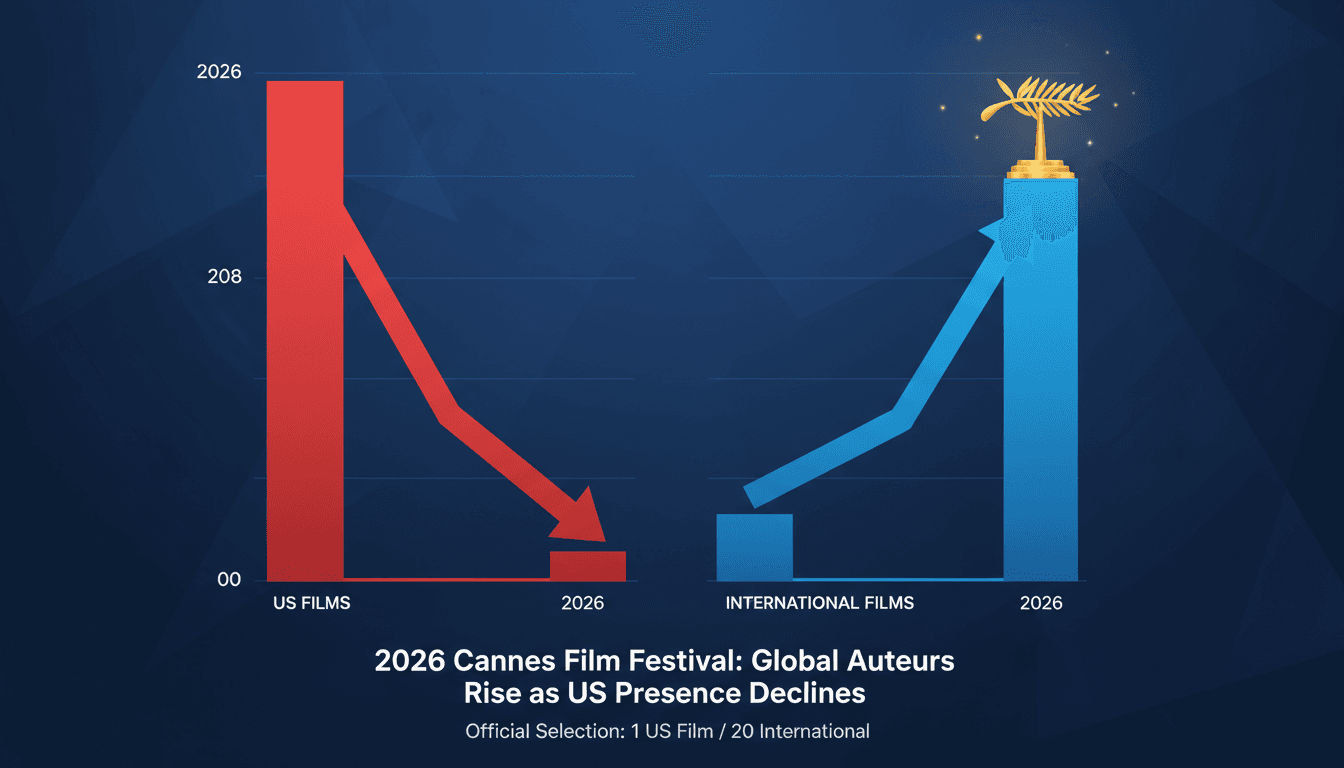
- Cannes 2026 announced its official selection on April 9, featuring only one American-directed film in the main Competition section out of 21 entries.
- International directors dominate the lineup, with notable films from Japan, Spain, and France, emphasizing a shift from Hollywood-centric programming.
- Industry challenges such as post-strike production delays and fewer suitable submissions from major studios have contributed to this trend.
The context you actually need
- Hollywood's previous dominance: The 2025 Cannes edition featured major US films, indicating a stark contrast to the current selection.
- Increased competition: This year saw 2,541 features submitted, a significant rise from a decade ago, intensifying the competition for slots at Cannes.
- Cannes' artistic criteria: Festival director Thierry Frémaux noted that studios are producing fewer films that align with Cannes' artistic vision, impacting the selection process.
What's really happening
The 2026 Cannes Film Festival's official selection reflects a significant pivot in the global film landscape, emphasizing the rise of international filmmakers while sidelining Hollywood. With only one American-directed film—Ira Sachs' "The Man I Love"—in the main Competition, the festival showcases a diverse array of international talent, including films like Pedro Almodóvar's "Bitter Christmas" and Hirokazu Kore-eda's "Sheep in the Box." This shift is not merely a trend but a response to evolving market dynamics and artistic preferences.
The decline in US representation can be traced back to several systemic factors. First, the aftermath of the Hollywood strikes has led to production delays, causing studios to be more cautious about festival commitments. This caution is compounded by a broader industry trend where major studios are producing fewer films that meet the artistic and thematic criteria valued by Cannes. As Frémaux pointed out, studios are less active in producing films that resonate with the festival's ethos, which prioritizes auteur-driven cinema over commercial blockbusters.
Moreover, the festival's selection process has become increasingly competitive. With a record number of submissions this year—up by 1,000 from a decade ago—filmmakers from around the world are vying for a limited number of slots. This influx of international entries not only highlights the growing talent pool outside of Hollywood but also reflects a shift in audience preferences towards diverse storytelling and global perspectives.
The implications of this shift extend beyond the festival itself. For filmmakers and industry professionals, it signals a potential reallocation of resources and attention towards international markets. The Cannes-Dubai Film Market partnerships, for instance, may offer new opportunities for Arab filmmakers and executives, indicating a growing interest in promoting regional cinema on the global stage. As the festival embraces a more global narrative, it could reshape the landscape of film production and distribution, encouraging a more interconnected and diverse cinematic ecosystem.
Who feels it first (and how)
- Filmmakers: Directors and producers may need to adapt their projects to align with international tastes and themes.
- Studios: Major studios could face pressure to rethink their festival strategies and production choices.
- Film festivals: Other festivals may follow Cannes' lead, prioritizing international films and auteurs, impacting programming decisions globally.
- Audiences: Viewers may experience a broader range of narratives and styles, enriching their cinematic experiences.
What to watch next
- Future festival selections: Keep an eye on upcoming film festivals to see if this trend of minimal US representation continues.
- International film collaborations: Watch for increased partnerships between US studios and international filmmakers, as they seek to adapt to changing market dynamics.
- Market reactions: Monitor how studios adjust their strategies in response to Cannes' focus on global cinema, particularly regarding production and distribution.
The 2026 Cannes selection features only one American-directed film in the main Competition.
Hollywood's influence on major film festivals may continue to wane as international filmmakers gain prominence.
The long-term impact on US studio participation in international festivals remains uncertain.
Frequently Asked Questions
- Why it matters?
- The Cannes Film Festival's focus on international auteurs signals a potential decline in Hollywood's influence on global cinema.
- What happened (in 30 seconds)?
- Cannes 2026 announced its official selection on April 9, featuring only one American-directed film in the main Competition section out of 21 entries. International directors dominate the lineup, with notable films from Japan, Spain, and France, emphasizing a shift from Hollywood-centric programming. Industry challenges such as post-strike production delays and fewer suitable submissions from major studios have contributed to this trend.
- What's really happening?
- The 2026 Cannes Film Festival's official selection reflects a significant pivot in the global film landscape, emphasizing the rise of international filmmakers while sidelining Hollywood. With only one American-directed film—Ira Sachs' "The Man I Love"—in the main Competition, the festival showcases a diverse array of international talent, including films like Pedro Almodóvar's "Bitter Christmas" and Hirokazu Kore-eda's "Sheep in the Box." This shift is not merely a trend but a response to evolvi
- Who feels it first (and how)?
- Filmmakers: Directors and producers may need to adapt their projects to align with international tastes and themes. Studios: Major studios could face pressure to rethink their festival strategies and production choices. Film festivals: Other festivals may follow Cannes' lead, prioritizing international films and auteurs, impacting programming decisions globally. Audiences: Viewers may experience a broader range of narratives and styles, enriching their cinematic experiences.
- What to watch next?
- Future festival selections: Keep an eye on upcoming film festivals to see if this trend of minimal US representation continues. International film collaborations: Watch for increased partnerships between US studios and international filmmakers, as they seek to adapt to changing market dynamics. Market reactions: Monitor how studios adjust their strategies in response to Cannes' focus on global cinema, particularly regarding production and distribution.
Top international stories selected by The Guardian editors.
"The Guardian is known for its progressive editorial stance and in-depth analysis."
— A47 Editor
Cannes looks beyond Hollywood as US film-makers mostly fail to make the grade
The 79th Cannes Film Festival has unveiled a lineup that emphasizes auteur-driven cinema, featuring prominent directors such as Asghar Farhadi and Pedro Almodovar, while notably lacking significant representation from Hollywood filmmakers.
24/7 international news from a French perspective in multiple languages.
"France 24 is viewed as a globally focused outlet with balanced coverage and a European perspective."
— A47 Editor
Cannes Festival promises escapism in Hollywood-lite edition
The Cannes Film Festival has announced its lineup for this year's edition, featuring 21 films in competition for the prestigious Palme d'Or prize, with a focus on historical dramas and a notable absence of major Hollywood studios. Festival director T...