
Trump's Threats Against Iranian Infrastructure Prompt Legal War Crime Concerns
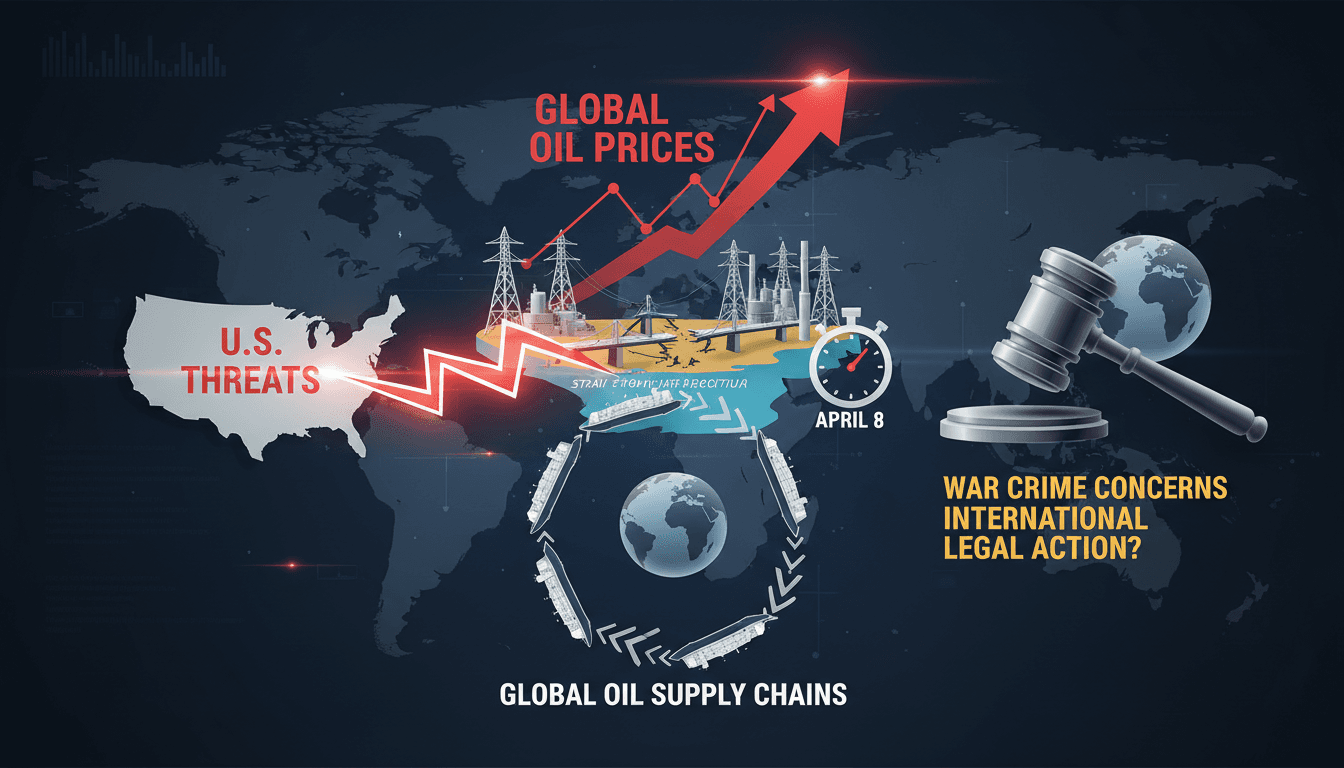
Here's what it means for you.
If you rely on stable energy prices or international trade, the escalating U.S.-Iran tensions could impact your costs and supply chains.
Why it matters
The threats against Iranian infrastructure could disrupt global oil supplies, affecting prices and availability for consumers and businesses worldwide.
What happened (in 30 seconds)
- On April 6, 2026, President Trump threatened to destroy Iranian power plants and bridges unless Iran reopened the Strait of Hormuz.
- Legal experts warned that such actions could constitute war crimes under international law, particularly targeting civilian infrastructure.
- Iranian officials rejected negotiations and threatened retaliation against U.S. allies' energy infrastructure in the Gulf.
The context you actually need
- Tensions escalated after Iran's missile strikes on Israel and the partial closure of the Strait of Hormuz, a critical chokepoint for global oil trade.
- Previous U.S. threats to target Iranian energy sites were paused but resumed amid renewed hostilities, leading to ultimatums from Trump.
- Legal scholars have raised alarms about the implications of targeting civilian infrastructure, which could lead to significant humanitarian crises.
What's really happening
The geopolitical landscape surrounding U.S.-Iran relations has become increasingly volatile, primarily driven by Iran's military actions and the strategic importance of the Strait of Hormuz. This narrow waterway is vital for global oil shipments, accounting for approximately 20% of the world's oil trade. In early 2026, tensions flared after Iran conducted missile strikes against Israeli cities, prompting a partial closure of the Strait, which disrupted oil supplies and raised global prices.
In response, President Trump issued a series of threats, initially stating he would "obliterate" Iranian power plants if the Strait was not reopened. These threats escalated on April 6, when he declared that every bridge and power plant in Iran would be destroyed by midnight unless Iran complied. This rhetoric has drawn sharp criticism from international law experts, who argue that such actions would violate the Geneva Conventions, specifically prohibitions against targeting civilian infrastructure essential for survival.
The underlying mechanism here is a complex interplay of military posturing, economic pressures, and legal ramifications. The U.S. government is attempting to exert pressure on Iran to reopen the Strait and stabilize oil markets, while Iran is leveraging its military capabilities to deter U.S. aggression and protect its interests. This tit-for-tat dynamic raises the stakes for both nations, as any military action could lead to broader regional conflicts, potentially involving U.S. allies in the Gulf.
Moreover, the ramifications extend beyond military concerns. The threats have already caused fluctuations in global oil prices, impacting consumers and businesses alike. The uncertainty surrounding energy supplies has led to stockpiling behaviors in regions like Dubai, where residents are bracing for potential blackouts and disruptions to critical services such as water desalination.
As the situation evolves, the implications for international law and humanitarian standards are significant. Legal scholars and human rights organizations are closely monitoring the situation, with some filing concerns with the International Criminal Court regarding potential war crimes. The outcome of this standoff could redefine the rules of engagement in international conflicts, particularly concerning civilian infrastructure.
Who feels it first (and how)
- Energy Sector: Oil companies and traders face volatility in prices and supply disruptions.
- Consumers: Individuals reliant on stable energy prices may see increased costs for fuel and utilities.
- Businesses: Companies engaged in international trade may experience supply chain disruptions and increased operational costs.
- Residents of Dubai: Local populations are stockpiling resources in anticipation of potential shortages and blackouts.
What to watch next
- Iran's military response: How Iran reacts to U.S. threats could escalate tensions further, impacting regional stability.
- Global oil prices: Fluctuations in oil prices will signal market reactions to ongoing threats and potential military actions.
- International legal actions: Watch for developments regarding legal challenges or actions taken by human rights organizations against U.S. threats.
Tensions between the U.S. and Iran are escalating, with potential impacts on global oil supplies.
Continued volatility in oil prices and market reactions to military threats.
The long-term implications of these threats on international law and humanitarian standards.
Frequently Asked Questions
- Why it matters?
- The threats against Iranian infrastructure could disrupt global oil supplies, affecting prices and availability for consumers and businesses worldwide.
- What happened (in 30 seconds)?
- On April 6, 2026, President Trump threatened to destroy Iranian power plants and bridges unless Iran reopened the Strait of Hormuz. Legal experts warned that such actions could constitute war crimes under international law, particularly targeting civilian infrastructure. Iranian officials rejected negotiations and threatened retaliation against U.S. allies' energy infrastructure in the Gulf.
- What's really happening?
- The geopolitical landscape surrounding U.S.-Iran relations has become increasingly volatile, primarily driven by Iran's military actions and the strategic importance of the Strait of Hormuz. This narrow waterway is vital for global oil shipments, accounting for approximately 20% of the world's oil trade. In early 2026, tensions flared after Iran conducted missile strikes against Israeli cities, prompting a partial closure of the Strait, which disrupted oil supplies and raised global prices. In
- Who feels it first (and how)?
- Energy Sector: Oil companies and traders face volatility in prices and supply disruptions. Consumers: Individuals reliant on stable energy prices may see increased costs for fuel and utilities. Businesses: Companies engaged in international trade may experience supply chain disruptions and increased operational costs. Residents of Dubai: Local populations are stockpiling resources in anticipation of potential shortages and blackouts.
- What to watch next?
- Iran's military response: How Iran reacts to U.S. threats could escalate tensions further, impacting regional stability. Global oil prices: Fluctuations in oil prices will signal market reactions to ongoing threats and potential military actions. International legal actions: Watch for developments regarding legal challenges or actions taken by human rights organizations against U.S. threats.
Arabic-language coverage of international news and geopolitics.
"RT Arabic is a Russian state-funded outlet often criticized for promoting Kremlin-aligned narratives."
— A47 Editor
خبراء: تهديدات ترامب بتدمير محطات الكهرباء الإيرانية قد ترقى لجريمة حرب
U.S. President Donald Trump's threats to destroy all bridges and power stations in Iran have raised concerns among military law experts, who suggest that such statements could amount to war crimes. This assertion highlights the potential legal ramifi...
Conservative-leaning political and national coverage.
"The Washington Times is a conservative-leaning newspaper known for its political coverage and advocacy of right-of-center viewpoints."
— A47 Editor
Trump's threatened destruction of Iran's power plants could be considered a war crime, experts say
President Donald Trump has escalated tensions with Iran by threatening to destroy its power plants and bridges if a deal to reopen the Strait of Hormuz is not reached by a specified deadline. This declaration has raised alarms among military law expe...
National headlines across the United States including breaking stories and societal issues.
"NBC News is a mainstream media outlet known for comprehensive national and international news coverage with a centrist to slightly left-leaning editorial tone."
— A47 Editor
Trump says threats to Iran do not amount to war crimes
President Donald Trump stated that threats made against Iran do not constitute war crimes, defending his administration's aggressive military posture amid ongoing tensions. This assertion comes as Trump faces scrutiny over his remarks regarding poten...
Regional coverage and analysis focused on politics, diplomacy, and business across the Middle East.
"Al-Monitor is known for analytical reporting on Middle East politics and policy developments."
— A47 Editor
‘No bridges, no power plants’: Trump ups threats against Iran if deal fails
President Donald Trump has escalated threats against Iran, stating that if a peace deal is not reached, he will destroy all of Iran's bridges and power plants within four hours. This ultimatum follows a demand for the reopening of the strategic Strai...
Global news coverage with extensive reporting on Middle Eastern conflicts and geopolitics.
"Al Jazeera is a Qatar-based broadcaster known for wide regional coverage and alternative perspectives."
— A47 Editor
Where are Iran’s power plants that Trump has threatened to destroy?
U.S. President Donald Trump has issued a stark ultimatum to Iran, demanding the reopening of the strategic Strait of Hormuz within 48 hours or face severe military action targeting critical infrastructure, including power plants and bridges. This thr...